
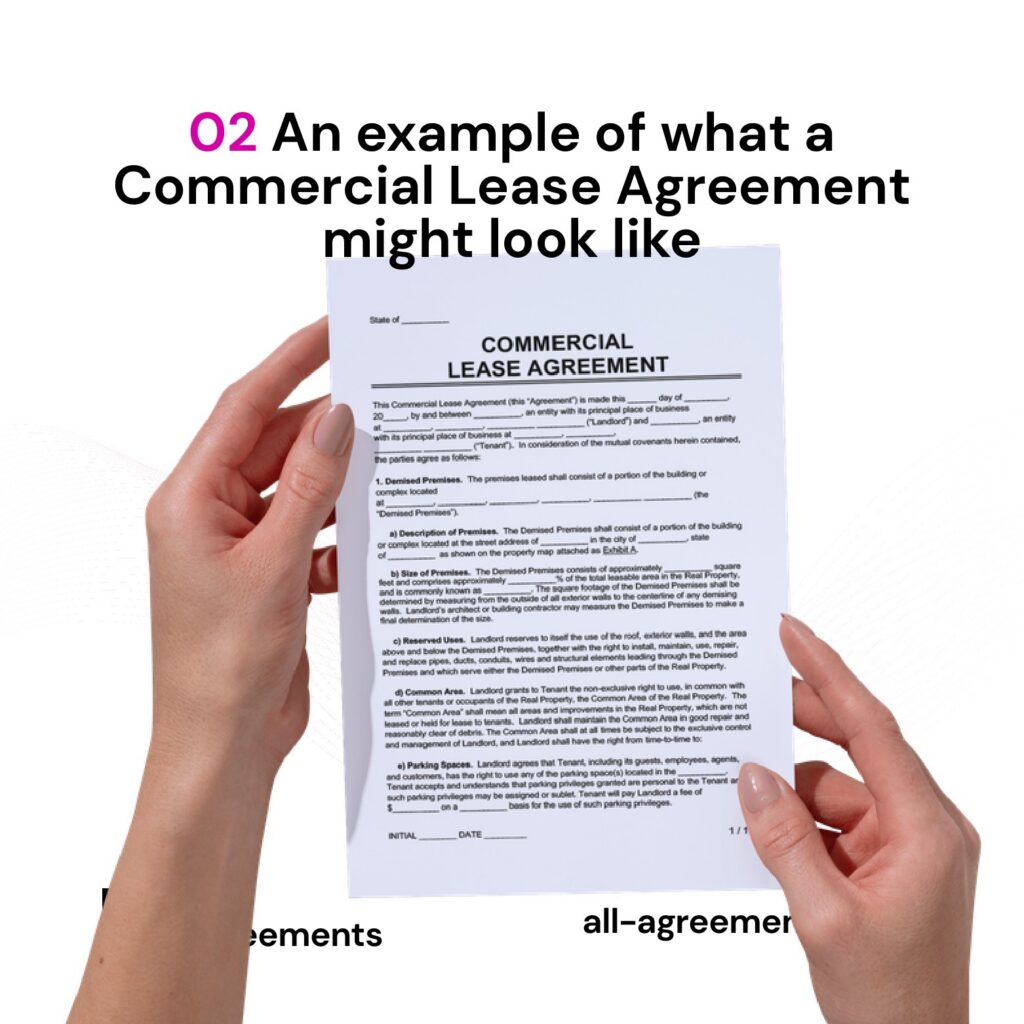
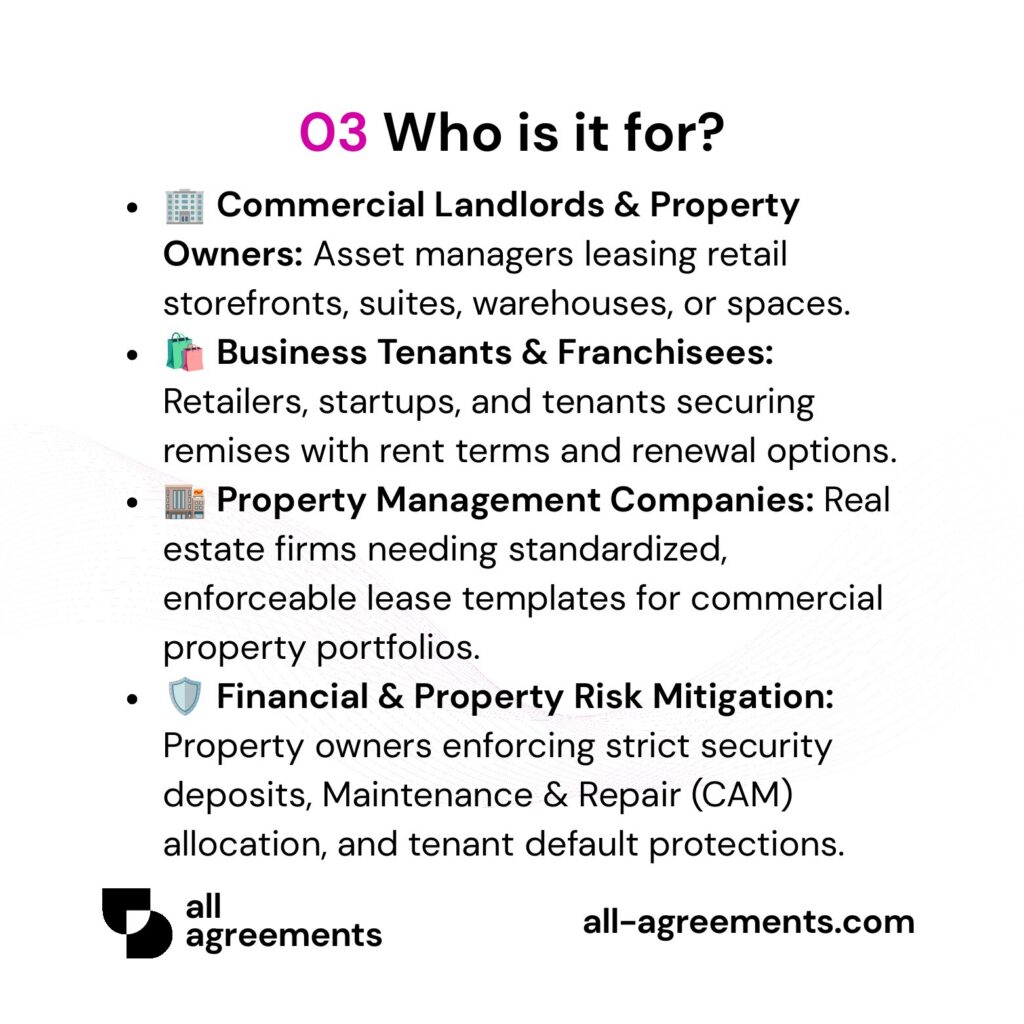
Commercial Lease Agreement
Create a custom Commercial Lease Agreement designed around your commercial property, business operations, and landlord-tenant responsibilities.
Clearly define rent terms, permitted use, maintenance obligations, operating expenses, renewal options, and commercial lease protections in one professional agreement.
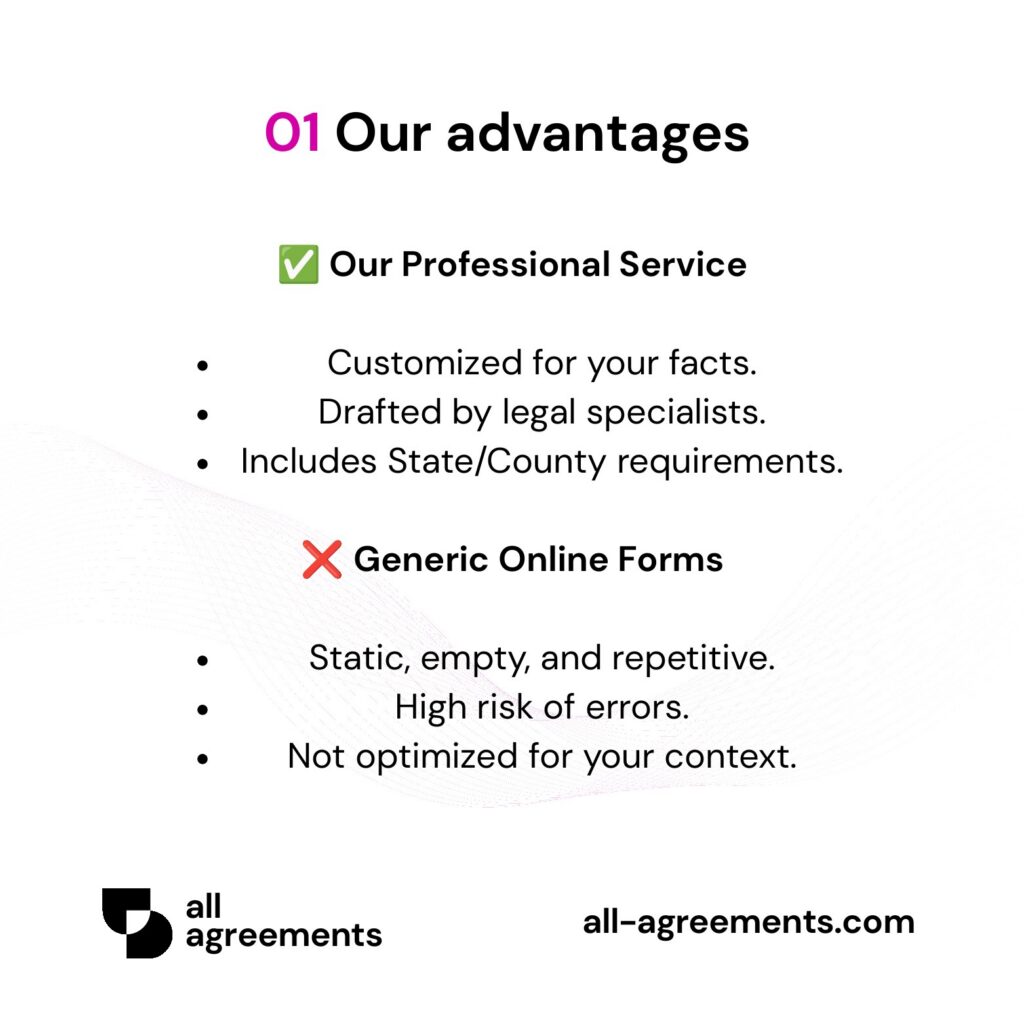
- Custom-Prepared Document: Structured using the commercial property, landlord, tenant, rental terms, and business requirements you provide.
- Complete Lease Structure: Document rent obligations, security deposits, maintenance duties, insurance requirements, property expenses, and renewal provisions.
- Commercial Property Protection: Address tenant responsibilities, landlord rights, default terms, termination procedures, dispute resolution, and additional lease provisions.
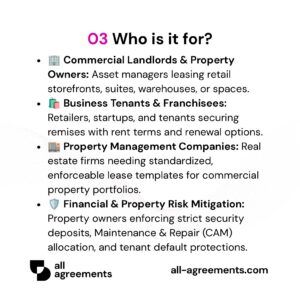
💡 Designed for landlords, tenants, investors, and commercial real estate professionals throughout the United States and adaptable to the governing state law and specific leasing arrangement selected by the parties.
What Are Contract Clauses?
A contract clause is a section of a legal agreement that addresses a particular issue or obligation. Together, these clauses form the complete contract and determine how the agreement will operate.
Contract clauses may explain:
- The parties’ responsibilities
- Payment obligations
- Project deadlines
- Confidentiality requirements
- Methods for resolving disputes
- Conditions for ending the agreement
- Liability limitations
- Ownership of property or intellectual property
Each clause should be read carefully because even a short provision can significantly affect the rights of the parties.
Why Contract Clauses Matter
Every clause contributes to the overall agreement. Missing or poorly written provisions can create uncertainty or lead to disagreements.
Well-drafted contract clauses help:
- Clarify expectations
- Reduce misunderstandings
- Allocate responsibilities
- Manage legal and financial risks
- Protect valuable assets
- Provide procedures for resolving disputes
- Create predictable business relationships
Understanding these provisions before signing helps avoid unexpected obligations later.
Common Contract Clauses Explained
1. Parties Clause
The parties clause identifies everyone entering into the agreement.
It typically includes:
- Full legal names
- Business names, if applicable
- Addresses
- Legal entity type
Correct identification ensures the proper parties are legally bound by the contract.
2. Scope of Work Clause
The scope of work describes exactly what services, products, or obligations are included.
It may define:
- Specific tasks
- Deliverables
- Project objectives
- Excluded services
- Performance standards
A detailed scope helps prevent disagreements about what was promised.
3. Payment Clause
The payment clause explains how compensation will be handled.
It commonly includes:
- Payment amount
- Due dates
- Payment methods
- Deposit requirements
- Installment schedules
- Late payment provisions
Clear payment terms help reduce billing disputes.
4. Term Clause
The term clause explains how long the agreement will remain in effect.
It may include:
- Start date
- End date
- Automatic renewal provisions
- Extension options
Knowing the contract term helps both parties plan accordingly.
5. Termination Clause
A termination clause explains how the agreement may end before completion.
It often addresses:
- Notice requirements
- Material breach
- Mutual agreement
- Failure to perform
- Immediate termination events
Clear termination procedures help reduce uncertainty if the relationship ends early.
6. Confidentiality Clause
Many agreements include confidentiality obligations.
A confidentiality clause may protect:
- Business strategies
- Customer information
- Financial data
- Trade secrets
- Product development
- Proprietary processes
These provisions help prevent unauthorized disclosure of sensitive information.
7. Non-Disclosure Clause
Although often similar to confidentiality clauses, a non-disclosure clause specifically restricts sharing protected information with unauthorized parties.
It commonly defines:
- Confidential information
- Permitted disclosures
- Exclusions
- Duration of confidentiality
Businesses frequently use these clauses during negotiations and service relationships.
8. Intellectual Property Clause
This clause determines ownership of creative or technical work produced under the agreement.
It may address:
- Copyright ownership
- Software
- Designs
- Written content
- Trademarks
- Inventions
- Licensing rights
Freelancers, consultants, and software developers should pay close attention to these provisions.
9. Warranties Clause
Warranty clauses describe promises made about goods, services, or performance.
They may address:
- Product quality
- Workmanship
- Compliance with specifications
- Performance standards
Some contracts also include warranty disclaimers that limit certain guarantees.
10. Limitation of Liability Clause
A limitation of liability clause attempts to define the extent of financial responsibility if problems arise.
It may limit liability for:
- Indirect damages
- Consequential losses
- Lost profits
- Certain categories of claims
The enforceability of these clauses depends on applicable law and the circumstances.
11. Indemnification Clause
An indemnification clause explains when one party agrees to compensate another for specified losses or claims.
It may address:
- Third-party lawsuits
- Property damage
- Negligence
- Contract violations
These clauses allocate certain legal risks between the parties.
12. Force Majeure Clause
A force majeure clause addresses events beyond a party’s reasonable control.
Examples may include:
- Natural disasters
- Floods
- Hurricanes
- Earthquakes
- War
- Government actions
- Major supply disruptions
This clause may excuse or delay performance when extraordinary events occur.
13. Dispute Resolution Clause
This clause explains how disagreements will be resolved.
Common methods include:
- Direct negotiation
- Mediation
- Arbitration
- Court litigation
Clearly defining the process can reduce uncertainty if a dispute arises.
14. Governing Law Clause
A governing law clause specifies which jurisdiction’s laws will apply to the contract.
It commonly identifies:
- State law
- National law
- Applicable legal jurisdiction
This clause is especially important when parties are located in different states or countries.
15. Venue Clause
A venue clause identifies where legal proceedings will take place if litigation becomes necessary.
It may specify:
- County
- State
- Federal court
- Arbitration location
This provision can significantly affect the convenience and cost of resolving disputes.
16. Assignment Clause
The assignment clause explains whether one party may transfer its rights or obligations to another person or business.
It may:
- Permit assignments
- Restrict assignments
- Require written consent
Businesses often use this clause to control who may assume contractual obligations.
17. Amendment Clause
An amendment clause describes how the contract may be modified.
Most agreements require:
- Written amendments
- Mutual agreement
- Signatures from both parties
This helps prevent disagreements over informal verbal changes.
18. Entire Agreement Clause
An entire agreement clause states that the written contract represents the complete understanding between the parties.
Its purpose is to prevent earlier discussions or informal promises from overriding the written agreement.
19. Severability Clause
A severability clause explains what happens if one provision is found unenforceable.
Typically, if one clause becomes invalid, the remainder of the contract continues in effect whenever possible.
20. Notice Clause
A notice clause establishes how official communications must be delivered.
It may specify:
- Certified mail
- Personal delivery
- Business addresses
- Required response periods
Proper notice procedures help ensure important communications are documented.
How to Review Contract Clauses
Before signing any agreement:
- Read every clause carefully
- Confirm the scope of work
- Verify payment terms
- Review deadlines
- Understand termination rights
- Check confidentiality obligations
- Review intellectual property ownership
- Understand dispute resolution procedures
- Confirm governing law
- Identify any unusual or one-sided provisions
Careful review helps reduce misunderstandings and unexpected obligations.
Common Mistakes When Reading Contracts
People often make mistakes by:
- Reading only the payment section
- Ignoring boilerplate clauses
- Assuming standard wording has the same meaning in every contract
- Overlooking renewal provisions
- Missing termination deadlines
- Ignoring liability limitations
- Failing to review intellectual property ownership
- Signing without asking questions
Every clause deserves careful attention because small details can have significant legal and financial consequences.
Frequently Asked Questions
What Is the Most Important Clause in a Contract?
There is no single most important clause. Payment, scope of work, termination, liability, and dispute resolution provisions are often among the most significant, depending on the type of agreement.
Can Contract Clauses Be Negotiated?
Many contract clauses can be negotiated before the agreement is signed, especially in business transactions.
What Happens If a Contract Clause Is Unclear?
Unclear language may create disputes about the parties’ intentions. Clear drafting helps reduce ambiguity.
Are Boilerplate Clauses Important?
Yes. Standard provisions such as governing law, entire agreement, severability, and notice clauses can have important legal consequences even though they often appear near the end of a contract.
Should Every Contract Be Reviewed Carefully?
Yes. Every agreement should be reviewed carefully to ensure you understand your rights, responsibilities, deadlines, and potential risks before signing.
Conclusion
Contract clauses are the building blocks of every legal agreement. Each provision serves a specific purpose, from defining payment obligations and project responsibilities to protecting confidential information and establishing procedures for resolving disputes.
Understanding common contract clauses allows individuals and businesses to review agreements more effectively, recognize potential risks, and make informed decisions before entering into legally binding relationships.
A well-written contract is more than a collection of legal terms—it is a roadmap that clearly explains how the relationship will work, what each party is expected to do, and how potential issues will be handled if they arise.

On sale products
-
Rent Receipt Template
Original price was: $14.99.$5.99Current price is: $5.99. -
Move-In Checklist
Original price was: $19.99.$8.99Current price is: $8.99. -
Move-Out Checklist
Original price was: $19.99.$8.99Current price is: $8.99. -
Landlord Reference Letter
Original price was: $19.99.$8.99Current price is: $8.99. -
Tenant Reference Letter
Original price was: $19.99.$8.99Current price is: $8.99.


Legal Document Preparation Services (A-J)
A
Affidavit Template Preparation Service
Agency Agreement Preparation Service
Asset Purchase Agreement Preparation Service
B
Bill of Sale Preparation Service
Boat Bill of Sale Preparation Service
Business Loan Agreement Preparation Service
Business Partnership Agreement Preparation Service
C
Character Reference Letter Preparation Service
Child Care Authorization Preparation Service
Child Support Agreement Preparation Service
Co-Parenting Agreement Preparation Service
Commercial Lease Agreement Preparation Service
Commercial Property Lease Preparation Service
Commission Agreement Preparation Service
Consent Form Preparation Service
Consulting Agreement Preparation Service
Construction Contract Preparation Service
Contractor Agreement Preparation Service
D
Debt Settlement Agreement Preparation Service
Deed Transfer Form Preparation Service
Demand Letter Preparation Service
E
Easement Agreement Preparation Service
Early Lease Termination Letter Preparation Service
Electrical Contract Preparation Service
Employee Handbook Preparation Service
Employment Contract Preparation Service
Eviction Notice Preparation Service
F
Franchise Agreement Preparation Service
G
Gift Letter Preparation Service
Guardianship Form Preparation Service
H
HOA Agreement Preparation Service
Home Improvement Agreement Preparation Service
Home Inspection Checklist Preparation Service
I
Independent Contractor Agreement Preparation Service
Internship Agreement Preparation Service
J
Joint Venture Agreement Preparation Service
Legal Document Preparation Services (L-Q)
L
Landlord Reference Letter Preparation Service
Last Will and Testament Preparation Service
Late Rent Notice Preparation Service
Lease Extension Agreement Preparation Service
Lease Renewal Agreement Preparation Service
Lease Termination Agreement Preparation Service
Letter of Intent Preparation Service
Listing Agreement Preparation Service
Living Will Preparation Service
M
Medical Power of Attorney Preparation Service
Month-to-Month Lease Agreement Preparation Service
Move-In Checklist Preparation Service
Move-Out Checklist Preparation Service
Motorcycle Bill of Sale Preparation Service
Mutual NDA Preparation Service
N
Name Change Letter Preparation Service
NDA Agreement Preparation Service
Non-Compete Agreement Preparation Service
Notice to Quit Preparation Service
O
Operating Agreement Preparation Service
P
Parking Space Rental Agreement Preparation Service
Personal Loan Agreement Preparation Service
Personal Property Agreement Preparation Service
Pet Addendum Preparation Service
Plumbing Contract Preparation Service
Power of Attorney Preparation Service
Promissory Note Preparation Service
Property Disclosure Form Preparation Service
Property Investment Agreement Preparation Service
Property Maintenance Agreement Preparation Service
Property Management Agreement Preparation Service
Property Management Contract Preparation Service
Property Sale Contract Preparation Service
Purchase Agreement Preparation Service
Q
Quitclaim Deed Preparation Service
Legal Document Preparation Services (R-W)
R
Real Estate Agent Agreement Preparation Service
Real Estate Commission Agreement Preparation Service
Real Estate Purchase Agreement Preparation Service
Remodeling Agreement Preparation Service
Rent Increase Notice Preparation Service
Rent Receipt Preparation Service
Rental Application Form Preparation Service
Residential Lease Agreement Preparation Service
Residential Property Lease Preparation Service
Room Rental Agreement Preparation Service
Roommate Agreement Preparation Service
Roofing Contract Preparation Service
S
Sales Agreement Preparation Service
Security Deposit Agreement Preparation Service
Separation Agreement Preparation Service
Service Agreement Preparation Service
Shareholder Agreement Preparation Service
Simple Rent Agreement Preparation Service
Sublease Agreement Preparation Service
Supplier Agreement Preparation Service
T
Tenant Reference Letter Preparation Service
Travel Consent Form Preparation Service
V
Vacation Rental Agreement Preparation Service
Vehicle Bill of Sale Preparation Service
Vendor Agreement Preparation Service
W
Warranty Deed Preparation Service

