



Business Loan Agreement
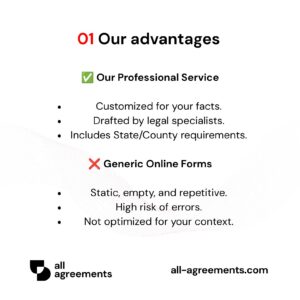
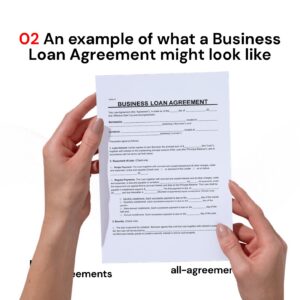
Document business financing clearly with a custom-prepared US Business Loan Agreement structured around your specific lending terms.
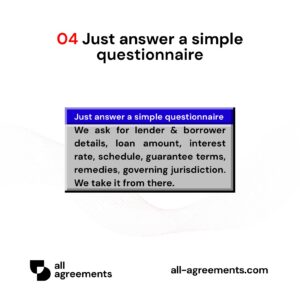
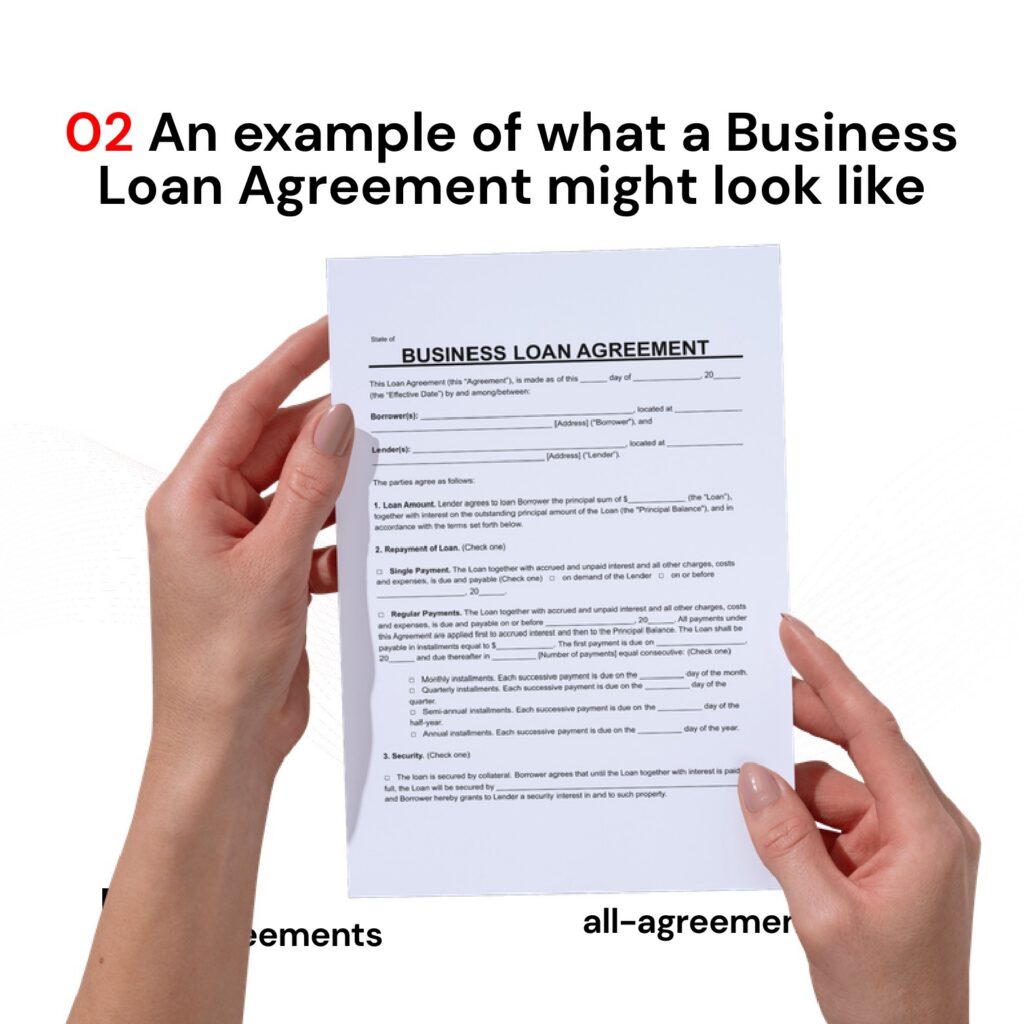
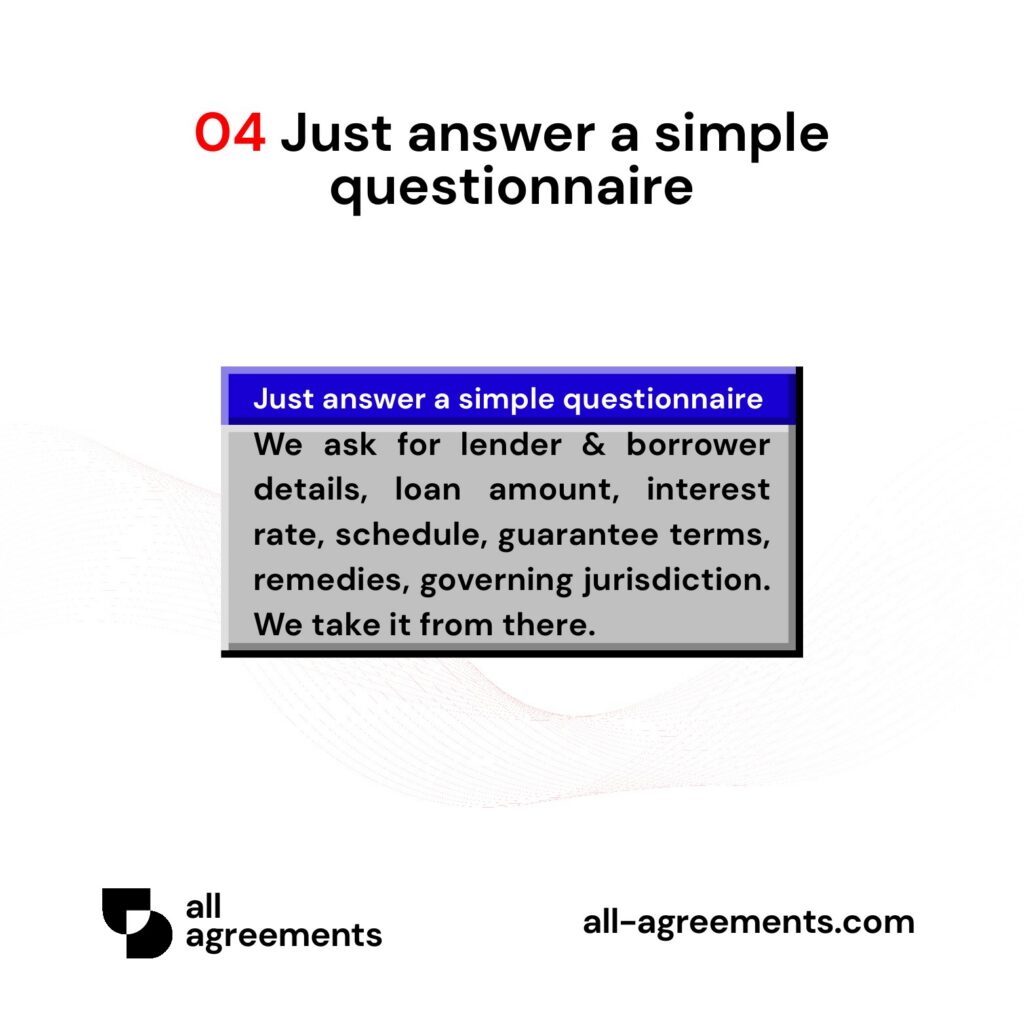
Define the loan amount, interest rate, repayment schedule, collateral, guarantees, default provisions, and key responsibilities in one professional agreement.
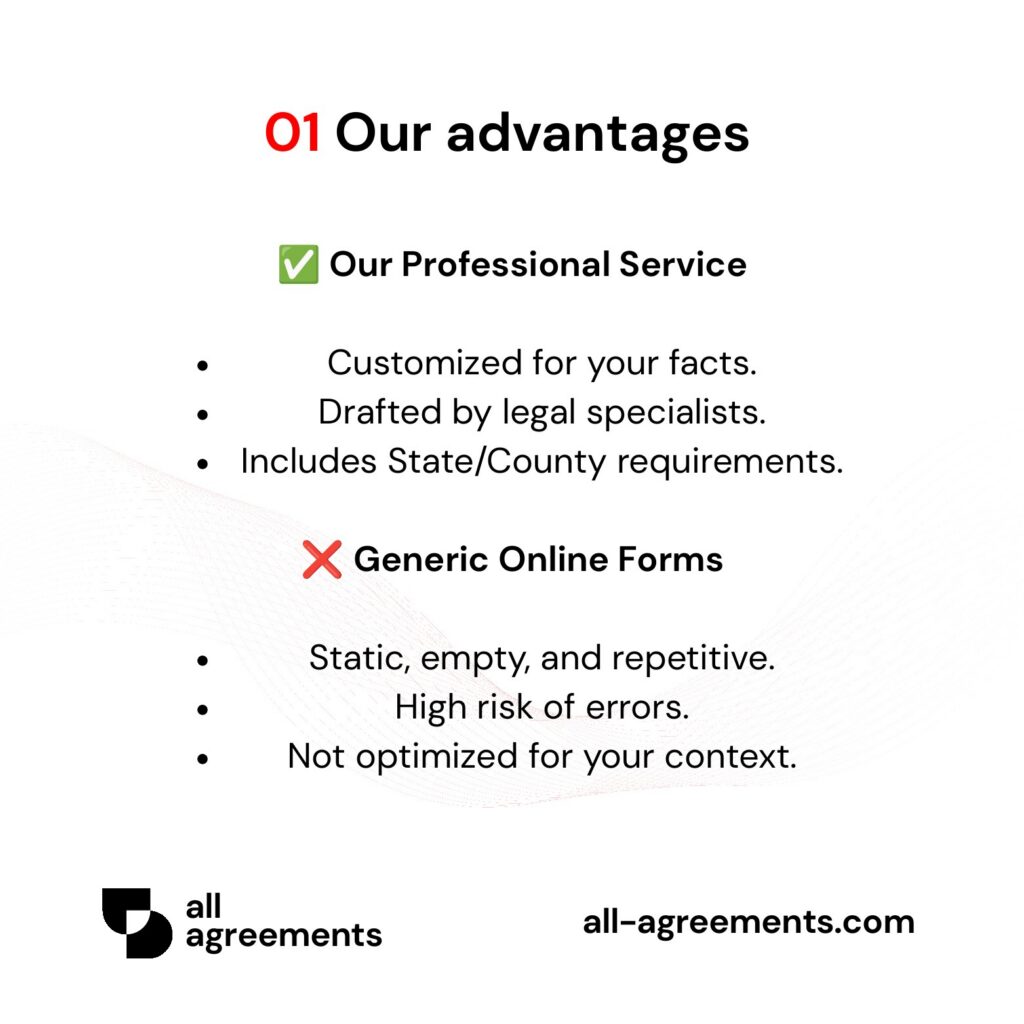
- Custom-Prepared Document: Structured using the lender, borrower, loan, repayment, and business information you provide.
- Clear Financing Terms: Document interest, payment dates, maturity, permitted use of funds, prepayment, late fees, and reporting duties.
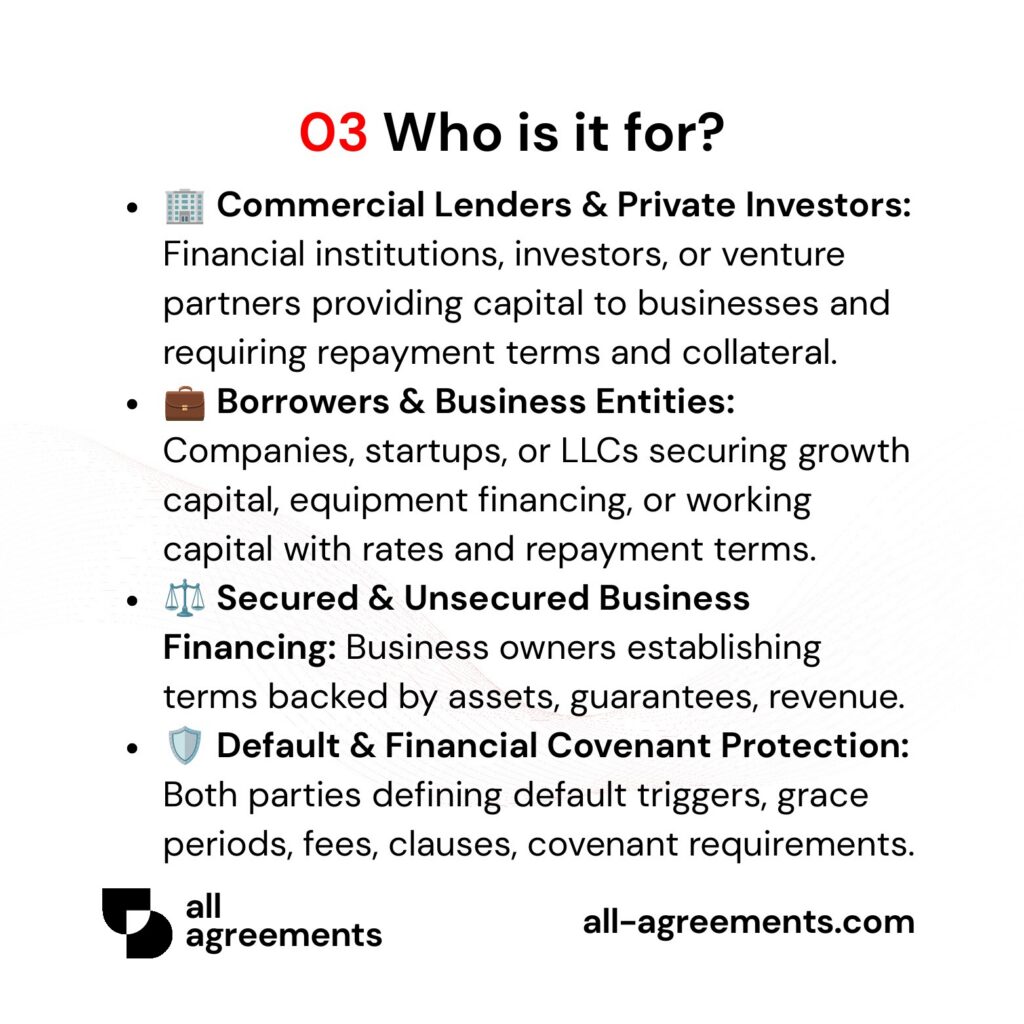
- Lender and Borrower Protection: Address collateral, personal guarantees, default events, remedies, and additional commercial obligations.
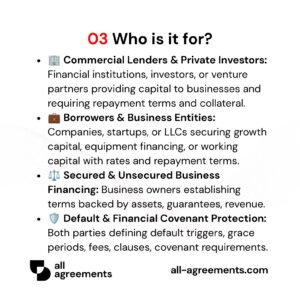
💡 Designed for business lenders and borrowers throughout the United States and adaptable to the governing law and specific financing terms selected by the parties.
Why Proper Legal Document Preparation Matters
Legal documents often determine how important relationships, transactions, and responsibilities are handled. Poorly prepared documents may create confusion, disputes, or unintended obligations.
Proper preparation helps:
- Clearly define agreements
- Protect legal rights
- Document important decisions
- Establish responsibilities
- Reduce potential disputes
- Create reliable records
- Improve professional credibility
A carefully prepared document provides clarity for everyone involved.
Step-by-Step Guide to Preparing Legal Documents
1. Identify the Purpose of the Document
Before creating any legal document, determine exactly what the document needs to accomplish.
Ask:
- What is the purpose of this document?
- Who are the parties involved?
- What rights or obligations need to be established?
- What problem or transaction does it address?
Examples of legal documents include:
- Service Agreements
- Lease Agreements
- Purchase Agreements
- Business Contracts
- Employment Agreements
- Property Documents
- Legal Notices
- Authorization Forms
Understanding the purpose helps determine what information should be included.
2. Identify the Parties Involved
Every legal document should clearly identify the individuals or organizations involved.
Include:
- Full legal names
- Business names
- Addresses
- Contact information
- Entity information, if applicable
Accurate identification helps prevent confusion about who is bound by the document.
3. Gather Required Information
Before drafting the document, collect all necessary details.
Depending on the document type, this may include:
- Names and contact details
- Dates
- Addresses
- Payment information
- Property descriptions
- Service details
- Deadlines
- Responsibilities
- Supporting documents
Having complete information helps avoid missing important terms.
4. Choose the Correct Document Format
Different situations require different types of documents.
Examples:
Business Relationships
Common documents include:
- Service Agreements
- Partnership Agreements
- Vendor Agreements
- Independent Contractor Agreements
Real Estate Matters
Common documents include:
- Purchase Agreements
- Lease Agreements
- Deeds
- Property Disclosure Forms
Personal Matters
Common documents include:
- Power of Attorney
- Affidavits
- Personal Loan Agreements
- Authorization Forms
Using the appropriate document type ensures the agreement addresses the correct issues.
5. Create a Clear Title
The title should describe the purpose of the document.
Examples:
- Residential Lease Agreement
- Independent Contractor Agreement
- Property Management Agreement
- Confidentiality Agreement
- Contract Amendment
A clear title makes the document easier to identify and organize.
6. Write a Clear Introduction
The introduction explains who is entering the agreement and why.
It usually includes:
- Date of agreement
- Names of parties
- Purpose of the document
- Relationship between parties
The opening section establishes the foundation of the document.
7. Define Terms and Definitions
Some legal documents include a definitions section.
This section explains important terms used throughout the document.
Examples:
- “Services”
- “Property”
- “Client”
- “Contractor”
- “Confidential Information”
- “Effective Date”
Clear definitions reduce confusion.
8. Describe Rights and Responsibilities
One of the most important parts of any legal document is explaining what each party must do.
Include:
- Required actions
- Deliverables
- Responsibilities
- Restrictions
- Performance expectations
Each party should understand their obligations.
9. Include Payment Terms When Necessary
If money is involved, clearly explain financial arrangements.
Include:
- Amount owed
- Payment schedule
- Payment method
- Deposits
- Late fees
- Refund terms
Clear payment provisions help prevent financial disputes.
10. Add Important Dates and Deadlines
Specify all relevant timing requirements.
Include:
- Effective date
- Completion dates
- Renewal dates
- Payment deadlines
- Notice periods
Dates should be specific and easy to understand.
11. Include Termination Provisions
Many legal documents should explain how the relationship can end.
A termination section may include:
- Reasons for termination
- Required notice
- Final obligations
- Payment responsibilities
- Return of property or materials
Clear termination terms help avoid confusion.
12. Add Confidentiality Provisions When Needed
If sensitive information is involved, include confidentiality terms.
These may protect:
- Business information
- Customer data
- Financial information
- Trade secrets
- Private records
Confidentiality provisions help protect valuable information.
13. Address Ownership and Intellectual Property
For documents involving creative work or business assets, explain ownership rights.
Consider:
- Who owns completed work
- Licensing rights
- Copyright ownership
- Use restrictions
- Transfer of rights
This is especially important for freelancers, designers, developers, and businesses.
14. Include Dispute Resolution Terms
A legal document may explain how disagreements will be handled.
Possible methods include:
- Negotiation
- Mediation
- Arbitration
- Court proceedings
A dispute resolution clause provides a plan if problems arise.
15. Include Governing Law Information
Many agreements identify which laws apply.
This section may specify:
- State
- Country
- Jurisdiction
This is especially important when parties are located in different areas.
16. Review the Document Carefully
Before signing, check:
- Names
- Dates
- Numbers
- Responsibilities
- Payment terms
- Deadlines
- Attachments
- Signature sections
Small mistakes can create significant problems.
17. Remove Unclear Language
Legal documents should be specific and understandable.
Avoid:
- Vague descriptions
- Conflicting terms
- Undefined responsibilities
- Ambiguous deadlines
Clear writing improves enforceability and reduces disputes.
18. Add Signature Sections
Most legal documents require signatures.
Include:
- Printed names
- Signature lines
- Dates
- Titles or positions, if applicable
Signatures confirm acceptance of the agreement.
19. Include Witnesses or Notarization When Required
Some documents may require additional verification.
Examples include:
- Deeds
- Certain affidavits
- Some authorization documents
Requirements depend on the document type and applicable laws.
20. Store and Maintain Records
After completion:
- Keep signed copies
- Store digital versions
- Organize related documents
- Track amendments
- Maintain communication records
Good recordkeeping helps protect your interests.
Common Legal Documents and Their Preparation Requirements
Contract Agreements
Examples:
- Service Agreements
- Sales Agreements
- Partnership Agreements
Usually include:
- Parties
- Services or goods
- Payment terms
- Responsibilities
- Termination provisions
Lease Agreements
Usually include:
- Landlord and tenant information
- Property details
- Rent amount
- Security deposit
- Lease duration
- Rules and responsibilities
Business Agreements
Usually include:
- Ownership information
- Business obligations
- Financial arrangements
- Confidentiality terms
- Dispute procedures
Property Documents
Usually include:
- Property description
- Ownership information
- Transfer terms
- Legal descriptions
- Required signatures
Common Mistakes When Preparing Legal Documents
People often make mistakes by:
- Using the wrong document type
- Leaving important sections incomplete
- Copying outdated templates
- Failing to identify all parties
- Forgetting payment details
- Ignoring termination terms
- Not including signatures
- Not keeping copies
Careful preparation helps avoid these common issues.
Tips for Creating Better Legal Documents
Use Clear Language
Legal documents should be precise but understandable.
Be Specific
Avoid general statements that can create multiple interpretations.
Include Important Details
A complete document should address:
- Who
- What
- When
- Where
- How
- Responsibilities
- Consequences
Update Documents Regularly
Agreements should reflect current circumstances.
Review documents when:
- Business relationships change
- Services expand
- Ownership changes
- Laws change
- New obligations arise
Frequently Asked Questions
What Makes a Legal Document Valid?
A legal document generally requires clear agreement between parties, identification of the parties, specific terms, and proper execution according to applicable requirements.
Can I Prepare My Own Legal Documents?
Many individuals and businesses prepare their own documents using templates or document preparation services. More complex matters may require additional review.
What Information Should Every Legal Document Include?
Most documents should identify the parties, explain the purpose, define responsibilities, include important terms, and contain signature sections.
Should Legal Documents Be Written in Simple Language?
Yes. Clear language helps all parties understand their rights and obligations.
How Should Legal Documents Be Stored?
Keep signed copies securely in both digital and physical formats when possible.
Conclusion
Knowing how to prepare legal documents is an important skill for individuals and businesses. Proper preparation involves identifying the purpose, gathering accurate information, defining responsibilities, including important terms, and ensuring that all parties understand the agreement.
A well-prepared legal document creates clarity, protects rights, and provides a reliable record of important transactions and relationships.
Whether you are preparing a business contract, lease agreement, property document, or personal legal form, careful planning and attention to detail are essential for creating documents that effectively communicate the intentions of all parties involved.

On sale products
-
Rent Receipt Template
Original price was: $14.99.$5.99Current price is: $5.99. -
Move-In Checklist
Original price was: $19.99.$8.99Current price is: $8.99. -
Move-Out Checklist
Original price was: $19.99.$8.99Current price is: $8.99. -
Landlord Reference Letter
Original price was: $19.99.$8.99Current price is: $8.99. -
Tenant Reference Letter
Original price was: $19.99.$8.99Current price is: $8.99.


Legal Document Preparation Services (A-J)
A
Affidavit Template Preparation Service
Agency Agreement Preparation Service
Asset Purchase Agreement Preparation Service
B
Bill of Sale Preparation Service
Boat Bill of Sale Preparation Service
Business Loan Agreement Preparation Service
Business Partnership Agreement Preparation Service
C
Character Reference Letter Preparation Service
Child Care Authorization Preparation Service
Child Support Agreement Preparation Service
Co-Parenting Agreement Preparation Service
Commercial Lease Agreement Preparation Service
Commercial Property Lease Preparation Service
Commission Agreement Preparation Service
Consent Form Preparation Service
Consulting Agreement Preparation Service
Construction Contract Preparation Service
Contractor Agreement Preparation Service
D
Debt Settlement Agreement Preparation Service
Deed Transfer Form Preparation Service
Demand Letter Preparation Service
E
Easement Agreement Preparation Service
Early Lease Termination Letter Preparation Service
Electrical Contract Preparation Service
Employee Handbook Preparation Service
Employment Contract Preparation Service
Eviction Notice Preparation Service
F
Franchise Agreement Preparation Service
G
Gift Letter Preparation Service
Guardianship Form Preparation Service
H
HOA Agreement Preparation Service
Home Improvement Agreement Preparation Service
Home Inspection Checklist Preparation Service
I
Independent Contractor Agreement Preparation Service
Internship Agreement Preparation Service
J
Joint Venture Agreement Preparation Service
Legal Document Preparation Services (L-Q)
L
Landlord Reference Letter Preparation Service
Last Will and Testament Preparation Service
Late Rent Notice Preparation Service
Lease Extension Agreement Preparation Service
Lease Renewal Agreement Preparation Service
Lease Termination Agreement Preparation Service
Letter of Intent Preparation Service
Listing Agreement Preparation Service
Living Will Preparation Service
M
Medical Power of Attorney Preparation Service
Month-to-Month Lease Agreement Preparation Service
Move-In Checklist Preparation Service
Move-Out Checklist Preparation Service
Motorcycle Bill of Sale Preparation Service
Mutual NDA Preparation Service
N
Name Change Letter Preparation Service
NDA Agreement Preparation Service
Non-Compete Agreement Preparation Service
Notice to Quit Preparation Service
O
Operating Agreement Preparation Service
P
Parking Space Rental Agreement Preparation Service
Personal Loan Agreement Preparation Service
Personal Property Agreement Preparation Service
Pet Addendum Preparation Service
Plumbing Contract Preparation Service
Power of Attorney Preparation Service
Promissory Note Preparation Service
Property Disclosure Form Preparation Service
Property Investment Agreement Preparation Service
Property Maintenance Agreement Preparation Service
Property Management Agreement Preparation Service
Property Management Contract Preparation Service
Property Sale Contract Preparation Service
Purchase Agreement Preparation Service
Q
Quitclaim Deed Preparation Service
Legal Document Preparation Services (R-W)
R
Real Estate Agent Agreement Preparation Service
Real Estate Commission Agreement Preparation Service
Real Estate Purchase Agreement Preparation Service
Remodeling Agreement Preparation Service
Rent Increase Notice Preparation Service
Rent Receipt Preparation Service
Rental Application Form Preparation Service
Residential Lease Agreement Preparation Service
Residential Property Lease Preparation Service
Room Rental Agreement Preparation Service
Roommate Agreement Preparation Service
Roofing Contract Preparation Service
S
Sales Agreement Preparation Service
Security Deposit Agreement Preparation Service
Separation Agreement Preparation Service
Service Agreement Preparation Service
Shareholder Agreement Preparation Service
Simple Rent Agreement Preparation Service
Sublease Agreement Preparation Service
Supplier Agreement Preparation Service
T
Tenant Reference Letter Preparation Service
Travel Consent Form Preparation Service
V
Vacation Rental Agreement Preparation Service
Vehicle Bill of Sale Preparation Service
Vendor Agreement Preparation Service
W
Warranty Deed Preparation Service

