





Last Will and Testament
Last Will and Testament preparation for U.S. individuals organizing beneficiaries, executors, asset distribution, guardianship nominations, and final wishes.
Document specific gifts, the residuary estate, minor beneficiary instructions, debts, charitable gifts, funeral wishes, and important estate planning details.
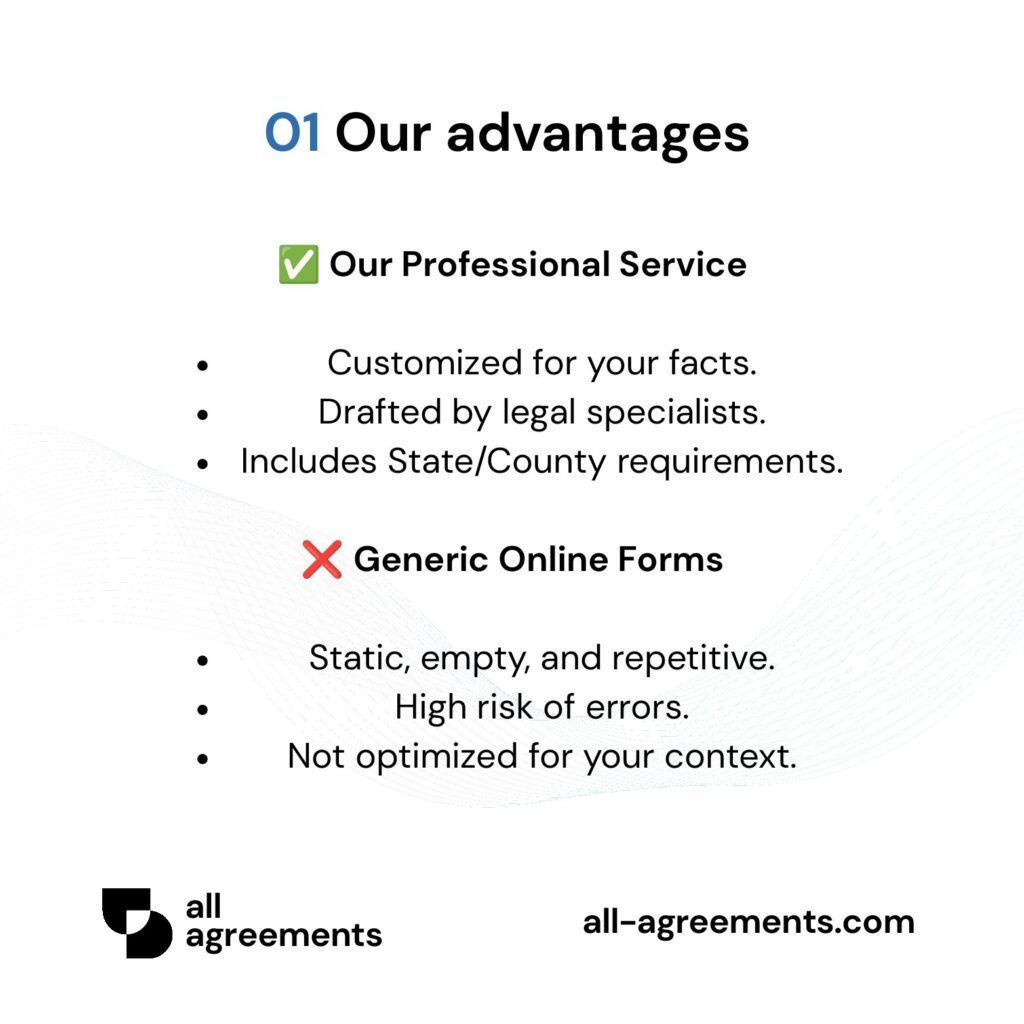
- Custom-Prepared Will and Testament: Structured using the Testator, family, beneficiary, executor, asset, guardian, and estate information you provide.
- Clear Asset Distribution: Organize real estate, financial accounts, vehicles, personal property, business interests, specific gifts, and the residuary estate.
- Family and Final Instructions: Address minor children, guardian nominations, trusts, debts, funeral wishes, charitable gifts, prior wills, witnesses, and execution details.
💡 Need more information before ordering? Explore our full Last Will and Testament Preparation Service.
What Is a Last Will and Testament?
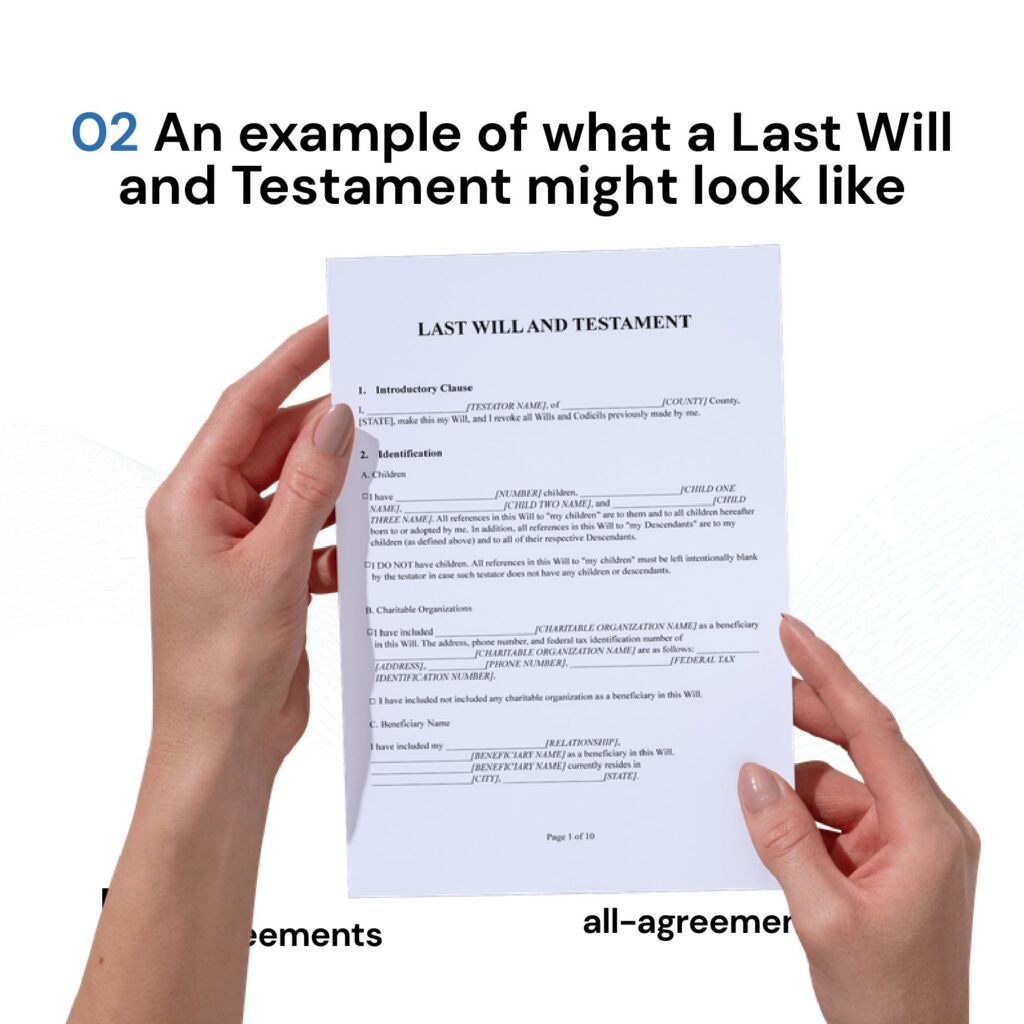
A Last Will and Testament is a legal document that describes how a person’s assets and responsibilities should be handled after their death.
The person creating the Will is called the testator. The person responsible for carrying out the instructions in the Will is called the executor or personal representative.
A Last Will and Testament commonly includes:
- Testator’s information
- Appointment of executor
- Beneficiary designations
- Distribution of property
- Specific gifts
- Guardianship instructions
- Funeral or personal wishes
- Estate administration instructions
- Signature requirements
A Will may address:
- Real estate
- Bank accounts
- Investments
- Vehicles
- Personal belongings
- Business interests
- Family heirlooms
- Digital assets
Last Will and Testament documents are commonly used for:
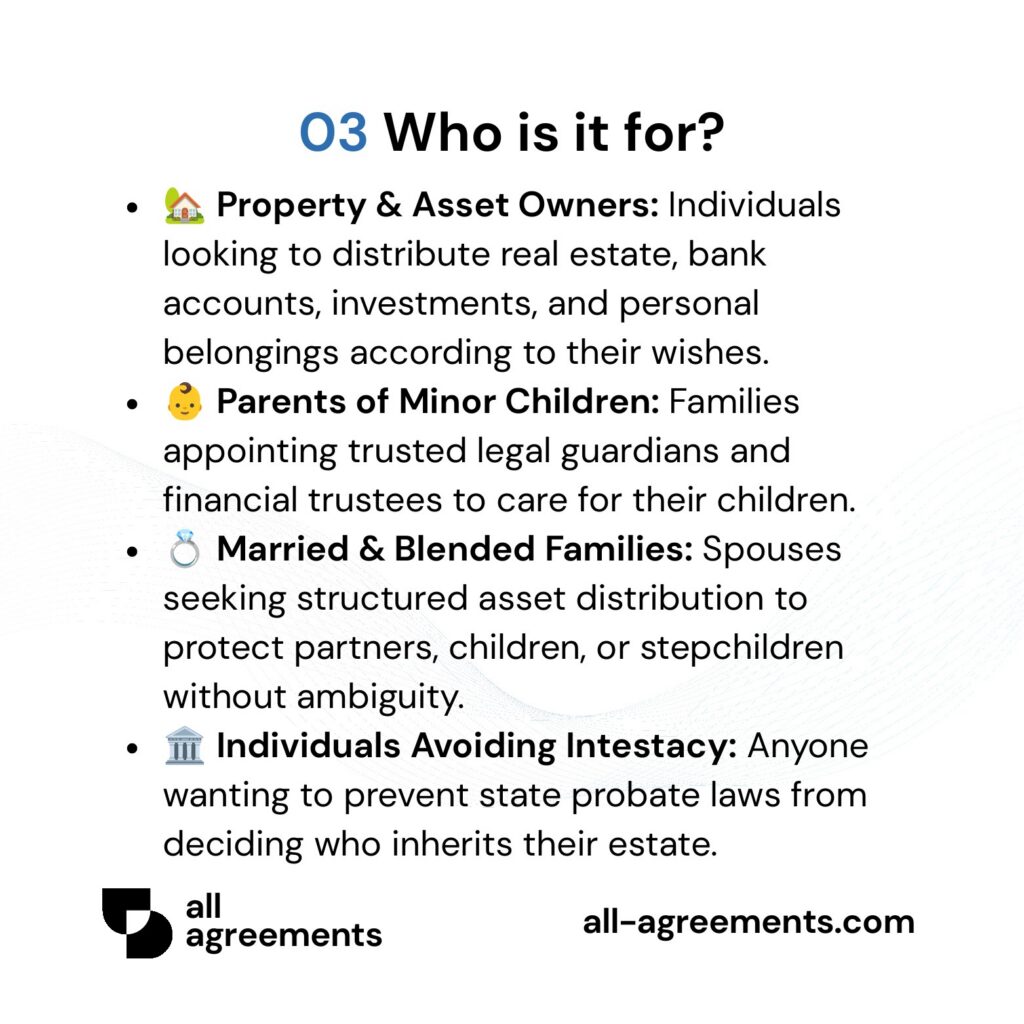
- Individual estate planning
- Family protection
- Asset distribution
- Minor child guardianship planning
- Business succession planning
- Personal property planning
A properly prepared Will helps create a clear plan for the future.
Why a Last Will and Testament Is Important
Without a Will, a person’s estate may be distributed according to state intestacy laws rather than personal wishes.
A Last Will and Testament helps:
- Control how assets are distributed
- Choose beneficiaries
- Appoint a trusted executor
- Name guardians for minor children
- Reduce family disagreements
- Simplify estate administration
- Protect loved ones
A clear Will allows individuals to make important decisions instead of leaving them entirely to state law.
Before You Start Creating a Last Will and Testament
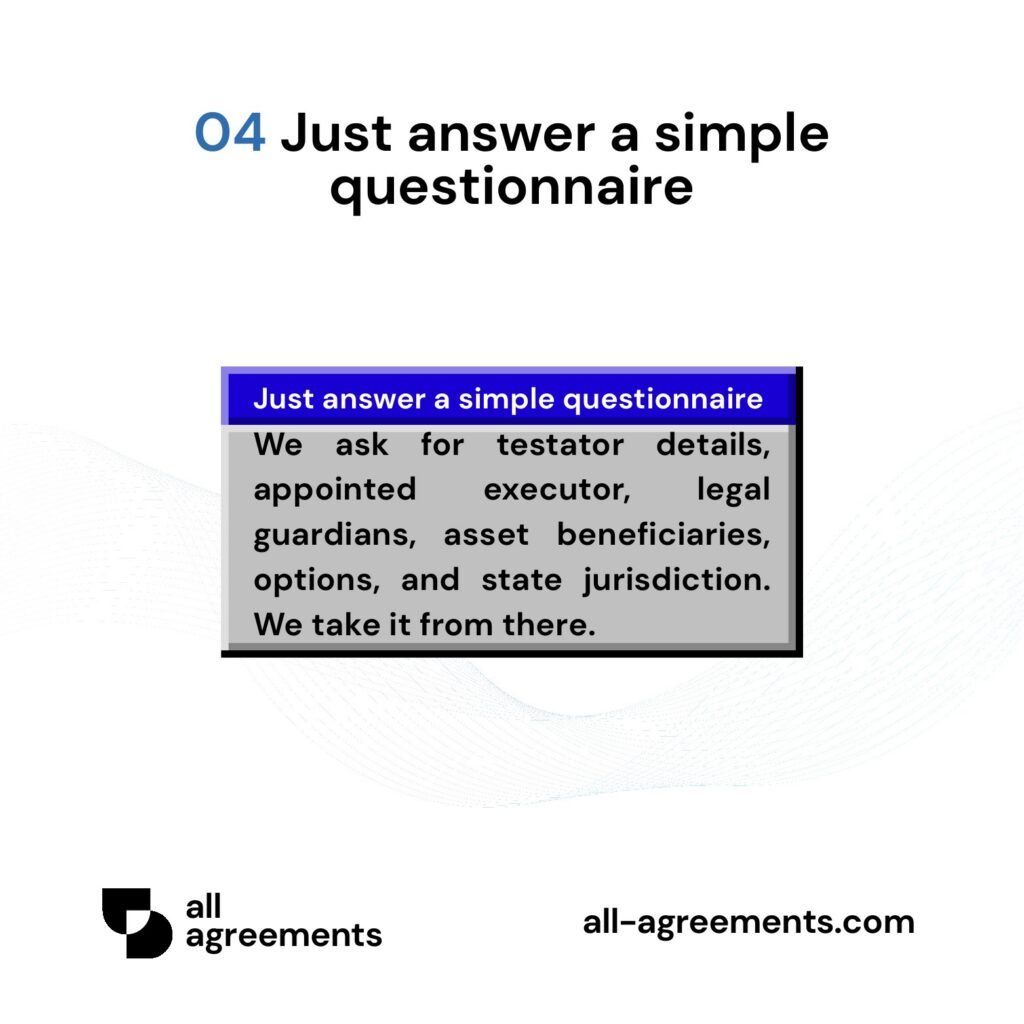
Before preparing a Will, the testator should organize important personal and financial information.
Important details may include:
- Full legal name
- Family information
- List of assets
- Beneficiary information
- Executor selection
- Guardianship preferences
- Special instructions
- Outstanding debts
- Business interests
Creating an inventory of assets and considering personal goals helps create a more complete estate plan.
Step-by-Step Guide to Creating a Last Will and Testament
Step 1. Identify the Testator
The Will should clearly identify the person creating the document.
Include:
- Full legal name
- Address
- State of residence
The document should also confirm that the testator is creating the Will voluntarily and has the legal capacity to do so.
Step 2. Choose an Executor
The executor is responsible for managing the estate after the testator’s death.
The executor’s duties may include:
- Filing the Will with the court
- Collecting estate assets
- Paying debts and expenses
- Managing estate property
- Distributing assets to beneficiaries
- Completing required paperwork
The chosen executor should be someone trustworthy, organized, and capable of handling financial responsibilities.
Step 3. Name Beneficiaries
The Will should identify the people or organizations that will receive assets.
Beneficiaries may include:
- Spouse
- Children
- Family members
- Friends
- Charities
- Other organizations
Include:
- Full legal names
- Relationship to the testator
- Contact information, if desired
- Specific inheritance instructions
Clearly identifying beneficiaries helps reduce confusion during estate administration.
Step 4. List Assets and Property
The Will should explain how important assets should be distributed.
Assets may include:
- Homes and real estate
- Bank accounts
- Investments
- Vehicles
- Jewelry
- Collectibles
- Family heirlooms
- Business interests
The testator may leave:
- Specific gifts
- Percentage shares of the estate
- Remaining assets through a residuary clause
A detailed asset plan helps ensure property is distributed according to personal wishes.
Step 5. Include Specific Gifts
The testator may leave certain items or amounts of money to specific individuals.
Examples include:
- A vehicle to a family member
- Jewelry to a child
- Money to a friend
- Personal belongings to designated beneficiaries
Specific gifts should be described clearly to avoid disputes.
Step 6. Create a Residuary Estate Plan
A residuary clause explains what happens to any remaining assets not specifically listed in the Will.
The residuary estate may include:
- Unlisted property
- Newly acquired assets
- Remaining financial accounts
- Personal belongings
Including a residuary clause helps ensure all property has a designated recipient.
Step 7. Name Guardians for Minor Children
Parents with minor children may use a Will to nominate a guardian.
The guardian may be responsible for:
- Daily care
- Education decisions
- General wellbeing
- Personal development
The testator may also name a backup guardian in case the first choice cannot serve.
Step 8. Address Special Instructions
A Will may include additional instructions regarding personal matters.
Examples include:
- Care of pets
- Funeral preferences
- Digital assets
- Family heirlooms
- Personal messages
While some instructions may not be legally binding in every jurisdiction, documenting preferences can provide valuable guidance.
Step 9. Consider Business Interests
Business owners should consider how ownership interests will be handled.
The Will may address:
- Business ownership shares
- Partnership interests
- Company stock
- Succession planning
Business assets may also be governed by separate agreements, so coordination with other documents is important.
Step 10. Review Estate Planning Considerations
A Will is one part of a complete estate plan.
Individuals may also consider:
- Trusts
- Beneficiary designations
- Life insurance planning
- Retirement account instructions
- Healthcare documents
- Powers of attorney
Reviewing the overall estate plan helps ensure documents work together.
Step 11. Review the Will Before Signing
Before signing, carefully review the entire document.
Important items to verify include:
- Testator information
- Executor selection
- Beneficiary names
- Asset distribution
- Guardianship provisions
- Special instructions
- Signature requirements
A careful review helps ensure the Will accurately reflects personal intentions.
Step 12. Sign the Last Will and Testament
A Will must be properly executed according to applicable state law.
Common requirements may include:
- Testator signature
- Witness signatures
- Notarization in some circumstances
Following legal requirements helps support the validity of the Will.
How to Store a Last Will and Testament
After signing, the original Will should be stored in a safe and accessible location.
Possible storage options include:
- Secure home storage
- Safe deposit box
- Estate planning attorney records
- Trusted document storage service
The executor and trusted family members should know where the document is located.
Keep the Will Updated
A Will should be reviewed periodically and updated after major life events.
Updates may be needed after:
- Marriage
- Divorce
- Birth of children
- Death of beneficiaries
- Significant asset changes
- Business changes
- Moving to another state
Keeping the Will current helps ensure it reflects current wishes.
Common Mistakes to Avoid
When creating a Last Will and Testament, common mistakes include:
- Failing to name an executor
- Forgetting to update beneficiaries
- Using unclear asset descriptions
- Not following signing requirements
- Ignoring minor child guardianship planning
- Failing to account for all assets
- Creating conflicts with other estate documents
- Not storing the Will properly
A carefully prepared Will helps reduce confusion and protects loved ones.
Frequently Asked Questions
What Is the Purpose of a Last Will and Testament?
A Will allows a person to specify how their property should be distributed and who should manage their estate after death.
Is a Will Required?
A Will is not always legally required, but it provides important instructions that may not exist otherwise.
Can a Will Be Changed?
Yes. A person may generally update or replace a Will while they have legal capacity.
Who Can Be an Executor?
An executor can usually be a trusted individual, family member, friend, or professional representative, depending on state law.
What Happens If Someone Dies Without a Will?
If a person dies without a Will, their estate is generally distributed according to state intestacy laws.
Does a Will Need to Be Notarized?
Requirements vary by state. Many states require witness signatures, and some allow notarized self-proving affidavits to simplify probate procedures.
Conclusion
Creating a Last Will and Testament is an important step in protecting loved ones and planning for the future.
A properly prepared Will documents essential decisions such as asset distribution, executor appointment, beneficiary selection, guardianship instructions, and personal wishes.
Before signing a Last Will and Testament, individuals should carefully review their instructions and ensure the document follows applicable state requirements.
A well-prepared Last Will and Testament is more than a legal document—it is an essential estate planning tool that provides control over personal affairs, protects family interests, reduces uncertainty, and ensures important wishes are carried out according to the individual’s intentions.

On sale products
-
Rent Receipt Template
Original price was: $14.99.$5.99Current price is: $5.99. -
Move-In Checklist
Original price was: $19.99.$8.99Current price is: $8.99. -
Move-Out Checklist
Original price was: $19.99.$8.99Current price is: $8.99. -
Landlord Reference Letter
Original price was: $19.99.$8.99Current price is: $8.99. -
Tenant Reference Letter
Original price was: $19.99.$8.99Current price is: $8.99.


Legal Document Preparation Services (A-J)
A
Affidavit Template Preparation Service
Agency Agreement Preparation Service
Asset Purchase Agreement Preparation Service
B
Bill of Sale Preparation Service
Boat Bill of Sale Preparation Service
Business Loan Agreement Preparation Service
Business Partnership Agreement Preparation Service
C
Character Reference Letter Preparation Service
Child Care Authorization Preparation Service
Child Support Agreement Preparation Service
Co-Parenting Agreement Preparation Service
Commercial Lease Agreement Preparation Service
Commercial Property Lease Preparation Service
Commission Agreement Preparation Service
Consent Form Preparation Service
Consulting Agreement Preparation Service
Construction Contract Preparation Service
Contractor Agreement Preparation Service
D
Debt Settlement Agreement Preparation Service
Deed Transfer Form Preparation Service
Demand Letter Preparation Service
E
Easement Agreement Preparation Service
Early Lease Termination Letter Preparation Service
Electrical Contract Preparation Service
Employee Handbook Preparation Service
Employment Contract Preparation Service
Eviction Notice Preparation Service
F
Franchise Agreement Preparation Service
G
Gift Letter Preparation Service
Guardianship Form Preparation Service
H
HOA Agreement Preparation Service
Home Improvement Agreement Preparation Service
Home Inspection Checklist Preparation Service
I
Independent Contractor Agreement Preparation Service
Internship Agreement Preparation Service
J
Joint Venture Agreement Preparation Service
Legal Document Preparation Services (L-Q)
L
Landlord Reference Letter Preparation Service
Last Will and Testament Preparation Service
Late Rent Notice Preparation Service
Lease Extension Agreement Preparation Service
Lease Renewal Agreement Preparation Service
Lease Termination Agreement Preparation Service
Letter of Intent Preparation Service
Listing Agreement Preparation Service
Living Will Preparation Service
M
Medical Power of Attorney Preparation Service
Month-to-Month Lease Agreement Preparation Service
Move-In Checklist Preparation Service
Move-Out Checklist Preparation Service
Motorcycle Bill of Sale Preparation Service
Mutual NDA Preparation Service
N
Name Change Letter Preparation Service
NDA Agreement Preparation Service
Non-Compete Agreement Preparation Service
Notice to Quit Preparation Service
O
Operating Agreement Preparation Service
P
Parking Space Rental Agreement Preparation Service
Personal Loan Agreement Preparation Service
Personal Property Agreement Preparation Service
Pet Addendum Preparation Service
Plumbing Contract Preparation Service
Power of Attorney Preparation Service
Promissory Note Preparation Service
Property Disclosure Form Preparation Service
Property Investment Agreement Preparation Service
Property Maintenance Agreement Preparation Service
Property Management Agreement Preparation Service
Property Management Contract Preparation Service
Property Sale Contract Preparation Service
Purchase Agreement Preparation Service
Q
Quitclaim Deed Preparation Service
Legal Document Preparation Services (R-W)
R
Real Estate Agent Agreement Preparation Service
Real Estate Commission Agreement Preparation Service
Real Estate Purchase Agreement Preparation Service
Remodeling Agreement Preparation Service
Rent Increase Notice Preparation Service
Rent Receipt Preparation Service
Rental Application Form Preparation Service
Residential Lease Agreement Preparation Service
Residential Property Lease Preparation Service
Room Rental Agreement Preparation Service
Roommate Agreement Preparation Service
Roofing Contract Preparation Service
S
Sales Agreement Preparation Service
Security Deposit Agreement Preparation Service
Separation Agreement Preparation Service
Service Agreement Preparation Service
Shareholder Agreement Preparation Service
Simple Rent Agreement Preparation Service
Sublease Agreement Preparation Service
Supplier Agreement Preparation Service
T
Tenant Reference Letter Preparation Service
Travel Consent Form Preparation Service
V
Vacation Rental Agreement Preparation Service
Vehicle Bill of Sale Preparation Service
Vendor Agreement Preparation Service
W
Warranty Deed Preparation Service

