
Understanding a Bill of Sale in Connecticut
A bill of sale is a written document that proves a transfer of ownership of personal property from one person or entity to another. It serves as evidence that a transaction took place and that the buyer has acquired legal rights to the item described in the document.
In Connecticut, bills of sale are commonly used in private transactions where ownership must be clearly documented, especially when no dealership, broker, or formal sales platform is involved.
Unlike real estate transactions, which require extensive documentation and formal closing procedures, bills of sale are typically simpler but still legally significant.
Why Bills of Sale Matter
Even though some personal property sales may seem informal, a written bill of sale provides important protection for both parties.
A bill of sale can help:
- Prove ownership transfer
- Document purchase price and payment terms
- Prevent future disputes between buyer and seller
- Support registration of certain property (such as vehicles, trailers, or vessels)
- Serve as proof of sale for tax or legal purposes (such as establishing sales and use tax owed to the Connecticut Department of Revenue Services / DRS)
In Connecticut, a bill of sale is not merely an informal receipt; for items like motor vehicles, watercraft, and commercial equipment, it is often a key supporting document during state agency registration processes.
Common Types of Property Sold with Bills of Sale
Bills of sale in Connecticut are used for a wide variety of personal property transactions.
Motor Vehicles
Private vehicle sales are one of the most common uses. In Connecticut, an official bill of sale (such as Form H-31 issued by the Connecticut Department of Motor Vehicles / DMV) is frequently required along with title transfer documents when registering a newly purchased used car, truck, or motorcycle.
Boats and Watercraft
Vessel transactions on Connecticut’s inland lakes and coastal waters require proper documentation to record ownership transfer and complete mandatory registration through the Connecticut DMV and Department of Energy and Environmental Protection (DEEP).
Trailers
Utility trailers, travel trailers, and commercial trailers are frequently sold privately throughout Connecticut and documented with a bill of sale for registration and titling with the state DMV.
Equipment and Machinery
Construction equipment, industrial machinery, commercial tools, and agricultural equipment are often transferred using private sale agreements supported by a bill of sale.
Livestock and Personal Goods
In agricultural regions across Connecticut (such as Litchfield, Windham, and New London counties), bills of sale are used for horses, livestock, farm equipment, and other privately sold high-value personal property.
Essential Elements of a Bill of Sale
A properly prepared bill of sale should clearly describe the transaction and include enough detail to prevent confusion later.
Buyer and Seller Information
The document should identify both parties, including:
- Full legal names
- Physical addresses
- Contact information and driver’s license numbers
This ensures that both sides of the transaction are clearly documented.
Description of the Item Sold
A detailed description of the property is essential.
For example:
- Vehicle make, model, and year
- VIN, license plate number, or serial number
- Color and condition
- Odometer reading / mileage (if applicable)
- Equipment specifications
The more precise the description, the stronger the documentation.
Purchase Price and Payment Method
The bill of sale should clearly state:
- Agreed purchase price (or note if it is a gift)
- Payment method (cash, cashier’s check, bank transfer, etc.)
- Whether payment is complete or pending
- Any deposit or installment terms (if applicable)
This helps avoid disputes about whether payment was made in full and assists the DMV in assessing applicable use taxes.
Date of Transfer
The date the ownership is transferred is critical for legal, tax, and liability purposes. It establishes when the buyer becomes responsible for the property and when the seller’s liability ends.
“As-Is” Condition (Common in Connecticut) and Signatures of Both Parties
Many private sales in Connecticut include an “as-is” clause, meaning the buyer accepts the item in its current condition without express or implied warranties from the seller.
This is especially common in:
- Used vehicle sales
- Private machinery and equipment transactions
- General personal property sales
An “as-is” statement helps clarify that the seller is not responsible for future mechanical issues or repairs after the transaction is completed.
A valid bill of sale should be signed and dated by both the buyer and seller. While Connecticut law does not strictly require notarization for standard vehicle transfers, notarization may still be included for high-value items or added security.
Vehicle Bills of Sale in Connecticut
One of the most common uses of a bill of sale in Connecticut is for motor vehicle transactions between private parties. The Connecticut Department of Motor Vehicles (DMV) accepts official state forms such as Form H-31 (Bill of Sale) or standardized written private bills of sale.
In a typical Connecticut vehicle sale, the bill of sale must include:
- Vehicle Identification Number (VIN)
- Make, model, body style, and year
- Purchase price and date of sale
- Odometer reading
- Full printed names, signatures, and addresses of buyer and seller
Having clear written documentation ensures compliance when submitting transfer materials to the Connecticut DMV. Additionally, sellers in Connecticut must retain their license plates (or return them to the DMV) and should cancel their registration to release legal liability upon selling the vehicle.
Bill of Sale vs Vehicle Title
It is important to understand the difference between a bill of sale and a vehicle title, as they serve distinct legal functions.
Vehicle Title
The title (Connecticut Certificate of Title) is the official legal document issued by the State of Connecticut that proves ownership of the vehicle. Transferring the title (with assigned signatures on the back) is the primary legal step in transferring vehicle ownership.
Bill of Sale
The bill of sale is a primary supporting transaction document that:
- Confirms the financial sale officially took place
- Establishes the chain of ownership if title lines are full or if additional proof is needed
- Records the agreed purchase price for state sales and use tax calculation by the DMV/DRS
- Documents transaction terms and dates
In Connecticut, both the signed Title and a Bill of Sale (Form H-31) are routinely presented together to complete DMV registration and titling.
When a Bill of Sale Is Required
In Connecticut, a bill of sale is explicitly required or strongly recommended by state agencies in several key situations:
- Registering and titling a motor vehicle through the Connecticut DMV when title reassignment space is full or when verifying the purchase price for tax assessment
- Transferring ownership of a vessel or watercraft with the Connecticut DMV and Department of Energy and Environmental Protection (DEEP)
- Documenting private sales for state sales and use tax reporting to the Connecticut Department of Revenue Services (DRS)
- Purchasing trailers or heavy commercial equipment privately
- Documenting private transfers of high-value personal property or livestock
Even when not strictly mandated by statute for minor personal goods, using a bill of sale is a best practice to protect both parties from future liability.




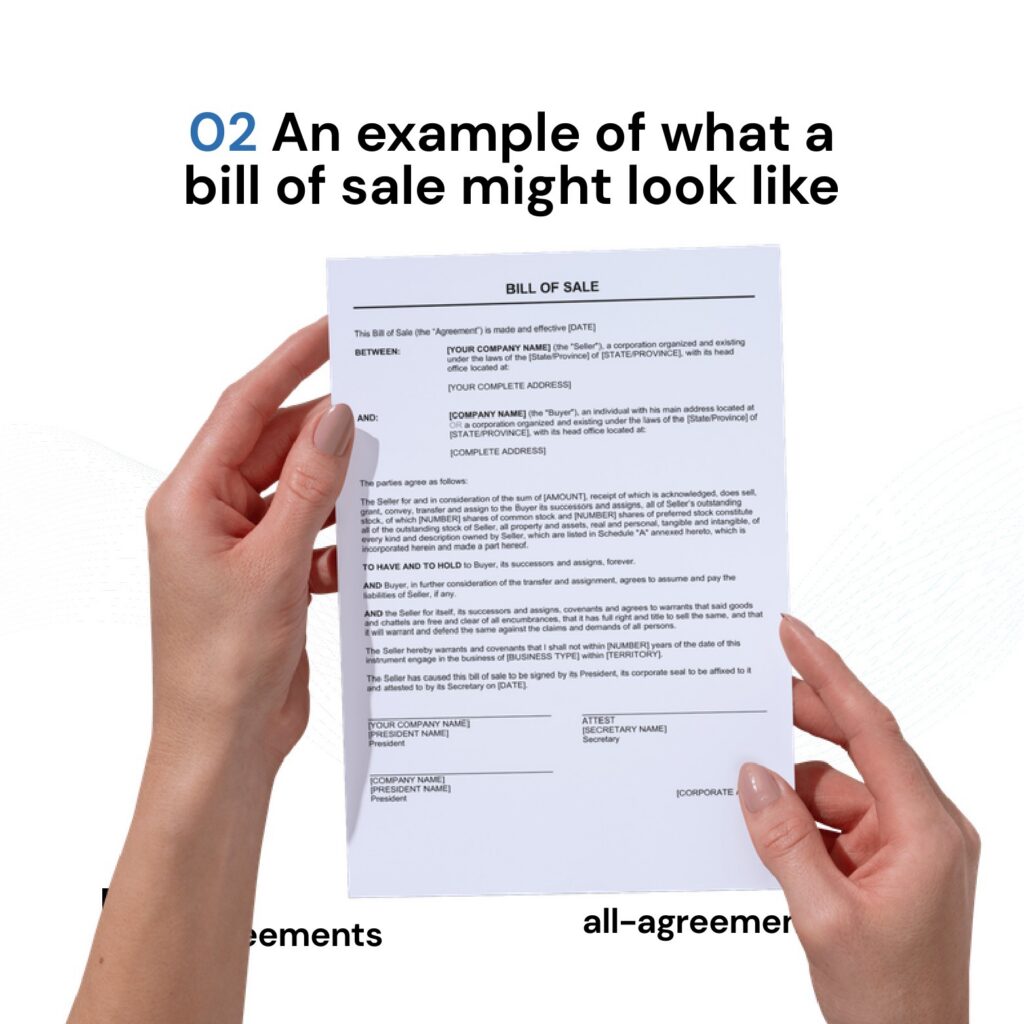
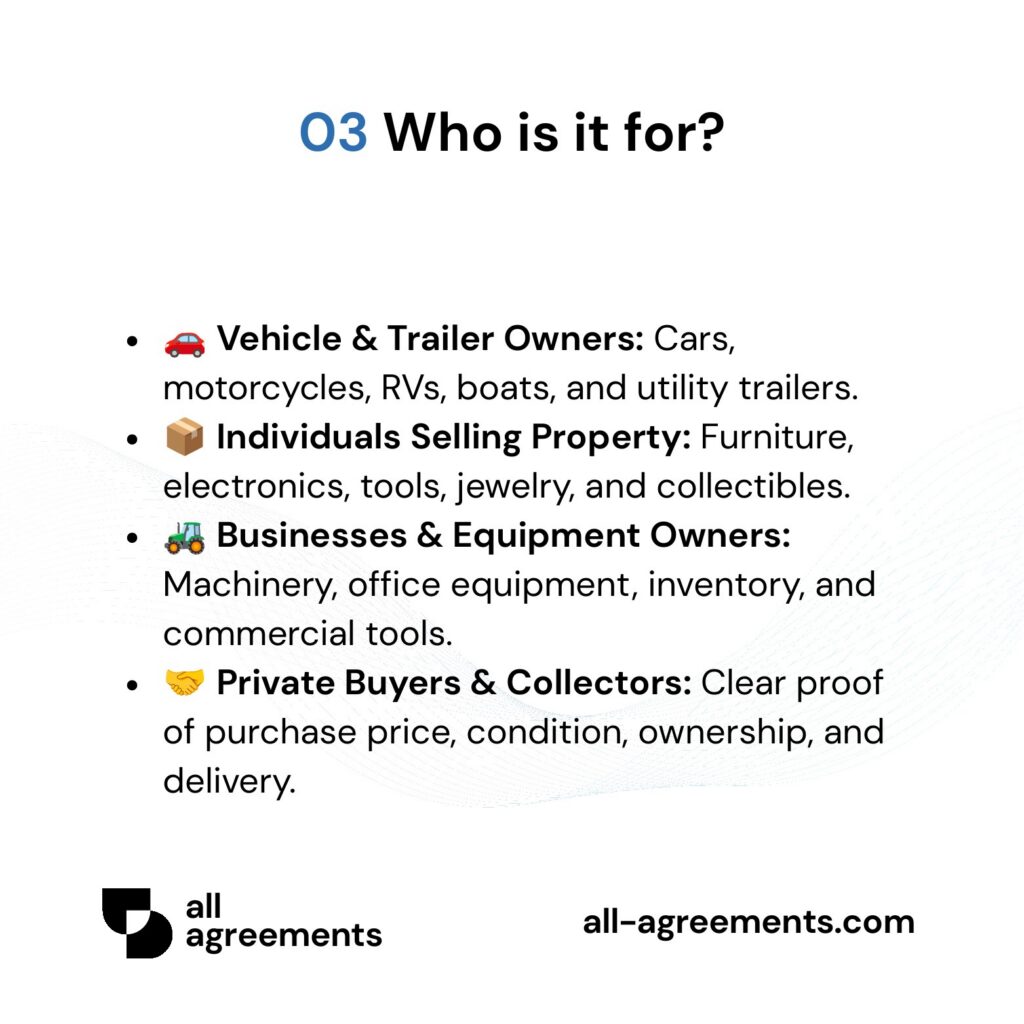
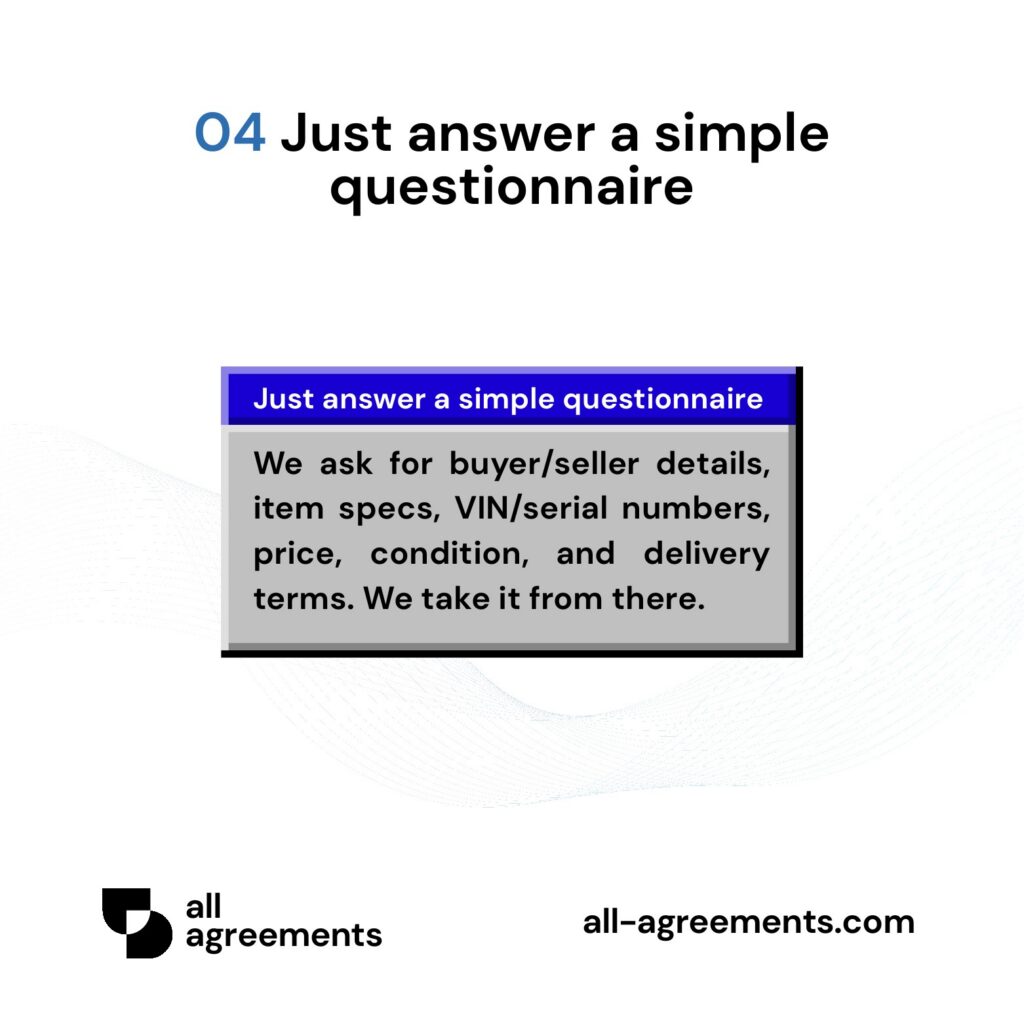
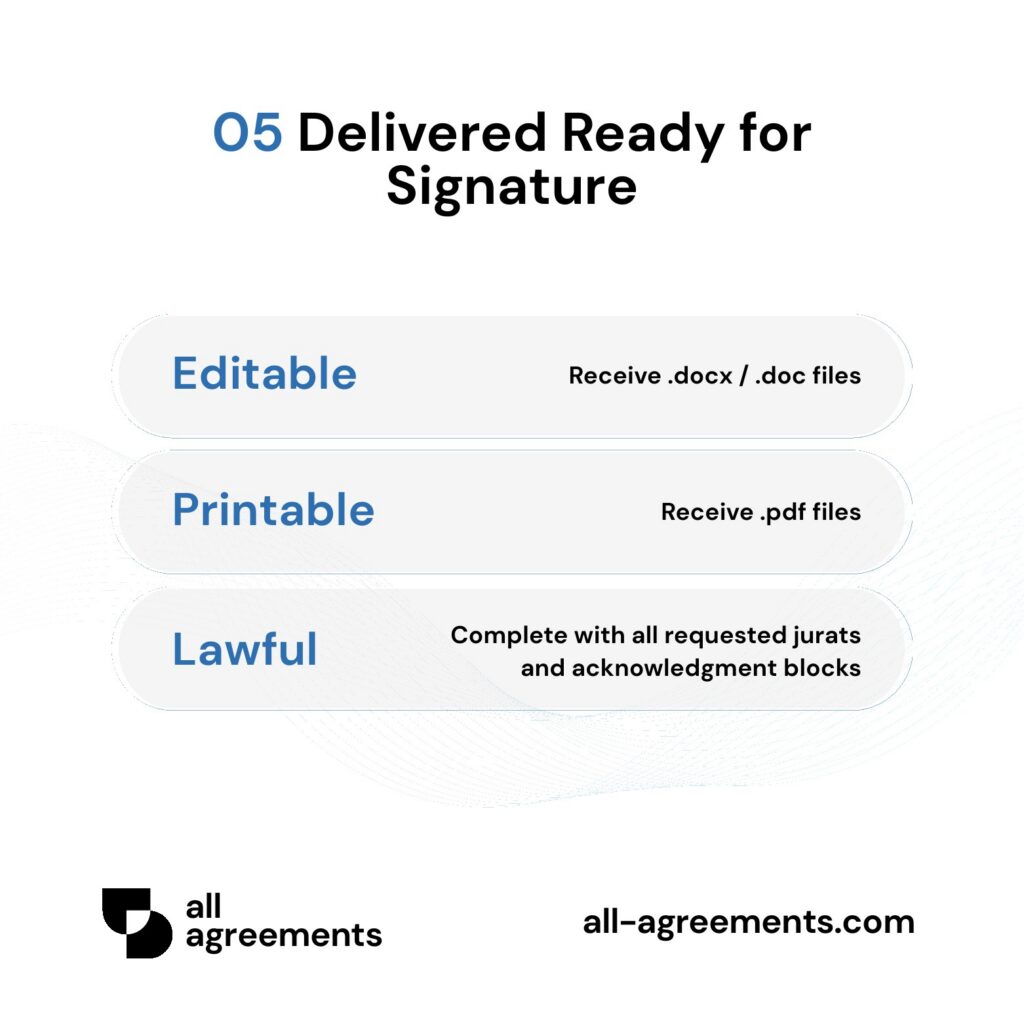

Bill of Sale
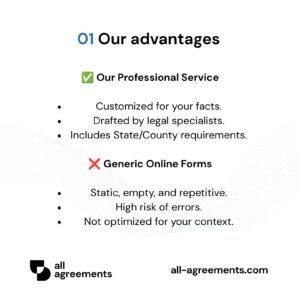
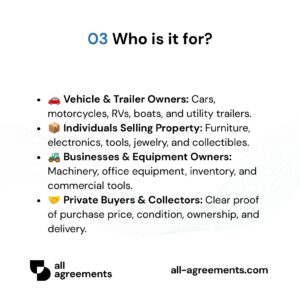
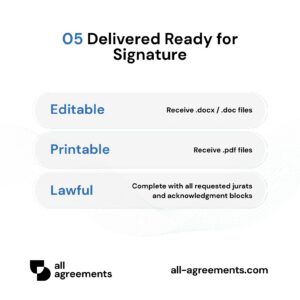
Document the sale of personal property with a custom-prepared U.S. Bill of Sale structured around the buyer, seller, and item involved.
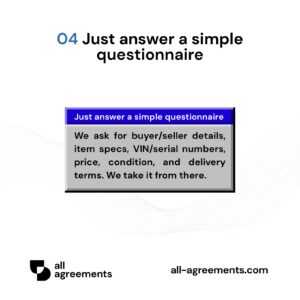
Define the item, purchase price, payment terms, condition, delivery, as-is status, warranties, ownership documents, liens, and transfer details.
- Custom-Prepared Bill of Sale: Structured using the buyer, seller, item, payment, condition, delivery, and ownership information you provide.
- Clear Transaction Record: Document the purchase price, payment method, deposit, remaining balance, sale date, delivery, and possession transfer.
- Property Transfer Details: Address as-is status, warranties, VIN or serial numbers, odometer readings, title documents, known liens, and additional terms.
💡 Need more information before ordering? Explore our full Bill of Sale Preparation Service.
Legal Importance of Bills of Sale
A bill of sale can serve several legal and practical functions beyond simply documenting a transaction. It may be used to:
- Establish official proof of ownership transfer
- Resolve disputes over payment, condition, or delivery terms
- Support insurance cancellations or liability releases (proving you no longer own a vehicle if it is involved in an accident post-sale)
- Assist in registration and emissions compliance verification
- Provide written evidence in court proceedings
Because of this, accuracy is essential. Incorrect or incomplete information can delay processing at DMV branch offices or complicate tax assessments.
Common Mistakes in Private Sales
Many issues in private property transactions arise from poorly prepared or incomplete documentation. Common mistakes include:
- Missing Key Details: Omitting important information such as VINs, Hull Identification Numbers (HINs), or exact property descriptions makes verification difficult later.
- Not Specifying Payment Status: Failing to state whether payment has been made in full can lead to financial disputes.
- Skipping Signatures: Without signatures from both parties, a bill of sale may not be considered legally binding.
- Relying on Verbal Agreements: Verbal agreements are difficult to prove in court if expectations differ after the sale.
- Ignoring “As-Is” Language: Without explicit “as-is” wording, misunderstandings may arise regarding post-sale mechanical issues or defect responsibility.
Fraud Prevention and Protection
Bills of sale play an important role in reducing fraud risk in private transactions. Best practices include:
- Verifying the driver’s license or state ID of the buyer and seller
- Checking VIN or serial numbers against the title and physical item
- Ensuring a valid Connecticut emissions inspection has been addressed if required for vehicle registration
- Avoiding cash-only deals without written receipts or records
- Ensuring both parties retain signed copies of the bill of sale
In Connecticut’s active private sales market, clear documentation prevents fraudulent ownership claims and protects sellers from parking tickets or EZPass toll violations accrued by the new owner.
Recordkeeping and Storage
After completing a transaction, both parties should keep a copy of the bill of sale for their records. It may be needed for:
- Tax reporting (Connecticut DRS / state income and sales tax)
- Insurance cancellations or claims
- Future resale of the item
- Legal verification of ownership transfer and liability release
Digital and printed copies are both commonly used, but ensuring the document is stored securely is important for long-term protection.
Notarization and Witness Requirements
In Connecticut, standard motor vehicle and vessel bills of sale do not legally require notarization under state law. However, notarization is still recommended when:
- The transaction involves high-value property or heavy industrial equipment
- The buyer and seller are located in different states or long distances apart
- Additional legal authentication is desired by either party for personal or business records
Special Cases: Boats, Trailers, and Livestock
Certain types of property in Connecticut require specific steps due to registration rules enforced by state agencies like the DMV, DEEP, and the Connecticut Department of Agriculture.
Boats and Watercraft
All motorized vessels and sail-powered boats operating on Connecticut waters must be registered through the DMV in coordination with DEEP. Registration requires:
- A completed Bill of Sale detailing the purchase date, price, signatures, and vessel information
- The Hull Identification Number (HIN)
- Connecticut Certificate of Title or previous registration signed over by the seller
- Completed Connecticut Boat Registration Application and applicable fees
Trailers
Trailers sold privately in Connecticut (including utility, boat, and travel trailers) are registered through the DMV. Proper registration requires a clear bill of sale detailing serial numbers, purchase price, weight, and specifications, alongside title documents where applicable.
Livestock and Agricultural Property
In Connecticut’s agricultural sector, bills of sale are standard for livestock, horses, and farm equipment. Proper documentation helps establish clear chain of title and health compliance when transferring farm animals across state or municipal lines.

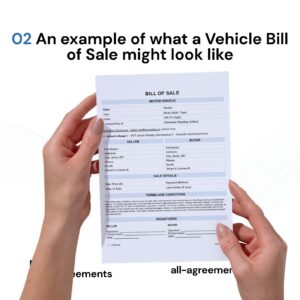
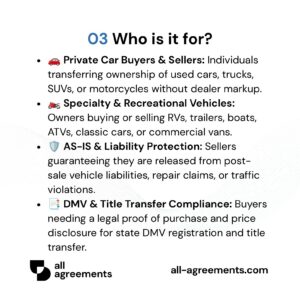
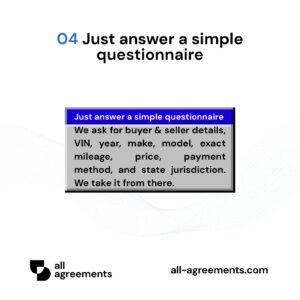
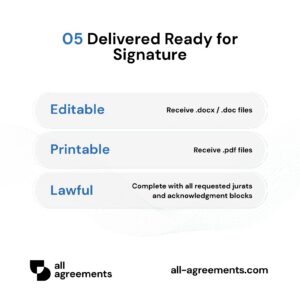


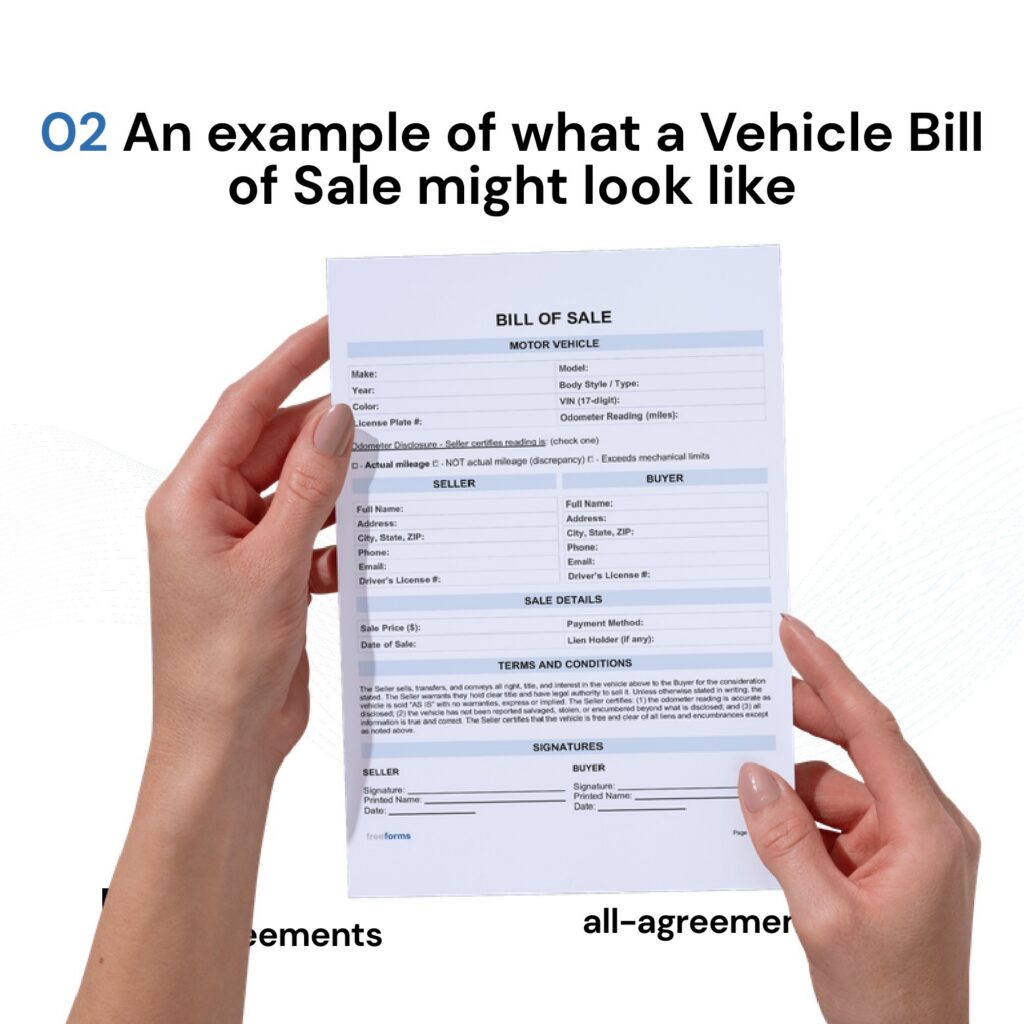
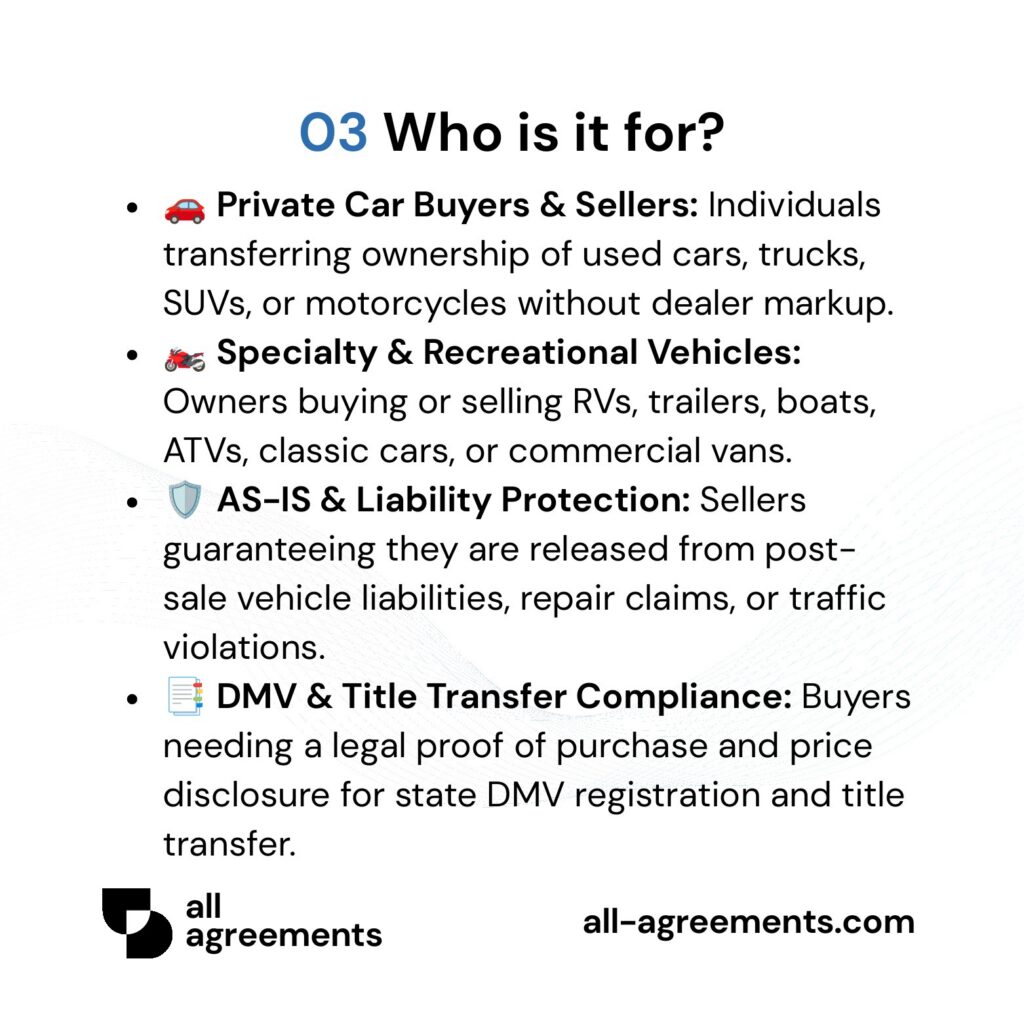
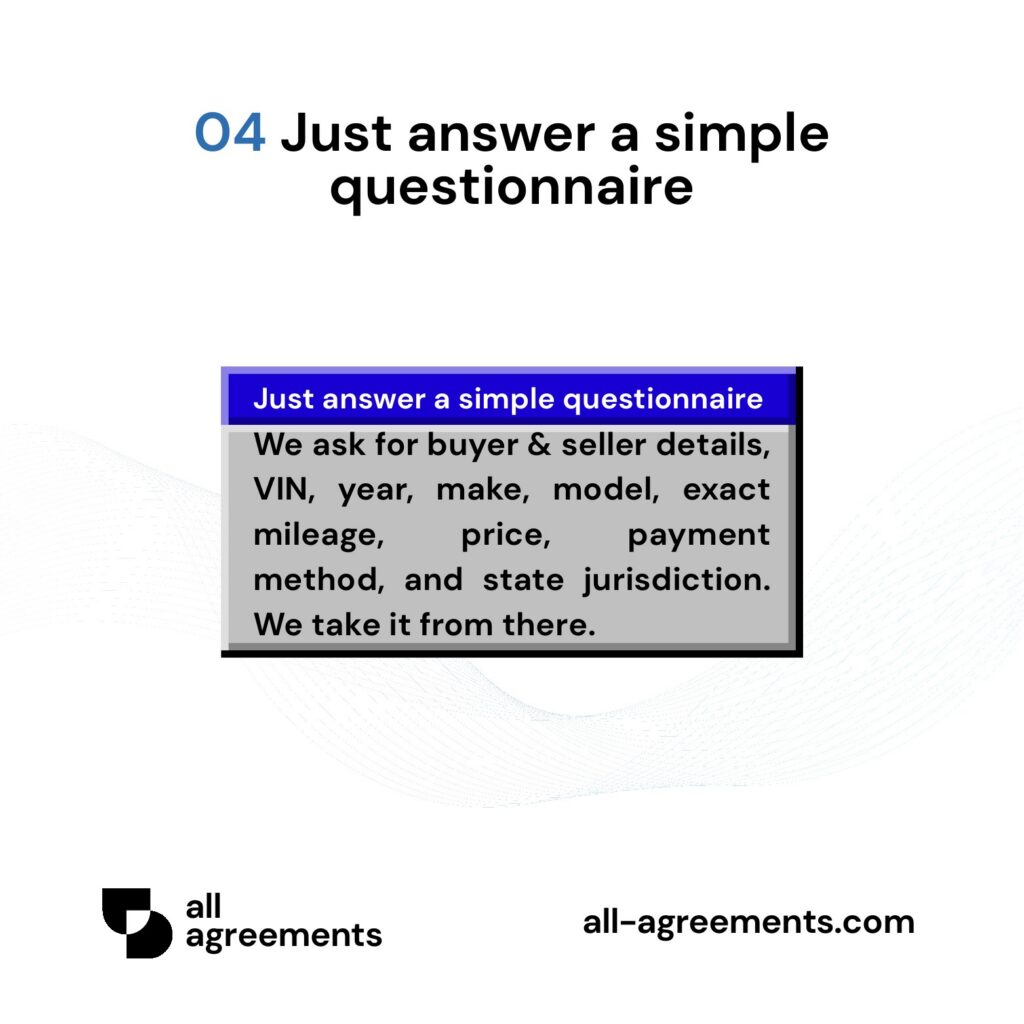
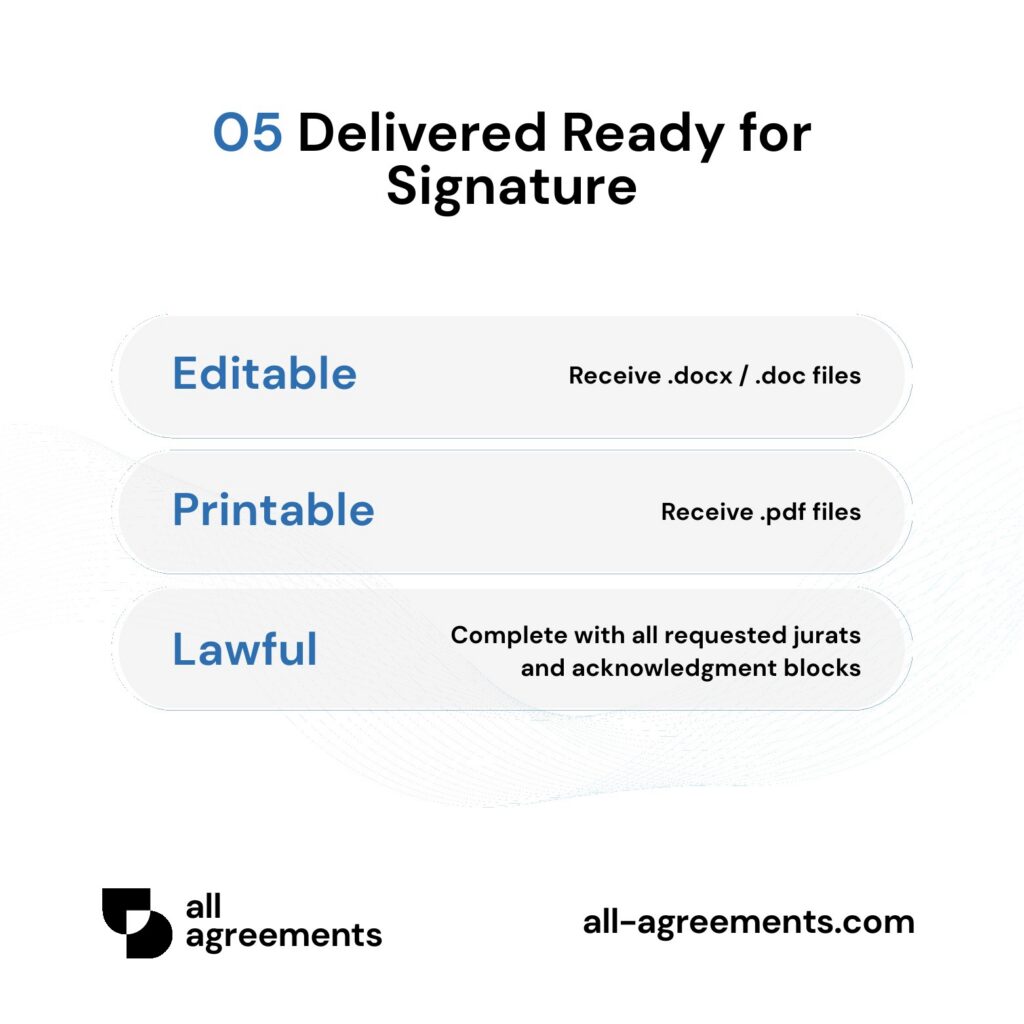
Vehicle Bill of Sale
Vehicle Bill of Sale preparation for U.S. buyers and sellers documenting a vehicle sale, payment, title, condition, and ownership transfer.
Record the vehicle, VIN, odometer reading, sale price, deposit, remaining balance, delivery date, warranties, title status, and liens.
- Custom-Prepared Motor Vehicle Bill of Sale: Structured using the buyer, seller, vehicle, payment, condition, title, lien, and delivery information you provide.
- Detailed Vehicle Record: Document the make, model, year, color, VIN, odometer reading, license plate, sale date, and purchase price.
- Clear Transfer Terms: Address deposits, remaining balances, title delivery, as-is condition, warranties, existing liens, possession, taxes, and fees.
💡 Need more information before ordering? Explore our full Vehicle Bill of Sale Preparation Service.
Best Practices for Connecticut Buyers and Sellers
A well-prepared bill of sale ensures a seamless transfer of ownership. Both buyers and sellers should follow these practical steps:
- Always use a comprehensive written bill of sale or state-accepted form (such as DMV Form H-31) for vehicle sales
- Double-check VINs, HINs, and serial numbers against the physical item
- Clearly outline purchase price, transaction date, and payment method
- Include clear “As-Is” disclaimers where applicable
- Ensure the seller removes their license plates and cancels/transfers registration with the DMV
- Ensure the buyer completes registration at their local DMV branch office within mandatory state timelines
Frequently Asked Questions
Is a bill of sale legally required in Connecticut?
While the Certificate of Title is the primary ownership document, the Connecticut DMV and DRS frequently require a bill of sale (Form H-31) to verify purchase price for sales tax assessment, establish chain of ownership, or complete registration when title assignment space is full.
Does a bill of sale transfer ownership?
The bill of sale documents the financial transaction and transfer terms, but legal title ownership for vehicles and vessels is officially transferred when the signed Certificate of Title and registration are processed with the Connecticut DMV.
Should a bill of sale be notarized in Connecticut?
No. Standard motor vehicle and vessel bills of sale in Connecticut do not legally require notarization. However, notarization is optional and can be helpful for private high-value property sales.
What happens if there is no bill of sale?
Without a bill of sale or signed title endorsement, the DMV may reject your registration transfer request or assess sales tax based on standard book value rather than actual purchase price.
Can a bill of sale protect me from fraud and liability?
Yes. Combined with removing your license plates and canceling your DMV registration, a properly executed bill of sale protects sellers from post-sale traffic violations, toll fees, accidents, and buyer disputes.
Conclusion
Bills of sale in Connecticut are essential legal documents for recording personal property transfers. Whether buying or selling a car, boat, trailer, farm machinery, or livestock, a written bill of sale provides clear proof of transaction terms, protects both parties from post-sale disputes, and helps fulfill Connecticut registration and tax requirements.
By following Connecticut statutory procedures and utilizing clear, accurate documentation, buyers and sellers can complete private transactions with confidence and peace of mind.
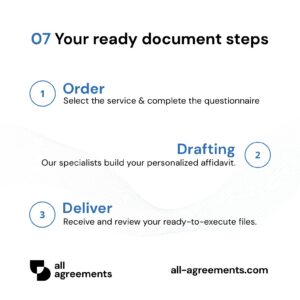
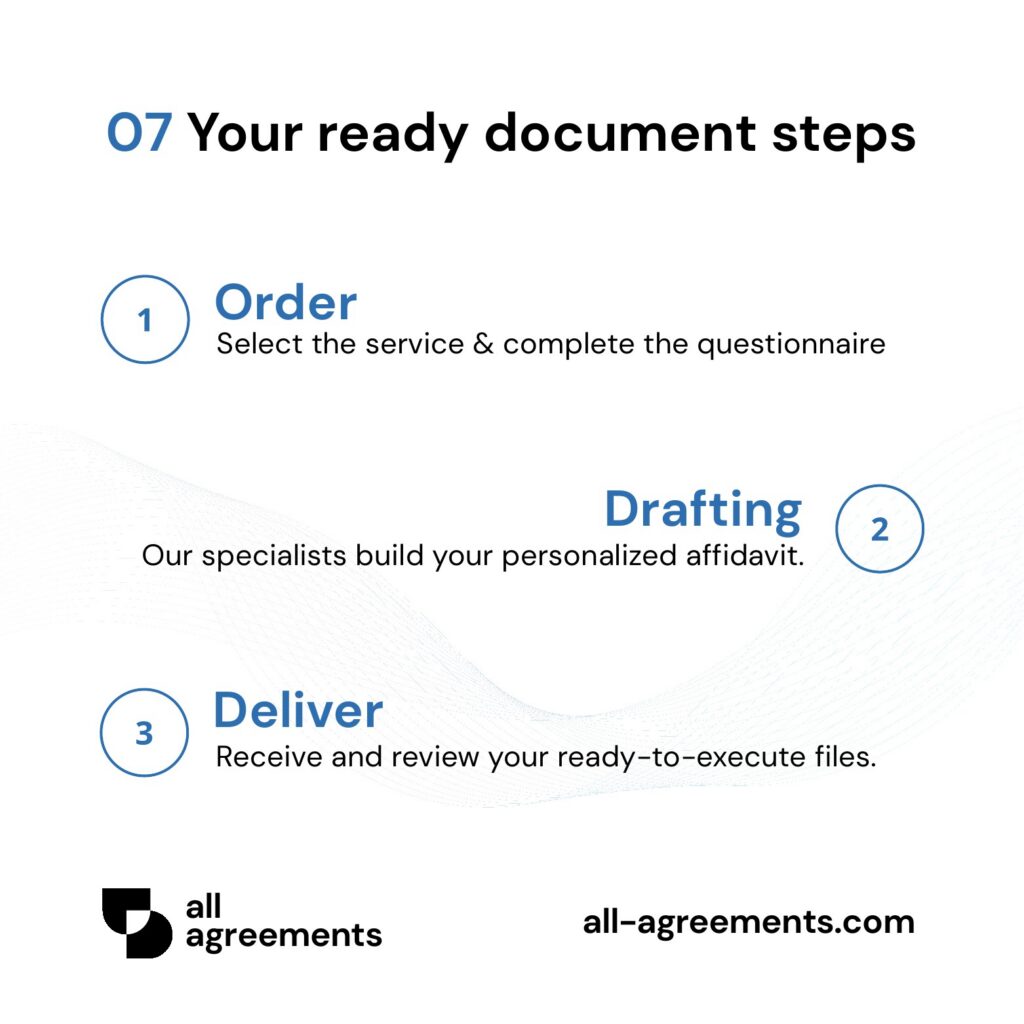
How It Works
Get started in just four simple steps
01
Select a document type
Choose the type of document from our catalog or contract us.
02
Provide details or requirements
Provide your specific requirements, details, and guidelines.
03
We prepare your document
Our consulting experts review your request and draft a tailored document.
04
You receive a printable file
Receive your ready-to-use, professional file in different formats.
Legal Context
Legal requirements in the state may vary depending on the type of document and situation.
Common use cases include:
- Business Agreements
- Consulting Agreements
- Personal Documents
- Real Estate Agreements
- Rental Agreements
- Packages Super Offer
Users should always ensure they select the correct document type for their specific situation.
Related Pages
United States Overview
Other States
Explore Legal Articles
Learn more about how legal documents work in the state:
- Connecticut Business Contracts Explained
- Connecticut Employment Contracts
- Connecticut Estate Planning
- Connecticut Power of Attorney Explained
- Connecticut Rental Laws Overview
- Connecticut Real Estate Transactions
- Connecticut Worker Classification
- How Connecticut Bills of Sale Work
- How Eviction Works in Connecticut
On sale products
-
Rent Receipt Template
Original price was: $14.99.$5.99Current price is: $5.99. -
Move-In Checklist
Original price was: $19.99.$8.99Current price is: $8.99. -
Move-Out Checklist
Original price was: $19.99.$8.99Current price is: $8.99. -
Landlord Reference Letter
Original price was: $19.99.$8.99Current price is: $8.99. -
Tenant Reference Letter
Original price was: $19.99.$8.99Current price is: $8.99.


