
Understanding Real Estate Transactions in Colorado
A real estate transaction is the legal process of transferring ownership of property from one party to another. In Colorado, this process is governed by statutory law (including the Colorado Real Estate Title Code and Division of Real Estate regulations), property law principles, and standard real estate practices that ensure the transfer is legally valid and properly documented.
Most real estate transactions involve:
- A buyer and a seller
- A written purchase agreement approved by the Colorado Real Estate Commission (CREC)
- A title review process
- Financing (in many cases)
- Statutory disclosures and property inspections
- A formal closing process handled by a title company or closing attorney
Although the process may appear straightforward, real estate transactions often involve multiple professionals, including real estate brokers, mortgage lenders, title companies, and real estate attorneys.
Because property is a high-value asset, even small mistakes in documentation or procedure can lead to significant legal or financial consequences.
The Role of the Purchase Agreement
The purchase agreement—most commonly the Colorado Real Estate Commission (CREC) Contract to Buy and Sell Real Estate—is the foundation of any real estate transaction in Colorado. In Colorado, real estate brokers are required to use standard CREC-approved forms, which provide a strict schedule of dates and deadlines for every stage of the transaction.
A typical purchase agreement includes:
- Purchase price
- Property description and inclusions/exclusions
- Earnest money deposit details
- Comprehensive table of Dates and Deadlines
- Title and document review deadlines
- Inspection, appraisal, and financing objection deadlines
- Responsibilities and remedies for each party
Once signed by both parties, the agreement governs the transaction and establishes each side’s legal obligations.
In practice, most disputes in Colorado real estate transactions arise from missed deadlines, misunderstanding objection periods, or unclear contract terms, making strict compliance with the contract calendar essential.
Earnest Money Deposits
Earnest money (often called the initial deposit) is a deposit made by the buyer to demonstrate serious intent to purchase the property.
Key points about earnest money include:
- It is typically held in an escrow or trust account by a title company or listing broker
- It is applied toward the purchase price or closing costs at closing
- It is refundable if the buyer terminates the contract in accordance with contractual objection deadlines
- It demonstrates good faith in fulfilling the contract terms
Common contingencies and deadlines that may allow a buyer to terminate and recover earnest money include:
- Inspection Objection and Resolution deadlines
- Property or HOA Document Objection deadlines
- Loan Conditions and Appraisal deadlines
- Title Objection deadlines
In Colorado, earnest money disputes are governed by the specific default and earnest money release provisions of the CREC contract, requiring clear written notice prior to the relevant contract deadline.
Financing in Colorado Real Estate
Most residential real estate transactions in Colorado involve some form of financing, typically through a mortgage lender using a Deed of Trust rather than a mortgage instrument.
The financing process may include:
- Loan application and pre-approval
- Credit review
- Income and asset verification
- Property appraisal ordered by the lender
- Loan underwriting approval
Financing contingencies in the CREC contract (New Loan Availability and New Loan Terms deadlines) protect buyers by allowing them to terminate the contract and receive their deposit back if they cannot secure satisfactory financing terms before the deadline.
Cash purchases are also common, particularly in competitive mountain resort communities and high-demand Front Range suburban markets.
Property Types in Colorado
Real estate transactions in Colorado involve a wide range of property types, each with its own specific legal and practical considerations.
Residential Property
Includes single-family homes, townhomes, and condominiums. Residential transactions are the most common and typically utilize standard CREC residential contract forms and inspection procedures.
Commercial Property
Includes office buildings, retail spaces, industrial warehouses, and mixed-use developments. These transactions often utilize CREC commercial forms or custom contracts drafted by real estate attorneys.
Vacant, Rural & Agricultural Land
Land transactions across Colorado—from Eastern Plains farmland and Western Slope orchards to mountain acreage—involve specific considerations such as mineral rights, water rights (ditches and well permits), grazing leases, zoning, soil stability, and utility access.
Investment Property
Includes rental properties, multi-family units, and short-term vacation rentals (VRBO/Airbnb). Investors evaluate these based on cap rates, income potential, and local municipal regulations (such as strict short-term rental ordinances in mountain towns or Front Range cities).
Role of Real Estate Professionals
Many Colorado real estate transactions involve professionals who help facilitate the process under state licensing laws.
These may include:
- Licensed real estate brokers (Colorado licenses all real estate practitioners as brokers)
- Mortgage lenders and loan originators
- Title insurance companies and closing agents
- Licensed home inspectors
- Real estate attorneys
Colorado brokers operate under defined agency relationships (Single Agent or Transaction Broker). Title companies typically act as neutral closing agents to manage earnest money, clear title defects, handle loan disbursements, and record closing deeds.
Each professional plays a specific role in reducing risk and ensuring the transaction proceeds smoothly.
Home Inspections and Due Diligence
Once a purchase agreement is executed, the buyer enters a strict due diligence window governed by the Inspection Objection, Inspection Resolution, and Inspection Termination deadlines set in the CREC contract.
A home inspection is a vital due diligence step. A qualified inspector generally evaluates:
- Roof condition and hail damage (a frequent concern in Colorado)
- Foundation, structural integrity, and expansive soils
- Electrical and plumbing systems
- Heating, HVAC, and fireplace/wood stove safety
- Radon gas levels (common in Colorado foothill and mountain geology)
If physical defects or safety issues are discovered, the buyer may:
- Submit an Inspection Objection requesting specific repairs or financial credits
- Reach an Inspection Resolution agreement with the seller prior to the resolution deadline
- Elect to terminate the contract before the Inspection Termination deadline and receive a full earnest money refund
In Colorado, adherence to written notice deadlines is strictly enforced; failing to object or terminate in writing before the deadline waives the buyer’s right to raise physical objections.
Title Searches and Title Insurance
Before ownership can be transferred, a title company performs a thorough title search to issue a Title Commitment and verify clear ownership rights.
A title search in Colorado evaluates:
- Outstanding mortgages or Deeds of Trust
- Tax liens, mechanic’s liens, or judgment liens
- Recorded easements, rights-of-way, and covenants (CC&Rs)
- Severed mineral rights or oil/gas leases
- Unresolved probate or estate claims
If title defects or unexpected encumbrances are discovered, the buyer may submit a Title Objection or terminate the contract in accordance with Title Deadlines.
To protect against hidden defects, title insurance policies (Owner’s Policy and Lender’s Policy) are issued at closing. In Colorado, custom varies by county as to whether the buyer or seller pays for the Owner’s Title Insurance Policy.


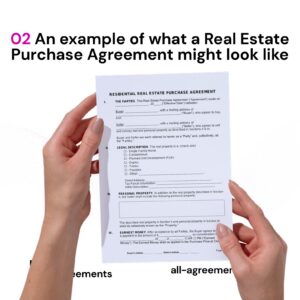







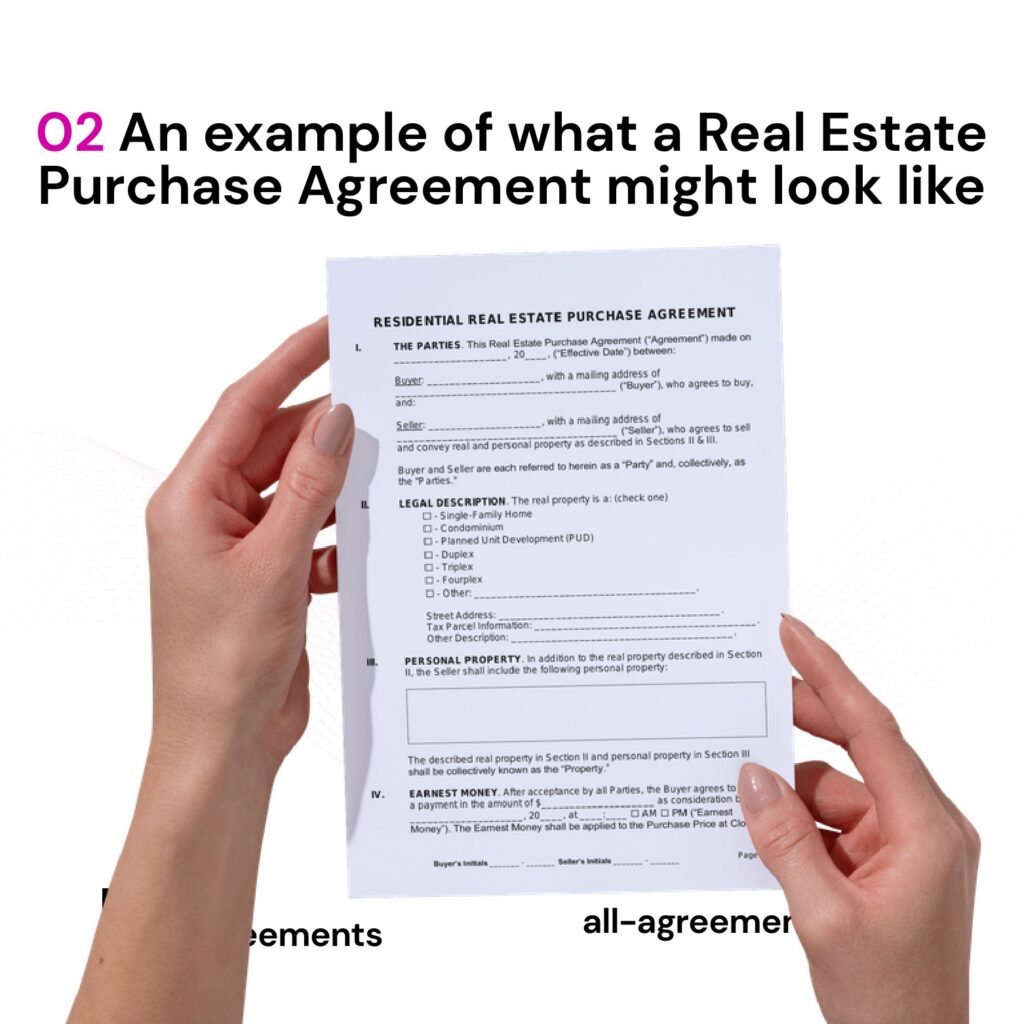



Real Estate Purchase Agreement
Purchase real estate confidently with a custom-prepared Real Estate Purchase Agreement tailored to your specific transaction.
Document purchase price, financing, contingencies, inspections, closing terms, disclosures, and buyer and seller obligations.
- Custom-Prepared Agreement: Built using your transaction details.
- Complete Purchase Terms: Covers financing, earnest money, inspections, closing, title, and possession.
- Professional Documentation: Prepared for residential, commercial, land, and investment property purchases throughout the United States.
💡 Prepared for buyers, sellers, investors, and real estate professionals across all U.S. states.
Contingencies in Real Estate Contracts
Contingencies in Colorado real estate contracts are structured as explicit rights of inspection, objection, and termination tied to strict calendar dates.
Common contract contingencies include:
Financing and Appraisal Contingency
Allows the buyer to terminate if loan terms are unsatisfactory or if the property appraisal comes in lower than the agreed purchase price without seller adjustment.
Inspection Contingency
Allows the buyer to evaluate the physical condition of the property and request repairs, negotiate credits, or terminate the deal.
Title and Document Contingency
Provides the buyer time to review title commitments, property tax records, and special taxing district disclosures.
Common Interest Community (HOA) Contingency
Gives the buyer the right to review HOA bylaws, financial statements, covenants, and reserve studies, and terminate if HOA rules or financial health are unacceptable.
These contingencies protect both parties by providing clear rules and timelines for resolving issues or exiting the transaction safely.
Closing Process in Colorado
Closing is the final stage of a Colorado real estate transaction where documents are signed, funds are transferred, and legal title passes from seller to buyer.
The closing process typically includes:
- Final walkthrough inspection by the buyer
- Execution of closing statements, loan documents, and the Deed (commonly a General Warranty Deed or Special Warranty Deed) before a notary
- Delivery of certified funds or wire transfer into the title company escrow account
- Payoff of existing mortgages, liens, and closing expenses
- Recording of the Deed and Deed of Trust with the County Clerk and Recorder
- Delivery of keys and possession to the buyer according to the Possession Date/Time specified in the contract
In Colorado, closings are usually conducted by a neutral title company acting as the closing agent.
Once the deed is formally recorded at the county level, the buyer becomes the legal owner of the property.
Closing Costs
Both buyers and sellers incur specific closing costs, which are detailed in the CREC Closing Disclosure or Settlement Statement.
Common buyer costs include:
- Loan origination, processing, and underwriting fees
- Appraisal and credit report fees
- Lender’s title insurance policy
- Home inspection and radon testing fees
- Escrow reserves for property taxes and homeowner insurance
- Recording fees for the Deed of Trust
Common seller costs may include:
- Real estate broker commissions
- Owner’s title insurance policy (per local custom)
- State documentary fee (0.01% of the purchase price in Colorado)
- Payoff of outstanding loans or liens
- Prorated real estate taxes (Colorado taxes are paid in arrears)
- HOA transfer and status letter fees
The exact allocation of closing costs is specified in the Contract to Buy and Sell Real Estate.
Common Buyer Mistakes
Navigating a Colorado real estate purchase requires careful attention to detail. Common buyer mistakes include:
- Missing Contract Deadlines: Failing to submit a written Inspection Objection or Loan Termination notice before 11:59 PM on the specified deadline can result in losing earnest money or waiving rights.
- Overlooking HOA Documents and Special Districts: Failing to review HOA financial reserves or Metropolitan District (Metro District) tax obligations can lead to unexpected tax increases or special assessments later.
- Ignoring Environmental Risks: Neglecting radon testing, soil expansion analysis, or wildfire risk assessments common to Colorado geography.
- Making Major Purchases Before Closing: Opening new credit cards or buying vehicles prior to closing can jeopardize final mortgage approval.
Common Seller Mistakes
Sellers in Colorado face legal and operational risks during a property transaction, including:
- Incomplete Property Disclosures: Failing to complete the mandatory Seller’s Property Disclosure form accurately can lead to post-closing litigation over hidden defects.
- Failing to Track Buyer Deadlines: Not monitoring the buyer’s contingency dates can leave the seller’s property off the market without assurance of closing.
- Ignoring Property Readiness for Inspection: Failing to address obvious roof, furnace, or safety items prior to listing can lead to transaction failure during the inspection phase.
- Mismanaging Water or Mineral Rights: Assuming mineral or water rights automatically convey without proper contractual specification.
Seller Disclosures in Colorado
Colorado law requires sellers to disclose known material defects regarding the physical condition of the property. The primary vehicle for this is the CREC-approved Seller’s Property Disclosure form.
Key Colorado disclosure aspects include:
- Seller’s Property Disclosure (Residential): Covers structural condition, roof age/leaks, electrical, plumbing, heating, sewer/septic systems, water leaks, and known environmental hazards.
- Lead-Based Paint Disclosure: Required for residential properties built prior to 1978 in compliance with federal law.
- Special Taxing District Disclosure: Statutory warning alerting buyers if the property is located within a Metropolitan District or special tax district that carries additional tax levies.
- Source of Water Disclosure: Sellers must disclose the property’s water source (e.g., municipal water provider, private well, or cistern).
- Methamphetamine Lab Disclosure: Under C.R.S. § 38-35.7-103, sellers must disclose if the property was used as a meth lab, unless remediated to state standards.
Failing to disclose known material defects can expose sellers to claims of misrepresentation and legal damages after closing.











Real Estate Agent Agreement
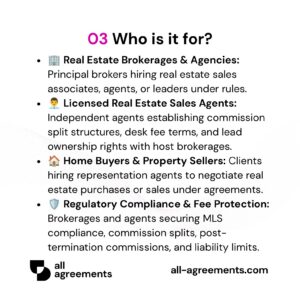
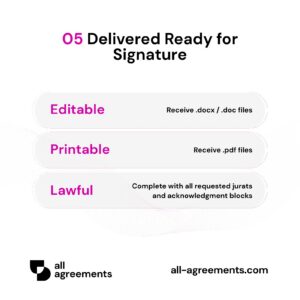
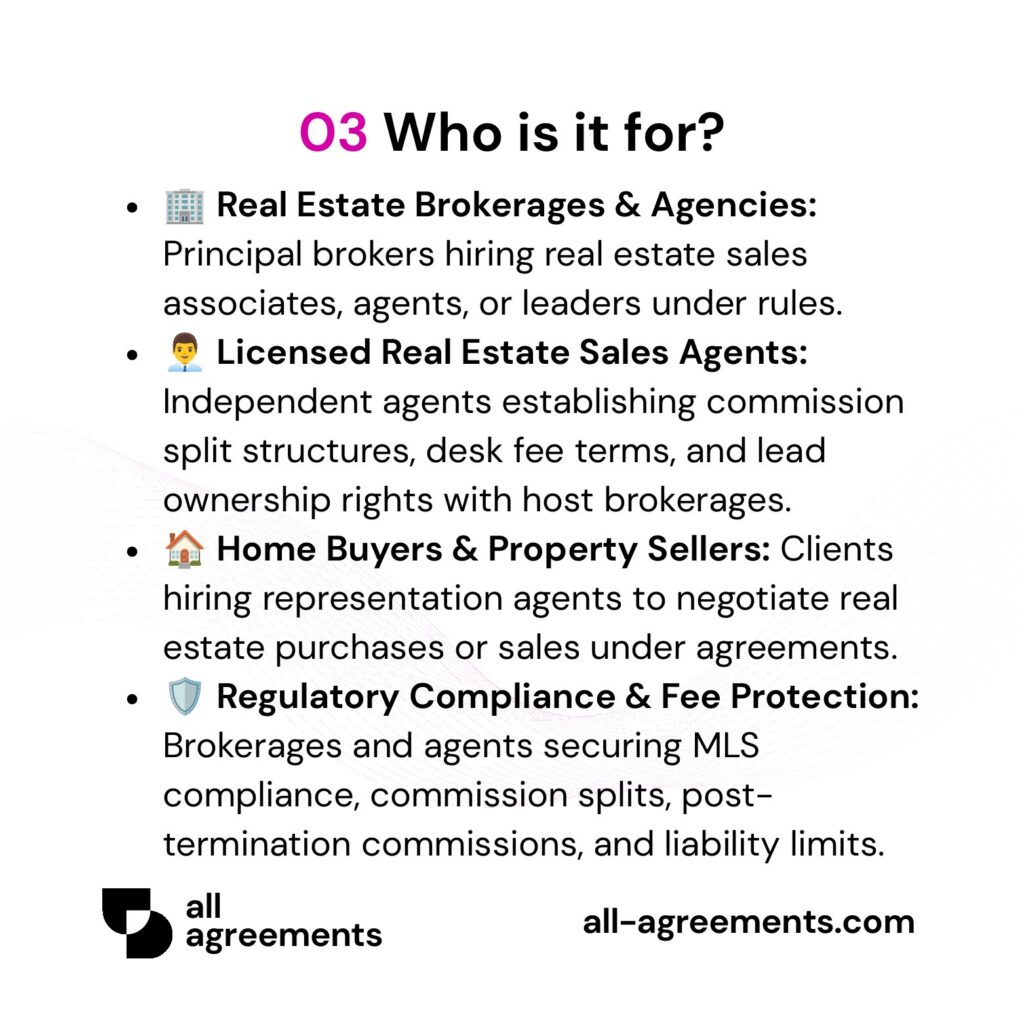
Create a custom Real Estate Agent Agreement defining representation terms, commissions, services, and responsibilities between agents and clients.
Clearly structure real estate relationships with professional terms covering compensation, authority, disclosures, and transaction duties.
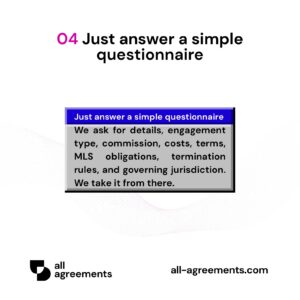
- Custom-Prepared Document: Structured using agent, brokerage, client, property, commission, and service information you provide.
- Complete Representation Terms: Document services, fees, negotiation authority, marketing responsibilities, and transaction expectations.
- Agent & Client Protection: Address termination, disclosures, expenses, disputes, and additional real estate provisions.
💡 Designed for real estate professionals and clients throughout the United States and adaptable to the governing state law and selected representation arrangement.
Contract Termination in Real Estate Transactions
A Colorado real estate contract may be terminated under specific conditions outlined in the CREC agreement or allowed by statute.
Common grounds for contract termination include:
- Unsatisfactory Inspection or Title Review: The buyer provides timely written notice of termination before the applicable objection/termination deadline.
- Inability to Secure Financing or Low Appraisal: The buyer terminates due to loan denial, unapproved loan terms, or an appraisal that falls short of the purchase price.
- Mutual Agreement: Both parties execute a written Mutual Execution of Earnest Money Release or Cancellation Agreement.
- Default or Breach of Contract: If either party fails to perform (e.g., buyer fails to deliver earnest money, seller refuses to convey title), the non-defaulting party may pursue earnest money forfeiture, damages, or specific performance.
Because CREC contracts rely on strict written notice procedures, termination notices must be executed and delivered in exact accordance with contract requirements.
Real Estate Investment Considerations
Investing in Colorado real estate offers significant opportunities in residential rentals, commercial spaces, and vacation properties, but requires specialized diligence.
Key factors investors consider in Colorado include:
- Local short-term rental (STR) restrictions, licensing rules, and municipal bans (e.g., Denver, Boulder, Breckenridge)
- State and local landlord-tenant laws, including security deposit regulations and eviction procedures
- Property tax calculations, including Metropolitan District debt service levies
- Maintenance expenses related to severe weather, snow loads, freezing pipes, and high-altitude roof wear
- Long-term appreciation patterns across the Front Range urban corridor versus mountain resort economies
Successful investing depends on thorough financial modeling, regulatory compliance checks, and clear understanding of municipal zoning ordinances
Common Legal and Practical Risks
Real estate transactions involve inherent risks that require proactive management. Key risks include:
- Title and Boundary Issues: Unrecorded easements, disputed property boundaries, or unreleased historical Deeds of Trust.
- Water Rights and Well Permits: Unclear domestic well permits or unadjudicated water rights on rural properties.
- Soil and Geotechnical Issues: Expansive soils (bentonite) causing foundation movement, especially along the Front Range foothills.
- Financing Disruptions: Last-minute loan denial or appraisal shortfalls occurring close to the closing date.
Working with experienced licensed brokers, qualified home inspectors, title professionals, and real estate attorneys mitigates these practical and legal risks.
Best Practices for Colorado Buyers and Sellers
Smooth and successful transactions result from careful preparation, open communication, and adherence to established contractual timelines.
Recommended best practices include:
- Understand and track every date on the CREC Contract Dates and Deadlines calendar.
- Complete a comprehensive physical inspection, including radon testing and sewer scope evaluations.
- Review all title commitments, HOA covenants, and Metro District disclosures during the document review period.
- Deliver all formal notices, objections, and terminations in writing prior to 11:59 PM on the deadline date.
- Ensure complete and honest completion of the Seller’s Property Disclosure form.
- Work with qualified, licensed real estate brokers and title professionals familiar with Colorado real estate law.
- Verify all wire transfer instructions directly with the title company by phone to prevent wire fraud.
Whether buying a home in a Denver neighborhood, selling property in Northern Colorado, or acquiring mountain acreage, thorough planning leads to confident and successful property transfers.
Frequently Asked Questions
Do I need an attorney to buy or sell property in Colorado?
In Colorado, real estate attorneys are not legally required for standard residential closings, as licensed brokers use CREC-approved standard contracts and title companies handle closing. However, hiring an attorney is recommended for complex commercial deals, custom contracts, or complex title issues.
How long does a typical real estate closing take in Colorado?
A standard residential transaction with conventional financing typically takes 30 to 45 days from contract acceptance to closing. Cash transactions can close much faster, often in 10 to 14 days.
Who pays for title insurance in Colorado?
Payment custom varies by county. In many Front Range counties (such as Denver, Arapahoe, and Jefferson), the seller customary pays for the Owner’s Title Insurance Policy. In other counties (such as El Paso or Pueblo), the cost is often split or paid by the buyer. The contract specifies the actual agreement.
What is a Metropolitan District (Metro District) in Colorado?
A Metro District is a independent governmental entity created to finance public infrastructure (roads, water lines, parks) for new developments. Properties in Metro Districts carry an additional mill levy on property taxes to service this debt, which buyers should evaluate carefully.
What happens if the appraisal comes in lower than the purchase price?
Under the CREC contract Appraisal Deadline, the buyer can deliver a written objection requesting a price reduction or terminate the contract and receive a full earnest money refund if the seller refuses to adjust the price.
Conclusion
Real estate transactions in Colorado follow a structured, contract-driven process established by state law and regulatory standards. From contract acceptance and earnest money deposit to strict contingency deadlines, title examination, and formal closing, every step serves to manage risk and clarify obligations for both buyers and sellers.
Understanding the CREC contract schedule, statutory seller disclosures, property inspection procedures, and closing mechanisms ensures that property transfers are executed smoothly and legally. Whether purchasing a primary home, selling investment real estate, or acquiring land, thorough preparation and adherence to contractual rules provide the foundation for successful outcomes.
How It Works
Get started in just four simple steps
01
Select a document type
Choose the type of document from our catalog or contract us.
02
Provide details or requirements
Provide your specific requirements, details, and guidelines.
03
We prepare your document
Our consulting experts review your request and draft a tailored document.
04
You receive a printable file
Receive your ready-to-use, professional file in different formats.
Legal Context
Legal requirements in the state may vary depending on the type of document and situation.
Common use cases include:
- Business Agreements
- Consulting Agreements
- Personal Documents
- Real Estate Agreements
- Rental Agreements
- Packages Super Offer
Users should always ensure they select the correct document type for their specific situation.
Related Pages
United States Overview
Other States
Explore Legal Articles
Learn more about how legal documents work in the state:
On sale products
-
Rent Receipt Template
Original price was: $14.99.$5.99Current price is: $5.99. -
Move-In Checklist
Original price was: $19.99.$8.99Current price is: $8.99. -
Move-Out Checklist
Original price was: $19.99.$8.99Current price is: $8.99. -
Landlord Reference Letter
Original price was: $19.99.$8.99Current price is: $8.99. -
Tenant Reference Letter
Original price was: $19.99.$8.99Current price is: $8.99.


