
Commercial Lease Agreement
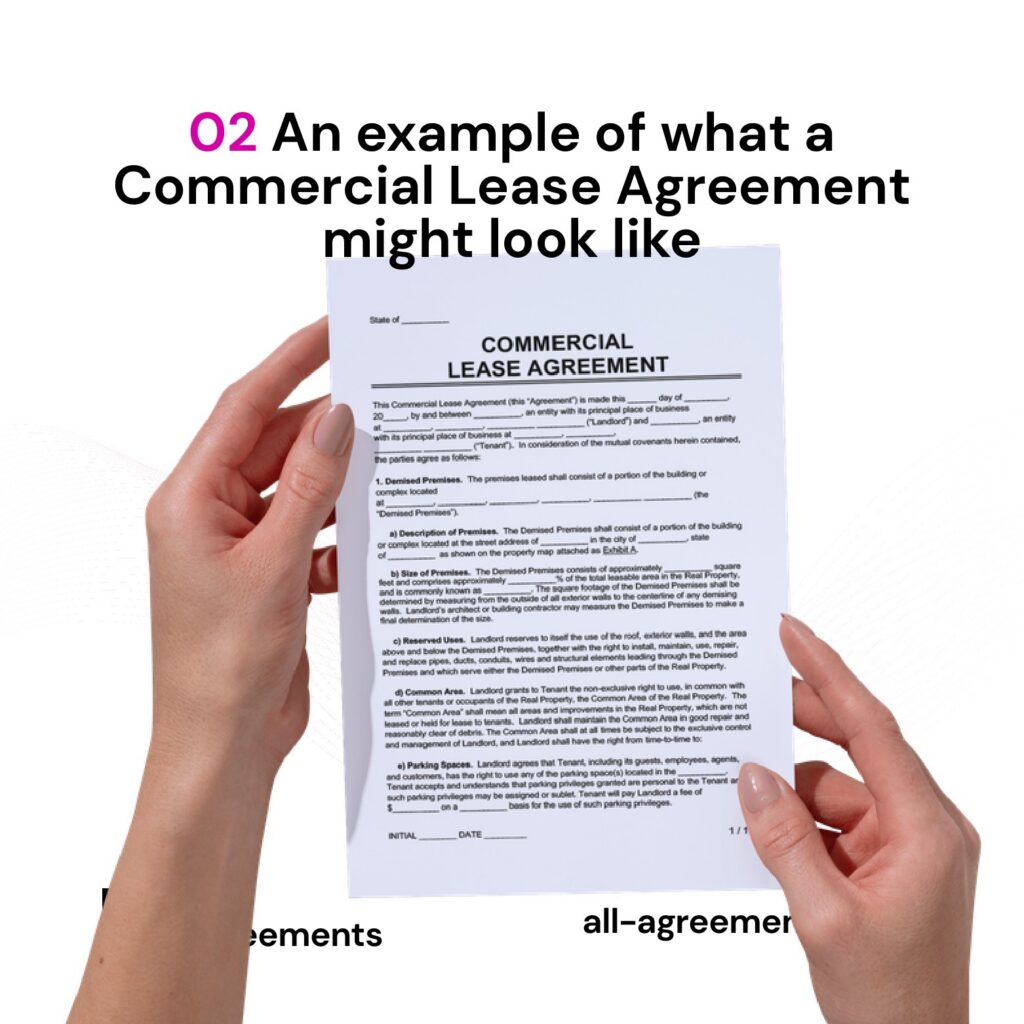
Create a custom Commercial Lease Agreement designed around your commercial property, business operations, and landlord-tenant responsibilities.
Clearly define rent terms, permitted use, maintenance obligations, operating expenses, renewal options, and commercial lease protections in one professional agreement.
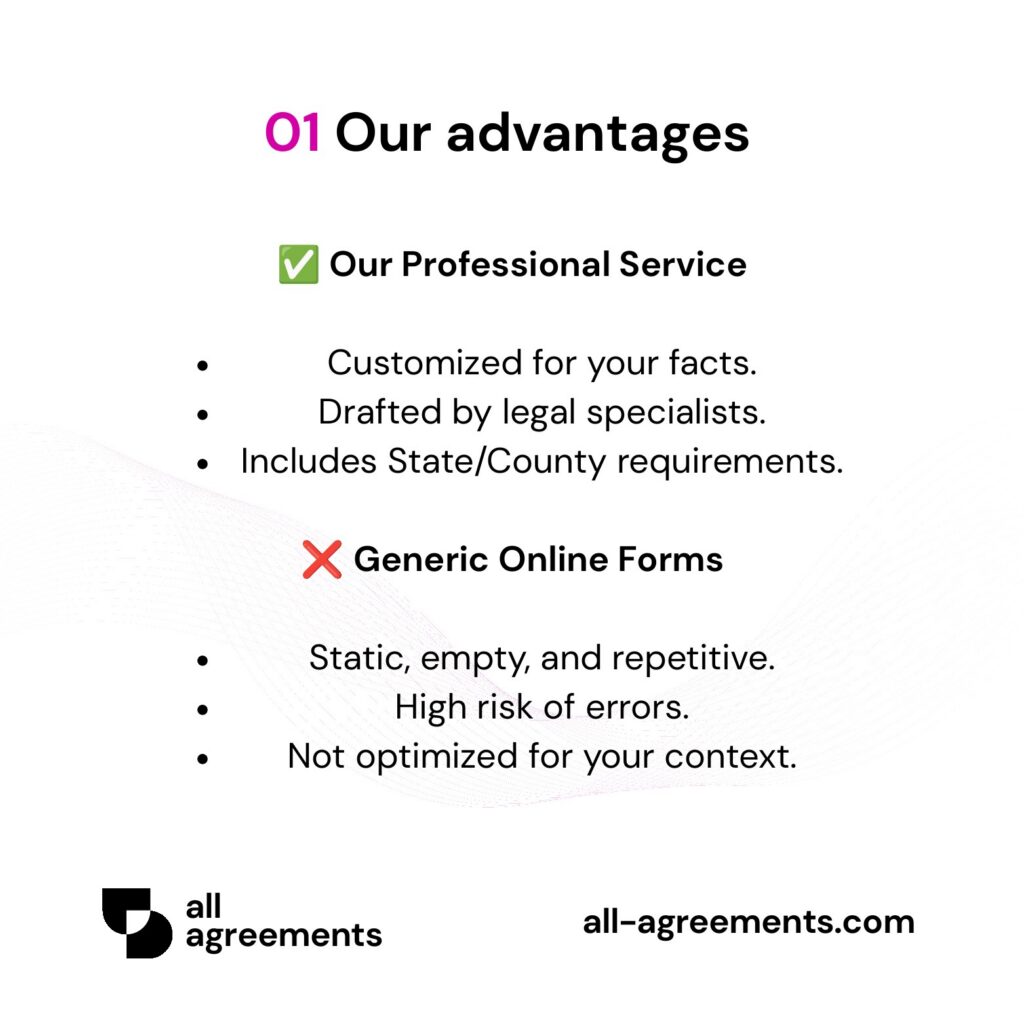
- Custom-Prepared Document: Structured using the commercial property, landlord, tenant, rental terms, and business requirements you provide.
- Complete Lease Structure: Document rent obligations, security deposits, maintenance duties, insurance requirements, property expenses, and renewal provisions.
- Commercial Property Protection: Address tenant responsibilities, landlord rights, default terms, termination procedures, dispute resolution, and additional lease provisions.
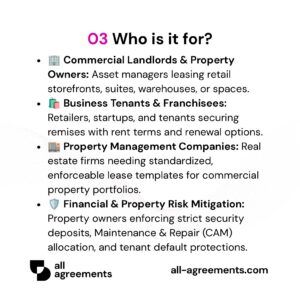
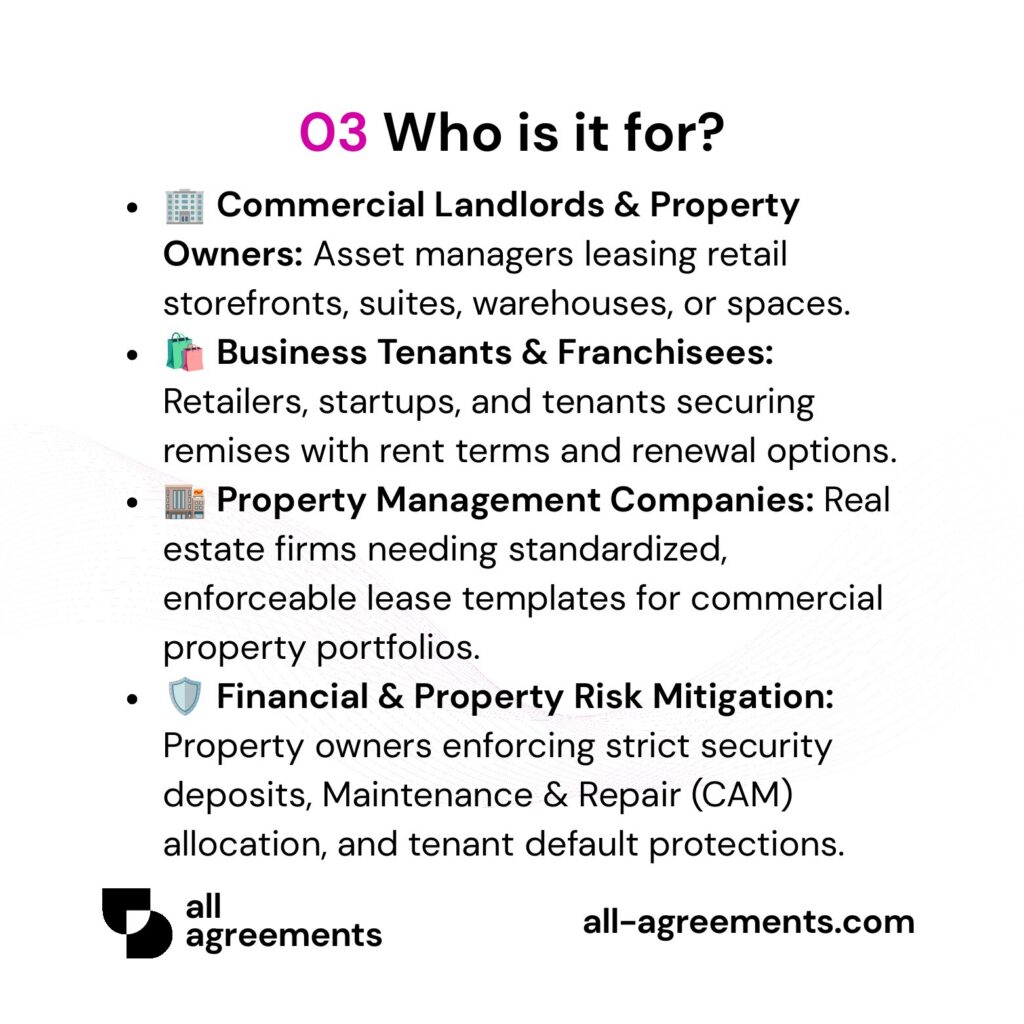
💡 Designed for landlords, tenants, investors, and commercial real estate professionals throughout the United States and adaptable to the governing state law and specific leasing arrangement selected by the parties.
Why Legal Record Keeping Is Important
Legal documents often serve as evidence when questions or disputes arise. Without proper records, it may be difficult to prove ownership, payment, compliance, or the terms of an agreement.
Effective record keeping helps:
- Protect legal rights
- Support financial claims
- Prove ownership
- Document agreements
- Track obligations
- Prepare for audits
- Resolve disputes
- Maintain business organization
A missing document can sometimes create unnecessary legal and financial problems.
Types of Legal Records You Should Keep
1. Contracts and Agreements
Contracts are among the most important records to maintain.
Keep copies of:
- Signed agreements
- Amendments
- Renewals
- Addendums
- Statements of work
- Exhibits
- Attachments
Examples include:
- Service Agreements
- Lease Agreements
- Sales Agreements
- Employment Agreements
- Partnership Agreements
- Vendor Agreements
Always keep the final signed version, not only drafts.
2. Real Estate Records
Property owners should maintain complete property files.
Important documents include:
- Purchase agreements
- Deeds
- Title documents
- Property disclosures
- Mortgage documents
- Lease agreements
- Property tax records
- Insurance policies
- Inspection reports
- Repair records
These documents help prove ownership and support future transactions.
3. Business Records
Business owners should maintain organized operational records.
Examples include:
- Business formation documents
- Operating agreements
- Partnership agreements
- Corporate records
- Licenses and permits
- Vendor contracts
- Client agreements
- Employee records
- Tax documents
Good records help demonstrate proper business management.
4. Financial Records
Financial documentation is essential for both individuals and businesses.
Keep:
- Invoices
- Receipts
- Payment confirmations
- Bank statements
- Loan agreements
- Tax filings
- Expense records
- Financial reports
Financial records help verify transactions and obligations.
5. Employment Records
Employers should maintain employee-related documentation.
Records may include:
- Employment agreements
- Offer letters
- Payroll records
- Benefits information
- Performance documents
- Workplace policies
- Termination documents
Proper employment records help document workplace decisions.
6. Intellectual Property Records
Businesses and creators should maintain records related to intellectual property.
Examples include:
- Copyright registrations
- Trademark documents
- Licensing agreements
- Patent records
- Creative work ownership agreements
- Software documentation
These records help protect valuable assets.
7. Legal Notices and Communications
Important communications should also be preserved.
Keep copies of:
- Demand letters
- Notices of termination
- Breach notices
- Lease notices
- Official correspondence
- Emails related to agreements
Communication records may provide important evidence.
8. Insurance Documents
Insurance records should be maintained for protection and claims.
Keep:
- Policies
- Renewals
- Coverage information
- Claims documents
- Communication with insurers
- Payment records
Insurance documents are often needed during emergencies or disputes.
How to Organize Legal Records
Create Categories
Separate documents into logical categories.
Examples:
- Personal documents
- Property records
- Business contracts
- Financial records
- Tax documents
- Insurance files
- Employment records
Organized categories make documents easier to find.
Use Consistent File Names
Create a naming system that makes documents easy to identify.
Example:
2026-07-26_Service_Agreement_Client_Name.pdf
Include:
- Date
- Document type
- Related person or company
- Version number if needed
Consistent naming prevents confusion.
Maintain a Document Inventory
Create a list of important records.
Include:
- Document name
- Date created
- Parties involved
- Location stored
- Expiration date
- Renewal date
A document inventory helps track important deadlines.
Store Both Digital and Physical Copies
Important documents should often be stored in multiple formats.
Consider keeping:
- Digital copies
- Physical originals
- Backup copies
This helps protect against loss, damage, or unauthorized access.
Digital Legal Record Keeping
Digital storage has become a common method for managing legal documents.
Good practices include:
- Use secure cloud storage
- Enable password protection
- Create regular backups
- Use organized folders
- Maintain version control
- Protect confidential information
Digital records should be stored securely because many contain sensitive information.
Physical Document Storage
Some original documents should be carefully preserved.
Examples include:
- Deeds
- Original signed agreements
- Certificates
- Notarized documents
- Estate planning documents
Consider using:
- Fireproof storage
- Secure filing systems
- Locked cabinets
Tracking Important Dates
Many legal documents have deadlines.
Track:
- Contract expiration dates
- Lease renewals
- Insurance renewals
- License renewals
- Payment deadlines
- Notice periods
Missing a deadline may result in financial or legal consequences.
Legal Record Retention Guide
Retention periods depend on the document type and applicable requirements.
Contracts
Keep:
- Active agreements
- Expired agreements
- Amendments
- Related communications
Retain records long enough to address possible disputes.
Tax Records
Maintain:
- Tax returns
- Receipts
- Financial statements
- Supporting documents
Tax retention requirements vary depending on jurisdiction and circumstances.
Property Records
Keep:
- Ownership documents
- Improvement records
- Tax records
- Insurance information
Property records may remain important for many years.
Business Records
Maintain:
- Formation documents
- Financial records
- Contracts
- Corporate records
Long-term retention helps support business continuity.
Legal Record Keeping for Different Groups
For Homeowners
Important records include:
- Deeds
- Mortgage documents
- Home improvement receipts
- Insurance policies
- Property inspections
These records help protect ownership and support future sales.
For Landlords
Maintain:
- Lease agreements
- Security deposit records
- Tenant communications
- Inspection reports
- Repair invoices
- Notices
Complete records help manage landlord responsibilities.
For Freelancers
Keep:
- Client agreements
- Invoices
- Payment records
- NDAs
- Project files
- Intellectual property agreements
Documentation helps protect income and professional relationships.
For Small Businesses
Maintain:
- Contracts
- Vendor records
- Employee documents
- Licenses
- Financial information
Good records support business growth and compliance.
Common Legal Record Keeping Mistakes
People and businesses often make mistakes by:
- Losing signed agreements
- Keeping only email conversations
- Failing to organize documents
- Not backing up files
- Ignoring expiration dates
- Mixing personal and business records
- Destroying documents too early
- Keeping outdated versions without tracking changes
A simple organization system can prevent many problems.
Best Practices for Legal Records
Review Records Regularly
Schedule periodic reviews to:
- Remove unnecessary duplicates
- Update files
- Check expiration dates
- Confirm backups
Protect Confidential Information
Limit access to sensitive records.
Use:
- Password protection
- Secure storage
- Access permissions
Keep Complete Files
Store related documents together.
For example, a contract file may include:
- Agreement
- Amendments
- Invoices
- Communications
- Supporting documents
Document Important Decisions
Important conversations should be recorded in writing when possible.
Written confirmation helps prevent disagreements.
Frequently Asked Questions
What Legal Documents Should I Keep?
Important documents include contracts, property records, financial records, insurance documents, business records, and official notices.
Should I Keep Old Contracts?
Yes. Expired agreements may still be important if disputes or questions arise later.
Is Digital Storage Enough?
Digital storage is useful, but important original documents may also require secure physical storage.
How Should Legal Documents Be Organized?
Use categories, consistent file names, backups, and a document inventory system.
Why Are Legal Records Important?
They provide evidence of ownership, agreements, payments, responsibilities, and compliance.
Conclusion
Legal record keeping is an essential practice for protecting personal, business, and property interests. Organized records provide evidence, improve decision-making, support compliance, and reduce the risk of disputes.
By maintaining contracts, financial records, property documents, communications, and other important paperwork in a secure and organized system, individuals and businesses can better protect their rights and manage their responsibilities.
Good record keeping is not just about storing documents—it is about creating a reliable history of important decisions, transactions, and legal relationships.

On sale products
-
Rent Receipt Template
Original price was: $14.99.$5.99Current price is: $5.99. -
Move-In Checklist
Original price was: $19.99.$8.99Current price is: $8.99. -
Move-Out Checklist
Original price was: $19.99.$8.99Current price is: $8.99. -
Landlord Reference Letter
Original price was: $19.99.$8.99Current price is: $8.99. -
Tenant Reference Letter
Original price was: $19.99.$8.99Current price is: $8.99.


Legal Document Preparation Services (A-J)
A
Affidavit Template Preparation Service
Agency Agreement Preparation Service
Asset Purchase Agreement Preparation Service
B
Bill of Sale Preparation Service
Boat Bill of Sale Preparation Service
Business Loan Agreement Preparation Service
Business Partnership Agreement Preparation Service
C
Character Reference Letter Preparation Service
Child Care Authorization Preparation Service
Child Support Agreement Preparation Service
Co-Parenting Agreement Preparation Service
Commercial Lease Agreement Preparation Service
Commercial Property Lease Preparation Service
Commission Agreement Preparation Service
Consent Form Preparation Service
Consulting Agreement Preparation Service
Construction Contract Preparation Service
Contractor Agreement Preparation Service
D
Debt Settlement Agreement Preparation Service
Deed Transfer Form Preparation Service
Demand Letter Preparation Service
E
Easement Agreement Preparation Service
Early Lease Termination Letter Preparation Service
Electrical Contract Preparation Service
Employee Handbook Preparation Service
Employment Contract Preparation Service
Eviction Notice Preparation Service
F
Franchise Agreement Preparation Service
G
Gift Letter Preparation Service
Guardianship Form Preparation Service
H
HOA Agreement Preparation Service
Home Improvement Agreement Preparation Service
Home Inspection Checklist Preparation Service
I
Independent Contractor Agreement Preparation Service
Internship Agreement Preparation Service
J
Joint Venture Agreement Preparation Service
Legal Document Preparation Services (L-Q)
L
Landlord Reference Letter Preparation Service
Last Will and Testament Preparation Service
Late Rent Notice Preparation Service
Lease Extension Agreement Preparation Service
Lease Renewal Agreement Preparation Service
Lease Termination Agreement Preparation Service
Letter of Intent Preparation Service
Listing Agreement Preparation Service
Living Will Preparation Service
M
Medical Power of Attorney Preparation Service
Month-to-Month Lease Agreement Preparation Service
Move-In Checklist Preparation Service
Move-Out Checklist Preparation Service
Motorcycle Bill of Sale Preparation Service
Mutual NDA Preparation Service
N
Name Change Letter Preparation Service
NDA Agreement Preparation Service
Non-Compete Agreement Preparation Service
Notice to Quit Preparation Service
O
Operating Agreement Preparation Service
P
Parking Space Rental Agreement Preparation Service
Personal Loan Agreement Preparation Service
Personal Property Agreement Preparation Service
Pet Addendum Preparation Service
Plumbing Contract Preparation Service
Power of Attorney Preparation Service
Promissory Note Preparation Service
Property Disclosure Form Preparation Service
Property Investment Agreement Preparation Service
Property Maintenance Agreement Preparation Service
Property Management Agreement Preparation Service
Property Management Contract Preparation Service
Property Sale Contract Preparation Service
Purchase Agreement Preparation Service
Q
Quitclaim Deed Preparation Service
Legal Document Preparation Services (R-W)
R
Real Estate Agent Agreement Preparation Service
Real Estate Commission Agreement Preparation Service
Real Estate Purchase Agreement Preparation Service
Remodeling Agreement Preparation Service
Rent Increase Notice Preparation Service
Rent Receipt Preparation Service
Rental Application Form Preparation Service
Residential Lease Agreement Preparation Service
Residential Property Lease Preparation Service
Room Rental Agreement Preparation Service
Roommate Agreement Preparation Service
Roofing Contract Preparation Service
S
Sales Agreement Preparation Service
Security Deposit Agreement Preparation Service
Separation Agreement Preparation Service
Service Agreement Preparation Service
Shareholder Agreement Preparation Service
Simple Rent Agreement Preparation Service
Sublease Agreement Preparation Service
Supplier Agreement Preparation Service
T
Tenant Reference Letter Preparation Service
Travel Consent Form Preparation Service
V
Vacation Rental Agreement Preparation Service
Vehicle Bill of Sale Preparation Service
Vendor Agreement Preparation Service
W
Warranty Deed Preparation Service

