
Property Management Agreement
Manage rental properties with a custom-prepared Property Management Agreement tailored to your management arrangement.
Document management services, authority, fees, maintenance responsibilities, rent collection, reporting, and operational procedures.
- Custom-Prepared Agreement: Built using your property management information.
- Comprehensive Management Terms: Covers authority, fees, tenant services, maintenance, accounting, and reporting.
- Professional Documentation: Prepared for residential, commercial, and mixed-use properties throughout the United States.
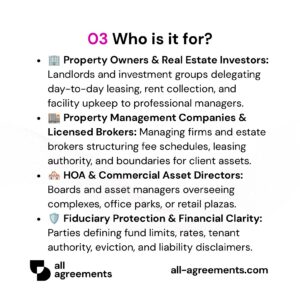
💡 Prepared for landlords, investors, property owners, and management companies across all U.S. states.
What Is a Property Management Agreement?
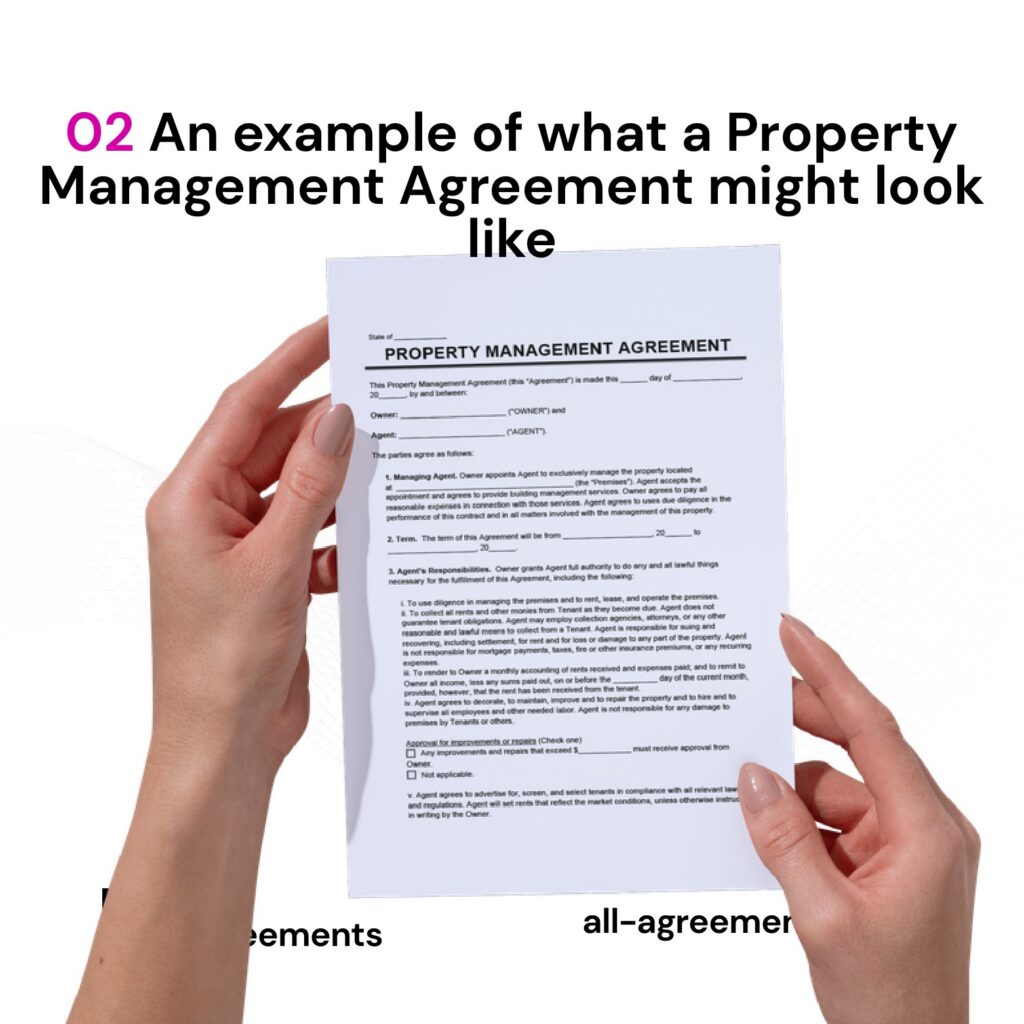
A Property Management Agreement is a contract between a property owner and a property manager that authorizes the manager to perform specific management services on behalf of the owner.
The property manager agrees to manage the property according to the terms of the agreement, and the owner agrees to compensate the manager for those services.
A Property Management Agreement commonly includes:
- Owner information
- Property manager information
- Property description
- Management services
- Manager authority
- Tenant management responsibilities
- Rent collection terms
- Maintenance responsibilities
- Management fees
- Expense reimbursement
- Term and termination provisions
- Liability provisions
- Signature requirements
Property Management Agreements are commonly used for:
- Residential rental properties
- Apartment buildings
- Commercial properties
- Vacation rentals
- Investment properties
- Multi-unit properties
A properly prepared agreement helps create a professional relationship between the owner and manager.
Why a Property Management Agreement Is Important
Managing rental property involves financial, operational, and legal responsibilities.
A Property Management Agreement helps:
- Define the manager’s duties
- Establish owner expectations
- Clarify payment arrangements
- Authorize property management activities
- Protect both parties’ interests
- Reduce misunderstandings
- Create a written record of responsibilities
A clear agreement helps ensure the property is managed efficiently and consistently.
Before You Start Creating a Property Management Agreement
Before preparing the agreement, both parties should discuss the scope of services and expectations.
Important details may include:
- Owner’s legal name
- Property manager’s information
- Property address
- Type of property
- Services required
- Management fees
- Tenant responsibilities
- Maintenance procedures
- Financial reporting requirements
- Contract duration
Proper planning helps create an agreement that matches the owner’s needs.
Step-by-Step Guide to Creating a Property Management Agreement
Step 1. Identify the Parties
The agreement should clearly identify the property owner and property manager.
Include:
Property Owner Information
- Full legal name
- Address
- Contact information
Property Manager Information
- Individual or company name
- Business address
- Contact information
- License information, if required
Accurate identification ensures that the correct parties are bound by the agreement.
Step 2. Describe the Property
The agreement should clearly identify the property being managed.
Include:
- Property address
- Type of property
- Number of units, if applicable
- Description of buildings or facilities
A detailed property description helps define the manager’s responsibilities.
Step 3. Define the Management Services
The agreement should explain the specific services the property manager will provide.
Services may include:
- Advertising vacancies
- Screening tenants
- Collecting rent
- Handling tenant communication
- Coordinating repairs
- Managing inspections
- Maintaining records
- Preparing financial reports
Clearly defining services prevents disputes about expectations.
Step 4. Establish Manager Authority
The agreement should explain what actions the property manager is authorized to take.
Authority may include:
- Communicating with tenants
- Signing certain documents
- Collecting rental payments
- Hiring contractors
- Scheduling maintenance
- Handling tenant requests
The owner should clearly define the limits of the manager’s authority.
Step 5. Define Tenant Management Responsibilities
Property management often involves handling tenant-related matters.
Responsibilities may include:
- Advertising rental units
- Reviewing rental applications
- Conducting tenant screening
- Preparing lease documents
- Collecting security deposits
- Addressing tenant complaints
- Managing move-in and move-out procedures
Clear tenant management duties help establish expectations.
Step 6. Explain Rent Collection Procedures
The agreement should describe how rental payments will be handled.
Include:
- Rent collection methods
- Payment processing procedures
- Deposit of funds
- Owner payment schedule
- Late payment handling
Clear financial procedures help protect both parties.
Step 7. Establish Management Fees
The agreement should explain how the property manager will be compensated.
Fees may include:
- Monthly management fee
- Percentage of collected rent
- Leasing fees
- Maintenance coordination fees
- Inspection fees
- Additional service charges
The agreement should clearly state when and how fees are paid.
Step 8. Define Maintenance Responsibilities
The agreement should explain how property repairs and maintenance will be handled.
Include:
- Routine maintenance responsibilities
- Emergency repair procedures
- Approval limits for expenses
- Contractor selection process
- Repair documentation requirements
Clear maintenance rules help avoid delays and unexpected costs.
Step 9. Address Property Expenses
The agreement should explain how expenses will be paid.
Expenses may include:
- Repairs
- Utilities
- Insurance
- Taxes
- Vendor payments
- Cleaning services
The agreement should specify whether expenses are paid directly by the owner or from property income.
Step 10. Include Financial Reporting Requirements
Property owners often require regular financial information.
Reports may include:
- Rent collected
- Expenses paid
- Maintenance costs
- Outstanding balances
- Property income statements
Clear reporting requirements help owners monitor property performance.
Step 11. Define Inspection Responsibilities
The agreement may explain property inspection procedures.
Include:
- Inspection frequency
- Inspection reports
- Tenant compliance checks
- Documentation requirements
Regular inspections help protect the condition of the property.
Step 12. Include Legal Compliance Responsibilities
The agreement should address compliance with applicable laws.
Responsibilities may include:
- Following landlord-tenant laws
- Maintaining required records
- Handling security deposits properly
- Following housing regulations
- Complying with local requirements
Clear compliance responsibilities reduce legal risks.
Step 13. Establish the Agreement Term
The agreement should specify how long the relationship will continue.
Include:
- Start date
- End date, if applicable
- Renewal terms
- Automatic renewal provisions
A defined term helps both parties understand the commitment.
Step 14. Include Termination Provisions
The agreement should explain how either party may end the relationship.
Termination provisions may address:
- Notice requirements
- Breach of agreement
- Failure to perform duties
- Transfer of management responsibilities
- Final accounting procedures
Clear termination terms help prevent disputes.
Step 15. Include Liability and Insurance Provisions
The agreement may address responsibility for risks related to property management.
Include:
- Liability responsibilities
- Insurance requirements
- Indemnification provisions
- Property damage procedures
These provisions help protect both parties.
Step 16. Include Dispute Resolution Terms
The agreement should explain how disagreements will be handled.
Possible methods include:
- Negotiation
- Mediation
- Arbitration
- Court proceedings
A dispute resolution clause provides a clear process for handling conflicts.
Step 17. Review the Property Management Agreement Before Signing
Before signing, both parties should carefully review the agreement.
Important items to verify include:
- Party information
- Property description
- Management duties
- Fees
- Financial procedures
- Maintenance responsibilities
- Termination rules
- Signature requirements
A careful review helps ensure the agreement accurately reflects the intended relationship.
Step 18. Sign the Property Management Agreement
The agreement becomes effective after both parties sign.
The document should include:
- Owner signature
- Property manager signature
- Date of signing
Each party should keep a copy of the completed agreement.
Keep Records During the Management Relationship
Both parties should maintain records throughout the agreement period.
Records may include:
- Signed agreement
- Financial reports
- Tenant communications
- Maintenance invoices
- Vendor contracts
- Payment records
Proper documentation helps protect both parties.
Common Mistakes to Avoid
When creating a Property Management Agreement, common mistakes include:
- Failing to define services clearly
- Leaving management fees unclear
- Not limiting manager authority
- Ignoring maintenance procedures
- Failing to address expenses
- Not including termination terms
- Using vague responsibilities
- Not maintaining proper records
A carefully prepared agreement helps create a successful management relationship.
Frequently Asked Questions
What Is the Purpose of a Property Management Agreement?
A Property Management Agreement defines the relationship between a property owner and manager and explains the services, responsibilities, and compensation involved.
Can a Property Owner Manage Property Without an Agreement?
Yes, but a written agreement is strongly recommended because it clarifies responsibilities and protects both parties.
How Are Property Managers Usually Paid?
Property managers may charge monthly fees, percentages of rental income, leasing fees, or additional service charges depending on the agreement.
Can a Property Management Agreement Be Terminated?
Yes. The agreement should explain termination procedures, notice requirements, and obligations after termination.
Does a Property Manager Need a License?
Licensing requirements vary by state and the type of services provided.
Who Is Responsible for Property Repairs?
Responsibility depends on the agreement. Some repairs may be handled by the manager, while larger expenses may require owner approval.
Conclusion
Creating a Property Management Agreement is an important step for property owners and managers who want a clear and professional working relationship.
A properly prepared agreement defines management services, authority, fees, tenant responsibilities, maintenance procedures, financial reporting, legal obligations, and termination requirements.
Before signing a Property Management Agreement, both parties should carefully review the terms and ensure the document accurately reflects their expectations.
A well-prepared Property Management Agreement is more than a management contract—it is a valuable legal tool that protects property owners, clarifies manager responsibilities, improves property operations, and provides a structured framework for successful real estate management.
On sale products
-
Rent Receipt Template
Original price was: $14.99.$5.99Current price is: $5.99. -
Move-In Checklist
Original price was: $19.99.$8.99Current price is: $8.99. -
Move-Out Checklist
Original price was: $19.99.$8.99Current price is: $8.99. -
Landlord Reference Letter
Original price was: $19.99.$8.99Current price is: $8.99. -
Tenant Reference Letter
Original price was: $19.99.$8.99Current price is: $8.99.


Legal Document Preparation Services (A-J)
A
Affidavit Template Preparation Service
Agency Agreement Preparation Service
Asset Purchase Agreement Preparation Service
B
Bill of Sale Preparation Service
Boat Bill of Sale Preparation Service
Business Loan Agreement Preparation Service
Business Partnership Agreement Preparation Service
C
Character Reference Letter Preparation Service
Child Care Authorization Preparation Service
Child Support Agreement Preparation Service
Co-Parenting Agreement Preparation Service
Commercial Lease Agreement Preparation Service
Commercial Property Lease Preparation Service
Commission Agreement Preparation Service
Consent Form Preparation Service
Consulting Agreement Preparation Service
Construction Contract Preparation Service
Contractor Agreement Preparation Service
D
Debt Settlement Agreement Preparation Service
Deed Transfer Form Preparation Service
Demand Letter Preparation Service
E
Easement Agreement Preparation Service
Early Lease Termination Letter Preparation Service
Electrical Contract Preparation Service
Employee Handbook Preparation Service
Employment Contract Preparation Service
Eviction Notice Preparation Service
F
Franchise Agreement Preparation Service
G
Gift Letter Preparation Service
Guardianship Form Preparation Service
H
HOA Agreement Preparation Service
Home Improvement Agreement Preparation Service
Home Inspection Checklist Preparation Service
I
Independent Contractor Agreement Preparation Service
Internship Agreement Preparation Service
J
Joint Venture Agreement Preparation Service
Legal Document Preparation Services (L-Q)
L
Landlord Reference Letter Preparation Service
Last Will and Testament Preparation Service
Late Rent Notice Preparation Service
Lease Extension Agreement Preparation Service
Lease Renewal Agreement Preparation Service
Lease Termination Agreement Preparation Service
Letter of Intent Preparation Service
Listing Agreement Preparation Service
Living Will Preparation Service
M
Medical Power of Attorney Preparation Service
Month-to-Month Lease Agreement Preparation Service
Move-In Checklist Preparation Service
Move-Out Checklist Preparation Service
Motorcycle Bill of Sale Preparation Service
Mutual NDA Preparation Service
N
Name Change Letter Preparation Service
NDA Agreement Preparation Service
Non-Compete Agreement Preparation Service
Notice to Quit Preparation Service
O
Operating Agreement Preparation Service
P
Parking Space Rental Agreement Preparation Service
Personal Loan Agreement Preparation Service
Personal Property Agreement Preparation Service
Pet Addendum Preparation Service
Plumbing Contract Preparation Service
Power of Attorney Preparation Service
Promissory Note Preparation Service
Property Disclosure Form Preparation Service
Property Investment Agreement Preparation Service
Property Maintenance Agreement Preparation Service
Property Management Agreement Preparation Service
Property Management Contract Preparation Service
Property Sale Contract Preparation Service
Purchase Agreement Preparation Service
Q
Quitclaim Deed Preparation Service
Legal Document Preparation Services (R-W)
R
Real Estate Agent Agreement Preparation Service
Real Estate Commission Agreement Preparation Service
Real Estate Purchase Agreement Preparation Service
Remodeling Agreement Preparation Service
Rent Increase Notice Preparation Service
Rent Receipt Preparation Service
Rental Application Form Preparation Service
Residential Lease Agreement Preparation Service
Residential Property Lease Preparation Service
Room Rental Agreement Preparation Service
Roommate Agreement Preparation Service
Roofing Contract Preparation Service
S
Sales Agreement Preparation Service
Security Deposit Agreement Preparation Service
Separation Agreement Preparation Service
Service Agreement Preparation Service
Shareholder Agreement Preparation Service
Simple Rent Agreement Preparation Service
Sublease Agreement Preparation Service
Supplier Agreement Preparation Service
T
Tenant Reference Letter Preparation Service
Travel Consent Form Preparation Service
V
Vacation Rental Agreement Preparation Service
Vehicle Bill of Sale Preparation Service
Vendor Agreement Preparation Service
W
Warranty Deed Preparation Service

