


Construction Contract
Create a custom Construction Contract designed around your construction project, contractor relationship, and business requirements.
Clearly define construction scope, payments, materials, timelines, warranties, permits, and responsibilities in one professional agreement.
- Custom-Prepared Document: Structured using client, contractor, subcontractor, project, materials, and construction details you provide.
- Clear Construction Terms: Document pricing, payment schedules, change orders, warranties, permits, inspections, and project obligations.
- Contractor & Client Protection: Address delays, termination rights, lien waivers, dispute resolution, and additional construction requirements.
💡 Designed for contractors, subcontractors, and property owners throughout the United States and adaptable to the governing state law and specific construction project selected by the parties.
What Is a Construction Contract?
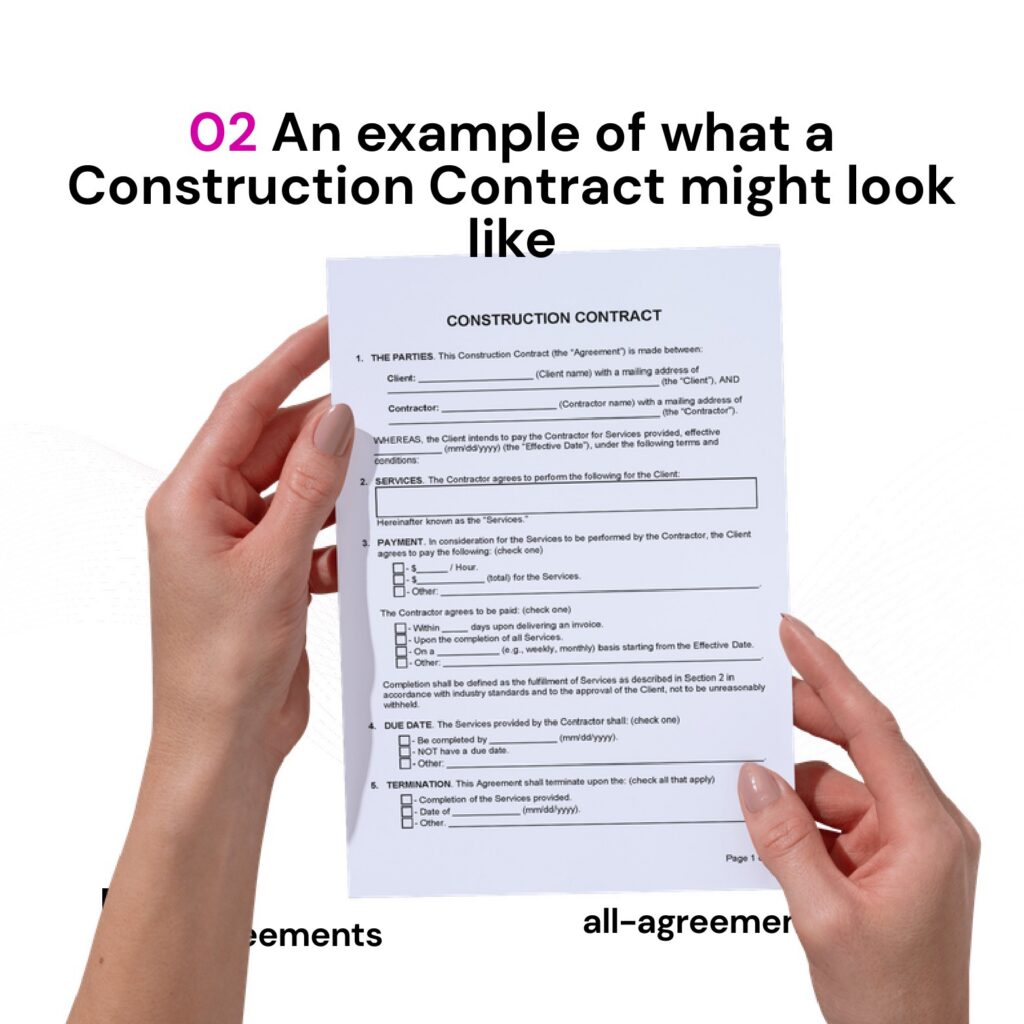
A Construction Contract is a legally binding agreement between a property owner and a contractor that outlines the requirements for completing a construction project.
The contractor agrees to perform specific work, and the owner agrees to provide payment according to the terms described in the contract.
A Construction Contract commonly includes:
- Owner information
- Contractor information
- Project description
- Scope of work
- Materials and specifications
- Project timeline
- Payment terms
- Change order procedures
- Permit responsibilities
- Insurance requirements
- Warranty provisions
- Dispute resolution terms
- Signature requirements
Construction Contracts are commonly used for:
- New home construction
- Home remodeling
- Commercial construction
- Renovation projects
- Roofing work
- Electrical projects
- Plumbing work
- Landscaping projects
- Property improvements
A properly prepared contract helps ensure that everyone understands their responsibilities.
Why a Construction Contract Is Important
Construction projects can involve unexpected costs, delays, and disagreements if responsibilities are not clearly defined.
A Construction Contract helps:
- Define the project scope
- Establish payment expectations
- Set deadlines
- Protect both parties’ rights
- Document materials and specifications
- Manage project changes
- Reduce disputes
- Provide legal protection
A clear agreement creates accountability and improves communication throughout the construction process.
Before You Start Creating a Construction Contract
Before preparing the contract, both parties should gather important project information.
Important details may include:
- Owner’s name and contact information
- Contractor’s information
- Project location
- Description of work
- Construction plans
- Estimated costs
- Materials list
- Start and completion dates
- Required permits
- Insurance information
Proper planning helps create a complete and accurate agreement.
Step-by-Step Guide to Creating a Construction Contract
Step 1. Identify the Parties
The contract should clearly identify everyone involved.
Include:
Owner Information
- Full legal name
- Address
- Contact information
Contractor Information
- Business name
- Contractor’s legal name
- License information, if applicable
- Address
- Contact information
Accurate identification ensures that the correct parties are legally bound by the agreement.
Step 2. Describe the Construction Project
The contract should clearly explain the work being performed.
Include:
- Project address
- Type of construction work
- Purpose of the project
- General description of improvements
Examples include:
- Building an addition
- Remodeling a kitchen
- Constructing a home
- Repairing a roof
- Renovating commercial space
A detailed project description helps prevent disagreements about expectations.
Step 3. Define the Scope of Work
The scope of work is one of the most important sections of a Construction Contract.
It should explain:
- Tasks the contractor will complete
- Work that is excluded
- Required materials
- Installation requirements
- Quality standards
A detailed scope of work helps both parties understand exactly what is included.
Step 4. Specify Materials and Specifications
The contract should describe the materials and standards required for the project.
Include:
- Material types
- Brands or quality standards
- Colors and finishes
- Equipment requirements
- Construction specifications
Clear specifications help prevent disputes about substitutions or quality.
Step 5. Establish the Project Timeline
The contract should include important project dates.
Include:
- Start date
- Estimated completion date
- Milestones
- Inspection dates
- Delivery deadlines
The agreement may also address delays caused by:
- Weather
- Material shortages
- Permit delays
- Owner-requested changes
- Unforeseen conditions
A timeline helps both parties plan effectively.
Step 6. Define Payment Terms
The contract should clearly explain how and when payment will be made.
Include:
- Total contract price
- Deposit amount
- Payment schedule
- Progress payments
- Final payment terms
- Accepted payment methods
Common payment structures include:
- Fixed-price contracts
- Cost-plus contracts
- Time and materials contracts
- Milestone-based payments
Clear payment terms reduce financial disputes.
Step 7. Include Change Order Procedures
Construction projects often require changes after work begins.
A change order section should explain:
- How changes are requested
- Approval process
- Additional costs
- Timeline adjustments
- Required documentation
Written change orders help prevent disagreements about additional work.
Step 8. Address Permits and Approvals
The contract should specify who is responsible for obtaining necessary approvals.
Responsibilities may include:
- Building permits
- Inspections
- Government approvals
- Code compliance
Clearly assigning responsibilities helps avoid delays.
Step 9. Define Contractor Responsibilities
The contract should explain the contractor’s obligations.
Responsibilities may include:
- Completing work according to specifications
- Providing labor and materials
- Following safety requirements
- Maintaining the work area
- Complying with building codes
- Obtaining required licenses
Clear responsibilities help establish performance expectations.
Step 10. Define Owner Responsibilities
The owner also has responsibilities under the agreement.
These may include:
- Providing access to the property
- Making timely payments
- Approving materials and designs
- Providing necessary information
- Communicating project decisions
Defining both parties’ duties creates a balanced agreement.
Step 11. Include Insurance and Liability Requirements
Construction contracts often address risk management.
Insurance provisions may include:
- General liability insurance
- Workers’ compensation coverage
- Property damage responsibility
- Accident responsibility
Clear insurance requirements help protect both parties.
Step 12. Include Warranty Provisions
The contract may include warranties regarding completed work.
Warranty terms may address:
- Length of warranty period
- Covered repairs
- Excluded issues
- Repair responsibilities
Warranty provisions provide additional protection after project completion.
Step 13. Address Delays and Unforeseen Conditions
Construction projects may experience unexpected issues.
The contract may explain procedures for:
- Material shortages
- Hidden property conditions
- Weather delays
- Labor problems
- Additional required work
A clear process helps manage unexpected situations.
Step 14. Include Dispute Resolution Terms
The contract should explain how disagreements will be handled.
Possible methods include:
- Negotiation
- Mediation
- Arbitration
- Court proceedings
A dispute resolution clause can help parties resolve conflicts efficiently.
Step 15. Include Termination Conditions
The contract should explain when either party may end the agreement.
Termination provisions may address:
- Failure to perform work
- Failure to make payments
- Contract violations
- Project abandonment
Clear termination terms help protect both parties.
Step 16. Review the Construction Contract Before Signing
Before signing, both parties should carefully review the agreement.
Important items to verify include:
- Party information
- Scope of work
- Materials
- Project timeline
- Payment schedule
- Change procedures
- Insurance requirements
- Warranty terms
- Signature requirements
A careful review helps ensure the contract reflects the actual project agreement.
Step 17. Sign the Construction Contract
The contract becomes effective after the required parties sign.
The agreement should include:
- Owner signature
- Contractor signature
- Date of signing
Each party should receive a copy of the signed contract.
Keep Records Throughout the Project
Both parties should maintain documentation during construction.
Records may include:
- Signed contract
- Change orders
- Payment receipts
- Invoices
- Project communications
- Inspection records
- Completion documents
Good recordkeeping helps resolve potential disputes.
Common Mistakes to Avoid
When creating a Construction Contract, common mistakes include:
- Using a vague project description
- Failing to define payment terms
- Not documenting changes
- Ignoring permit responsibilities
- Leaving deadlines unclear
- Failing to address delays
- Not including warranty terms
- Starting work without a signed agreement
A carefully prepared contract helps prevent costly misunderstandings.
Frequently Asked Questions
What Is the Purpose of a Construction Contract?
A Construction Contract establishes the responsibilities, payment terms, project requirements, and obligations between a property owner and contractor.
Do Construction Contracts Need to Be Written?
Requirements vary by jurisdiction, but written contracts are strongly recommended for construction projects because they clearly document the agreement.
Can a Construction Contract Be Changed After Signing?
Yes. Changes should generally be documented through written change orders signed by both parties.
Who Provides Materials in a Construction Contract?
The responsibility depends on the agreement. Some contracts require the contractor to provide materials, while others assign responsibilities differently.
What Happens If a Contractor Does Not Complete the Work?
The available options depend on the contract terms and applicable law, including possible negotiation, dispute resolution, or legal remedies.
Should a Construction Contract Include a Warranty?
Including warranty provisions is recommended because it clarifies responsibilities after project completion.
Conclusion
Creating a Construction Contract is an essential step in protecting both property owners and contractors before beginning a construction project.
A properly prepared agreement defines the project scope, responsibilities, payment terms, timeline, materials, change procedures, insurance requirements, warranties, and dispute resolution process.
Before signing a Construction Contract, both parties should carefully review the terms and ensure the agreement accurately reflects the project requirements.
A well-prepared Construction Contract is more than a simple agreement—it is a valuable legal tool that creates clarity, protects financial interests, reduces disputes, and provides a structured framework for successfully completing construction work.
On sale products
-
Rent Receipt Template
Original price was: $14.99.$5.99Current price is: $5.99. -
Move-In Checklist
Original price was: $19.99.$8.99Current price is: $8.99. -
Move-Out Checklist
Original price was: $19.99.$8.99Current price is: $8.99. -
Landlord Reference Letter
Original price was: $19.99.$8.99Current price is: $8.99. -
Tenant Reference Letter
Original price was: $19.99.$8.99Current price is: $8.99.


Legal Document Preparation Services (A-J)
A
Affidavit Template Preparation Service
Agency Agreement Preparation Service
Asset Purchase Agreement Preparation Service
B
Bill of Sale Preparation Service
Boat Bill of Sale Preparation Service
Business Loan Agreement Preparation Service
Business Partnership Agreement Preparation Service
C
Character Reference Letter Preparation Service
Child Care Authorization Preparation Service
Child Support Agreement Preparation Service
Co-Parenting Agreement Preparation Service
Commercial Lease Agreement Preparation Service
Commercial Property Lease Preparation Service
Commission Agreement Preparation Service
Consent Form Preparation Service
Consulting Agreement Preparation Service
Construction Contract Preparation Service
Contractor Agreement Preparation Service
D
Debt Settlement Agreement Preparation Service
Deed Transfer Form Preparation Service
Demand Letter Preparation Service
E
Easement Agreement Preparation Service
Early Lease Termination Letter Preparation Service
Electrical Contract Preparation Service
Employee Handbook Preparation Service
Employment Contract Preparation Service
Eviction Notice Preparation Service
F
Franchise Agreement Preparation Service
G
Gift Letter Preparation Service
Guardianship Form Preparation Service
H
HOA Agreement Preparation Service
Home Improvement Agreement Preparation Service
Home Inspection Checklist Preparation Service
I
Independent Contractor Agreement Preparation Service
Internship Agreement Preparation Service
J
Joint Venture Agreement Preparation Service
Legal Document Preparation Services (L-Q)
L
Landlord Reference Letter Preparation Service
Last Will and Testament Preparation Service
Late Rent Notice Preparation Service
Lease Extension Agreement Preparation Service
Lease Renewal Agreement Preparation Service
Lease Termination Agreement Preparation Service
Letter of Intent Preparation Service
Listing Agreement Preparation Service
Living Will Preparation Service
M
Medical Power of Attorney Preparation Service
Month-to-Month Lease Agreement Preparation Service
Move-In Checklist Preparation Service
Move-Out Checklist Preparation Service
Motorcycle Bill of Sale Preparation Service
Mutual NDA Preparation Service
N
Name Change Letter Preparation Service
NDA Agreement Preparation Service
Non-Compete Agreement Preparation Service
Notice to Quit Preparation Service
O
Operating Agreement Preparation Service
P
Parking Space Rental Agreement Preparation Service
Personal Loan Agreement Preparation Service
Personal Property Agreement Preparation Service
Pet Addendum Preparation Service
Plumbing Contract Preparation Service
Power of Attorney Preparation Service
Promissory Note Preparation Service
Property Disclosure Form Preparation Service
Property Investment Agreement Preparation Service
Property Maintenance Agreement Preparation Service
Property Management Agreement Preparation Service
Property Management Contract Preparation Service
Property Sale Contract Preparation Service
Purchase Agreement Preparation Service
Q
Quitclaim Deed Preparation Service
Legal Document Preparation Services (R-W)
R
Real Estate Agent Agreement Preparation Service
Real Estate Commission Agreement Preparation Service
Real Estate Purchase Agreement Preparation Service
Remodeling Agreement Preparation Service
Rent Increase Notice Preparation Service
Rent Receipt Preparation Service
Rental Application Form Preparation Service
Residential Lease Agreement Preparation Service
Residential Property Lease Preparation Service
Room Rental Agreement Preparation Service
Roommate Agreement Preparation Service
Roofing Contract Preparation Service
S
Sales Agreement Preparation Service
Security Deposit Agreement Preparation Service
Separation Agreement Preparation Service
Service Agreement Preparation Service
Shareholder Agreement Preparation Service
Simple Rent Agreement Preparation Service
Sublease Agreement Preparation Service
Supplier Agreement Preparation Service
T
Tenant Reference Letter Preparation Service
Travel Consent Form Preparation Service
V
Vacation Rental Agreement Preparation Service
Vehicle Bill of Sale Preparation Service
Vendor Agreement Preparation Service
W
Warranty Deed Preparation Service

