










Power of Attorney
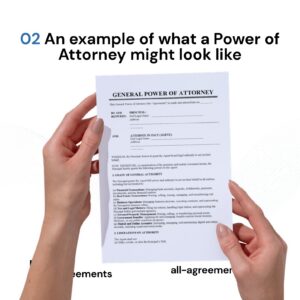
Power of Attorney preparation for U.S. individuals authorizing a trusted Agent to handle selected financial, legal, property, business, or personal matters.
Define the Principal, Agent, granted powers, effective conditions, duration, limitations, compensation, revocation, witnesses, and notarization requirements.
- Custom-Prepared Power of Attorney Form: Structured using the Principal, Agent, authority, effective date, limitation, compensation, and execution information you provide.
- Clearly Defined Agent Powers: Address banking, real estate, business, tax, personal property, financial, or other specifically selected responsibilities.
- Flexible Authority Structure: Organize durable, springing, limited, immediate, or transaction-specific authority with expiration, revocation, witnesses, and notarization terms.
💡 Need more information before ordering? Explore our full Power of Attorney Preparation Service.
What Is a Power of Attorney?
A Power of Attorney is a written legal document that authorizes one person to act on behalf of another within the authority granted by the document and applicable law.
Depending on the type of POA, the agent may be authorized to:
- Manage bank accounts
- Buy or sell real estate
- Handle investments
- Sign legal documents
- Manage business operations
- File taxes
- Conduct financial transactions
- Handle insurance matters
A Power of Attorney commonly includes:
- Principal’s information
- Agent’s information
- Scope of authority
- Effective date
- Duration of authority
- Special instructions
- Revocation provisions
- Governing law
- Signature requirements
Common types of Powers of Attorney include:
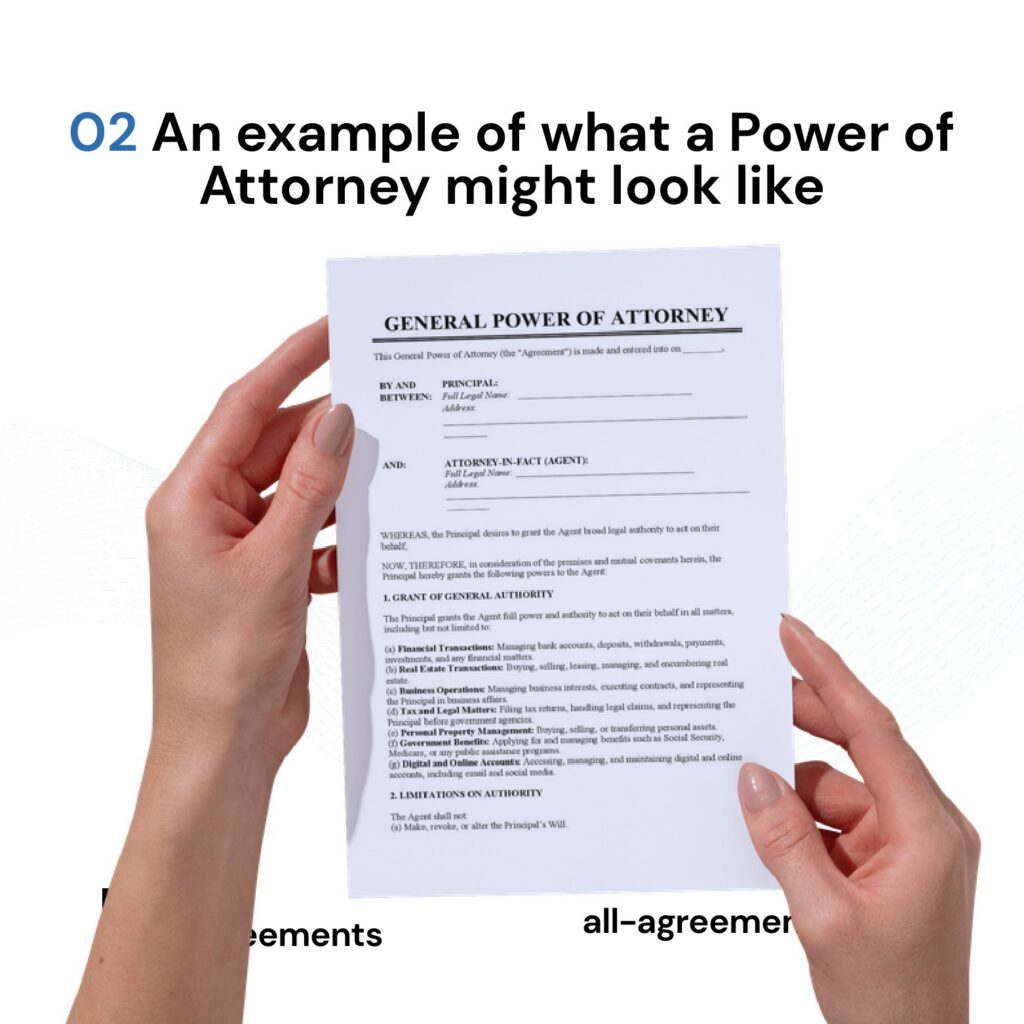
- General Power of Attorney
- Durable Power of Attorney
- Limited (Special) Power of Attorney
- Financial Power of Attorney
- Medical or Healthcare Power of Attorney
- Springing Power of Attorney
A properly drafted POA clearly defines the authority being granted.
Why a Power of Attorney Is Important
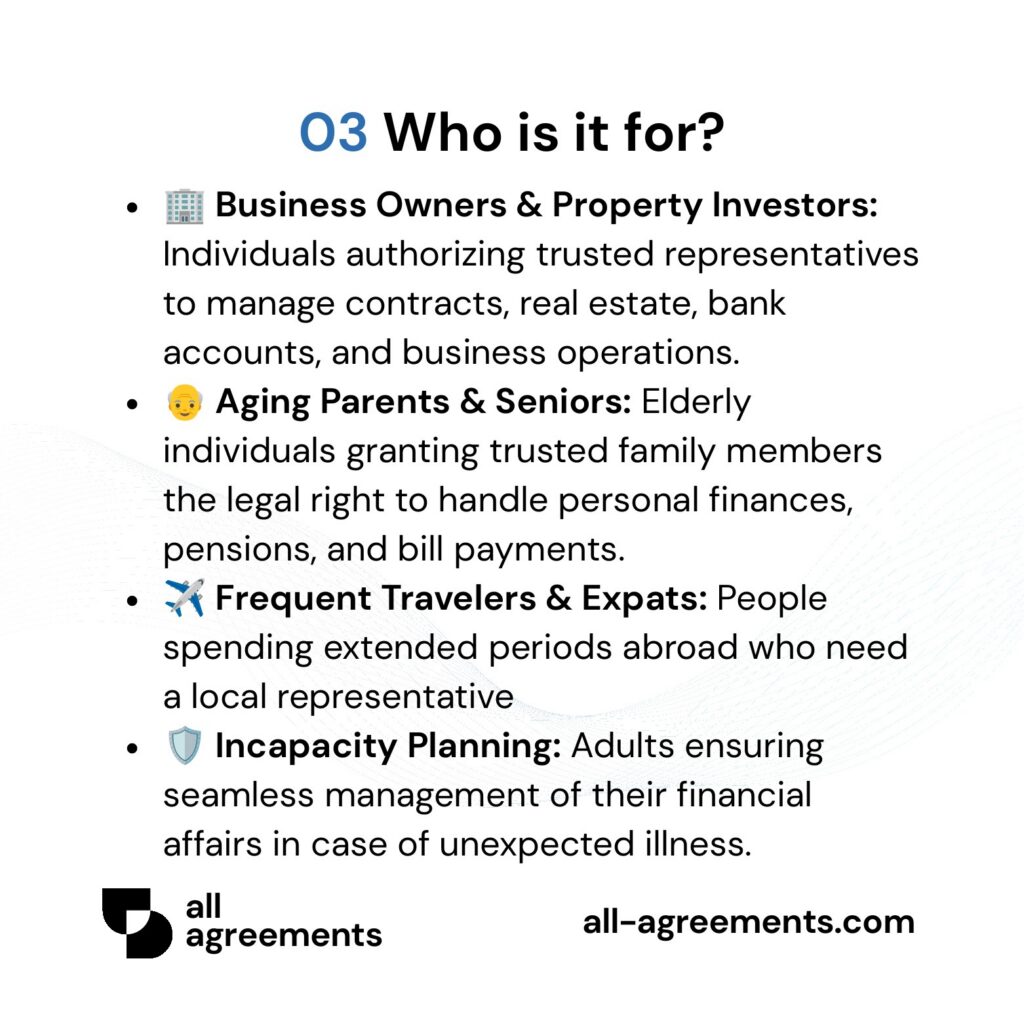
Unexpected illness, travel, military service, or other circumstances may prevent someone from handling important personal or financial matters.
A Power of Attorney helps:
- Ensure important decisions can still be made
- Avoid unnecessary delays
- Allow trusted individuals to act when needed
- Protect financial interests
- Simplify business transactions
- Support estate planning
- Reduce the need for court-appointed guardianship in some situations
A written POA provides clarity for both the principal and the agent.
Before You Start Creating a Power of Attorney
Before preparing the document, the principal should carefully consider the authority being granted and select a trustworthy agent.
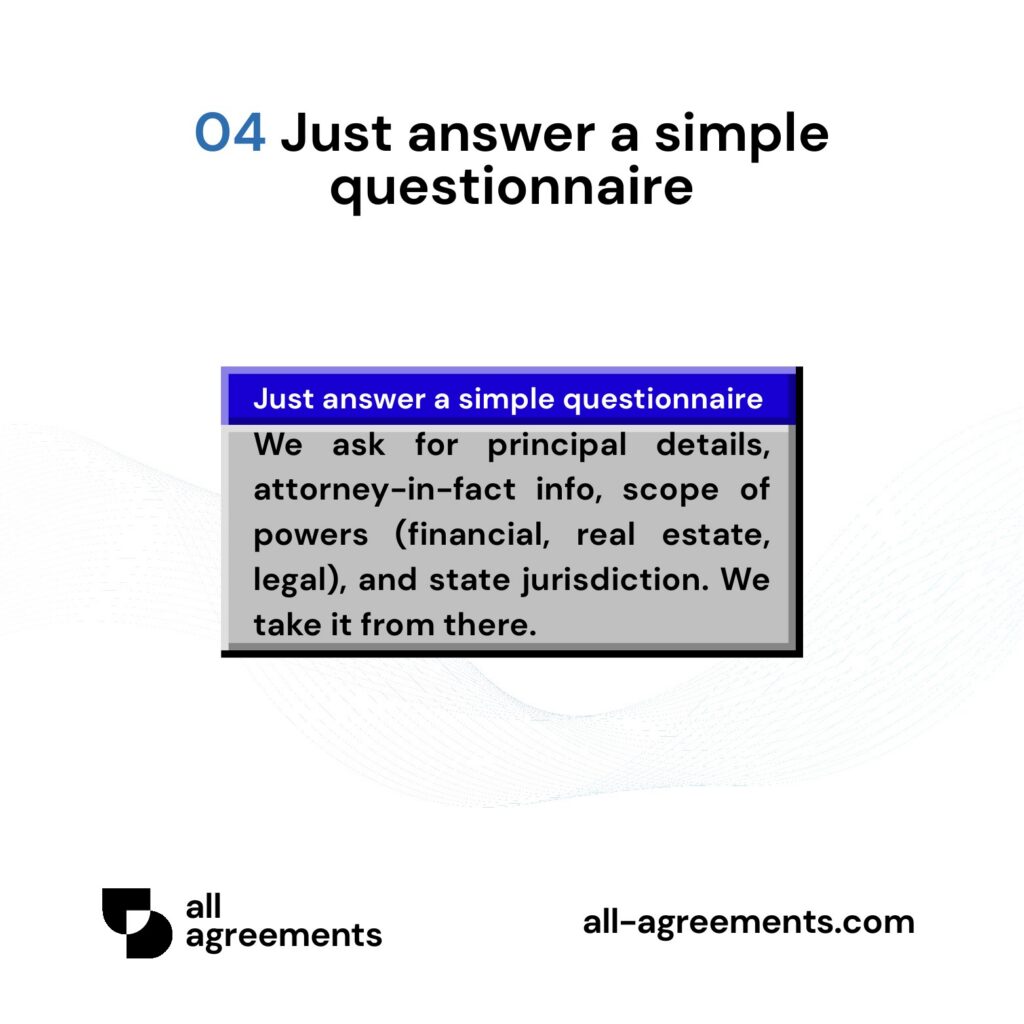
Important information may include:
- Principal’s legal name
- Agent’s legal name
- Contact information
- Type of Power of Attorney
- Powers to be granted
- Effective date
- Expiration date, if any
- Successor agent information
- State-specific legal requirements
Careful planning helps ensure the document reflects the principal’s intentions.
Step-by-Step Guide to Creating a Power of Attorney
Step 1. Identify the Principal
The document should clearly identify the person granting authority.
Include:
- Full legal name
- Residential address
- Contact information
Accurate identification helps establish the validity of the document.
Step 2. Identify the Agent
The Power of Attorney should clearly identify the person receiving authority.
Include:
- Full legal name
- Address
- Contact information
- Relationship to the principal (if desired)
The agent should be someone the principal trusts to act responsibly and in the principal’s best interests.
Step 3. Choose the Type of Power of Attorney
The principal should determine which type of POA best meets their needs.
Common options include:
General Power of Attorney
Grants broad authority over financial and legal matters.
Durable Power of Attorney
Remains effective even if the principal becomes incapacitated, subject to applicable law.
Limited Power of Attorney
Grants authority only for specific acts or transactions.
Financial Power of Attorney
Authorizes management of financial affairs.
Healthcare Power of Attorney
Authorizes healthcare decisions where permitted by law.
Selecting the appropriate type ensures the document matches the intended purpose.
Step 4. Define the Agent’s Authority
One of the most important sections of the document explains exactly what powers the agent may exercise.
Authority may include:
- Banking transactions
- Real estate transactions
- Investment management
- Business operations
- Tax matters
- Insurance claims
- Personal property management
- Legal proceedings
The powers granted should be described as clearly as possible.
Step 5. Include Any Limitations
The principal may choose to limit the agent’s authority.
Examples include:
- Authority limited to one property
- Specific financial accounts
- Single business transaction
- Defined monetary limits
- Limited time period
Clearly stating limitations helps prevent misunderstandings.
Step 6. Determine When the POA Becomes Effective
The document should explain when the agent’s authority begins.
Common options include:
- Immediately upon signing
- On a specified future date
- Upon a specific event, if permitted by applicable law
Clearly identifying the effective date avoids confusion.
Step 7. Determine When the POA Ends
The agreement should explain when the authority will terminate.
Termination may occur:
- On a specific date
- After completion of a particular transaction
- Upon written revocation
- Upon the principal’s death
- Under other circumstances provided by law
Including termination provisions helps define the duration of authority.
Step 8. Appoint a Successor Agent (Optional)
The principal may choose to name an alternate agent if the primary agent is unable or unwilling to serve.
Including a successor agent helps ensure continuity if circumstances change.
Step 9. Include Special Instructions
The principal may provide additional directions regarding how the authority should be exercised.
Examples include:
- Investment preferences
- Property management instructions
- Business operating procedures
- Financial limitations
- Reporting requirements
Special instructions help guide the agent’s actions.
Step 10. Review State Law Requirements
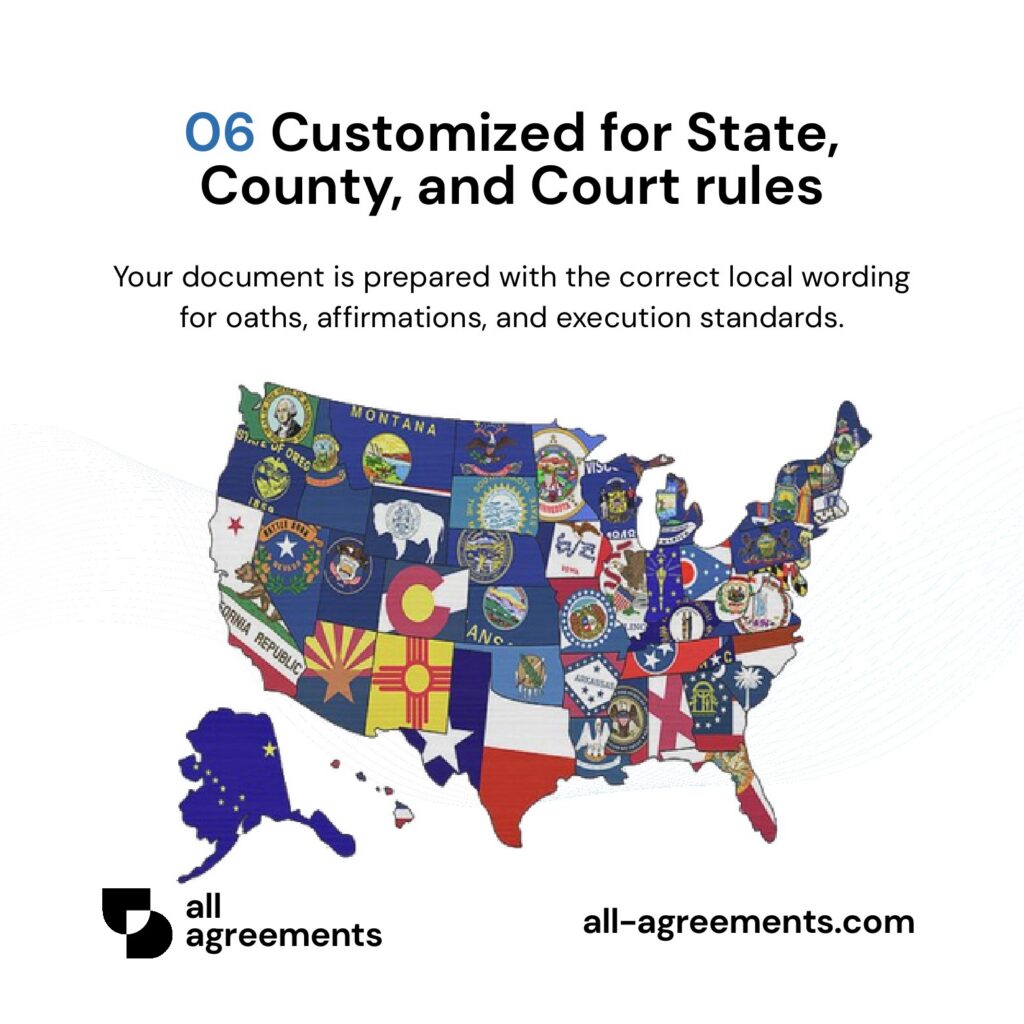
Power of Attorney requirements vary by state.
Depending on applicable law, the document may require:
- Witnesses
- Notarization
- Specific statutory language
- Special execution procedures
Reviewing state requirements helps ensure the document will be legally effective.
Step 11. Review the Power of Attorney Before Signing
Before signing, the principal should carefully review every section.
Important items to verify include:
- Principal information
- Agent information
- Granted powers
- Limitations
- Effective date
- Termination provisions
- Special instructions
- Signature requirements
A careful review helps ensure the document accurately reflects the principal’s wishes.
Step 12. Store the Document Safely
After signing, the original document should be stored in a secure location.
Copies may be provided to:
- The agent
- Financial institutions
- Attorneys
- Healthcare providers (if applicable)
- Family members, where appropriate
Proper storage ensures the document can be located when needed.
How to Sign a Power of Attorney
A Power of Attorney becomes effective according to its terms after it is properly executed.
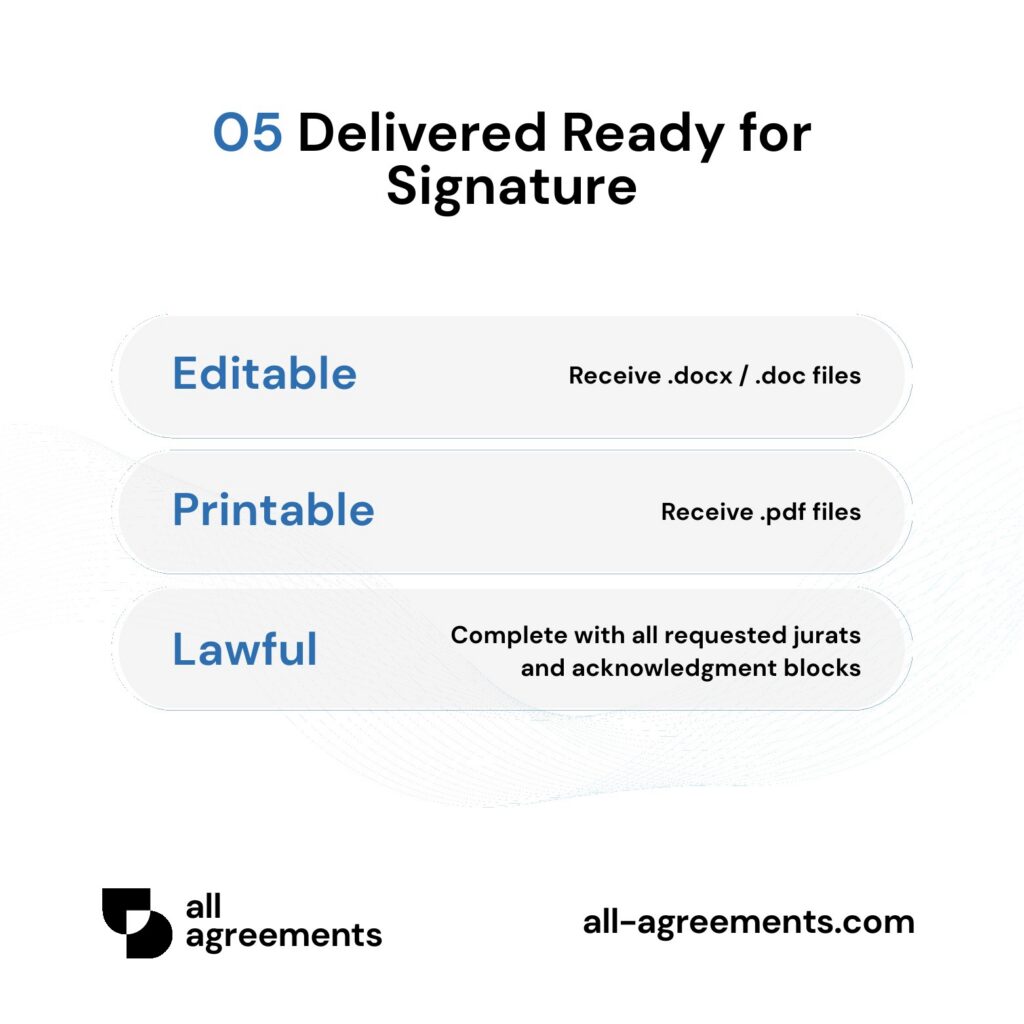
Depending on state law, execution may require:
- Principal’s signature
- Witness signatures
- Notarization
- Agent acknowledgment in some situations
Following applicable legal requirements helps support the document’s validity.
Keep Copies of the Signed Power of Attorney
Copies should be retained by the principal and, where appropriate, provided to the appointed agent.
Copies may be useful for:
- Banking transactions
- Real estate matters
- Business operations
- Estate planning
- Financial management
Maintaining organized records helps ensure the document can be used when necessary.
Common Mistakes to Avoid
When creating a Power of Attorney, common mistakes include:
- Choosing an untrustworthy agent
- Granting overly broad authority without limitations
- Failing to specify effective dates
- Ignoring state execution requirements
- Forgetting successor agents
- Using vague language
- Failing to revoke outdated POAs
- Not informing the agent of the appointment
A carefully prepared Power of Attorney provides greater clarity and protection.
Frequently Asked Questions
What Is the Purpose of a Power of Attorney?
A Power of Attorney authorizes another person to act on the principal’s behalf in specified legal, financial, business, or personal matters.
What Is the Difference Between a General and Durable Power of Attorney?
A General Power of Attorney may terminate if the principal becomes incapacitated, while a Durable Power of Attorney is generally intended to remain effective during incapacity, subject to applicable law.
Can a Power of Attorney Be Revoked?
Yes. In most cases, a competent principal may revoke a Power of Attorney at any time by following applicable legal procedures.
Can More Than One Agent Be Appointed?
Yes. A principal may appoint multiple agents and specify whether they may act independently or must act together.
Does a Power of Attorney Continue After Death?
No. A Power of Attorney generally ends upon the principal’s death. Authority over the estate is then governed by applicable probate law or estate planning documents.
Does a Power of Attorney Need to Be Notarized?
Many states require notarization for certain Powers of Attorney, particularly those involving financial or real estate matters. Requirements vary by jurisdiction.
Conclusion
Creating a Power of Attorney is an important step in planning for future financial, legal, or personal matters by authorizing a trusted individual to act on the principal’s behalf.
A properly prepared Power of Attorney documents essential terms such as the identity of the principal and agent, the scope of authority, effective dates, limitations, termination provisions, and applicable legal requirements.
Before signing a Power of Attorney, the principal should carefully review the document and ensure it complies with the laws of the applicable jurisdiction.
A well-prepared Power of Attorney is more than a standard legal form—it is a valuable planning tool that protects the principal’s interests, promotes continuity in managing important affairs, and provides confidence that trusted decisions can be made when needed.

On sale products
-
Rent Receipt Template
Original price was: $14.99.$5.99Current price is: $5.99. -
Move-In Checklist
Original price was: $19.99.$8.99Current price is: $8.99. -
Move-Out Checklist
Original price was: $19.99.$8.99Current price is: $8.99. -
Landlord Reference Letter
Original price was: $19.99.$8.99Current price is: $8.99. -
Tenant Reference Letter
Original price was: $19.99.$8.99Current price is: $8.99.


Legal Document Preparation Services (A-J)
A
Affidavit Template Preparation Service
Agency Agreement Preparation Service
Asset Purchase Agreement Preparation Service
B
Bill of Sale Preparation Service
Boat Bill of Sale Preparation Service
Business Loan Agreement Preparation Service
Business Partnership Agreement Preparation Service
C
Character Reference Letter Preparation Service
Child Care Authorization Preparation Service
Child Support Agreement Preparation Service
Co-Parenting Agreement Preparation Service
Commercial Lease Agreement Preparation Service
Commercial Property Lease Preparation Service
Commission Agreement Preparation Service
Consent Form Preparation Service
Consulting Agreement Preparation Service
Construction Contract Preparation Service
Contractor Agreement Preparation Service
D
Debt Settlement Agreement Preparation Service
Deed Transfer Form Preparation Service
Demand Letter Preparation Service
E
Easement Agreement Preparation Service
Early Lease Termination Letter Preparation Service
Electrical Contract Preparation Service
Employee Handbook Preparation Service
Employment Contract Preparation Service
Eviction Notice Preparation Service
F
Franchise Agreement Preparation Service
G
Gift Letter Preparation Service
Guardianship Form Preparation Service
H
HOA Agreement Preparation Service
Home Improvement Agreement Preparation Service
Home Inspection Checklist Preparation Service
I
Independent Contractor Agreement Preparation Service
Internship Agreement Preparation Service
J
Joint Venture Agreement Preparation Service
Legal Document Preparation Services (L-Q)
L
Landlord Reference Letter Preparation Service
Last Will and Testament Preparation Service
Late Rent Notice Preparation Service
Lease Extension Agreement Preparation Service
Lease Renewal Agreement Preparation Service
Lease Termination Agreement Preparation Service
Letter of Intent Preparation Service
Listing Agreement Preparation Service
Living Will Preparation Service
M
Medical Power of Attorney Preparation Service
Month-to-Month Lease Agreement Preparation Service
Move-In Checklist Preparation Service
Move-Out Checklist Preparation Service
Motorcycle Bill of Sale Preparation Service
Mutual NDA Preparation Service
N
Name Change Letter Preparation Service
NDA Agreement Preparation Service
Non-Compete Agreement Preparation Service
Notice to Quit Preparation Service
O
Operating Agreement Preparation Service
P
Parking Space Rental Agreement Preparation Service
Personal Loan Agreement Preparation Service
Personal Property Agreement Preparation Service
Pet Addendum Preparation Service
Plumbing Contract Preparation Service
Power of Attorney Preparation Service
Promissory Note Preparation Service
Property Disclosure Form Preparation Service
Property Investment Agreement Preparation Service
Property Maintenance Agreement Preparation Service
Property Management Agreement Preparation Service
Property Management Contract Preparation Service
Property Sale Contract Preparation Service
Purchase Agreement Preparation Service
Q
Quitclaim Deed Preparation Service
Legal Document Preparation Services (R-W)
R
Real Estate Agent Agreement Preparation Service
Real Estate Commission Agreement Preparation Service
Real Estate Purchase Agreement Preparation Service
Remodeling Agreement Preparation Service
Rent Increase Notice Preparation Service
Rent Receipt Preparation Service
Rental Application Form Preparation Service
Residential Lease Agreement Preparation Service
Residential Property Lease Preparation Service
Room Rental Agreement Preparation Service
Roommate Agreement Preparation Service
Roofing Contract Preparation Service
S
Sales Agreement Preparation Service
Security Deposit Agreement Preparation Service
Separation Agreement Preparation Service
Service Agreement Preparation Service
Shareholder Agreement Preparation Service
Simple Rent Agreement Preparation Service
Sublease Agreement Preparation Service
Supplier Agreement Preparation Service
T
Tenant Reference Letter Preparation Service
Travel Consent Form Preparation Service
V
Vacation Rental Agreement Preparation Service
Vehicle Bill of Sale Preparation Service
Vendor Agreement Preparation Service
W
Warranty Deed Preparation Service

