



Business Partnership Agreement
Establish clear terms between business partners with a custom-prepared U.S. Business Partnership Agreement structured around your specific ownership and management arrangements.
Define partner contributions, ownership percentages, profit sharing, responsibilities, voting rights, withdrawal terms, buyouts, and dissolution procedures.
- Custom-Prepared Document: Structured using the partner, business, ownership, contribution, and management information you provide.
- Clear Financial & Ownership Terms: Document capital contributions, ownership percentages, profit sharing, loss allocation, and banking authority.
- Partnership Protection: Address voting, management responsibilities, new partners, withdrawals, buyouts, disputes, and dissolution terms.
💡 Designed for business partners throughout the United States and adaptable to the governing law and partnership structure selected by the parties.
What Is a Business Partnership Agreement?
A Business Partnership Agreement is a written contract between two or more partners that outlines the rules governing their business relationship.
The agreement establishes how the partnership will operate and how the partners will share responsibilities, ownership, profits, losses, and decision-making authority.
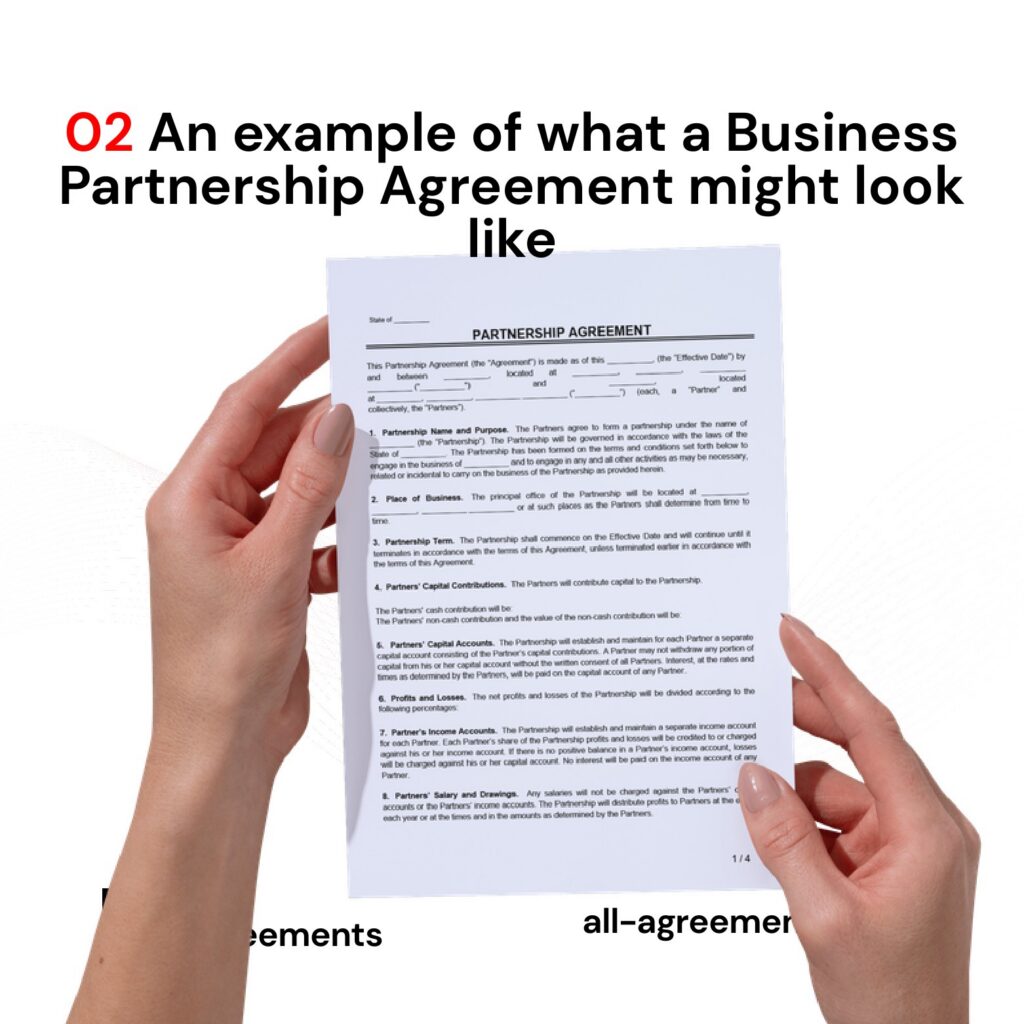
A Business Partnership Agreement commonly includes:
- Names of the partners
- Business name
- Purpose of the partnership
- Ownership interests
- Capital contributions
- Profit and loss allocation
- Management responsibilities
- Voting rights
- Admission of new partners
- Withdrawal or retirement procedures
- Dispute resolution
- Dissolution procedures
- Signature requirements
Business Partnership Agreements are commonly used for:
- Small businesses
- Professional practices
- Real estate investment partnerships
- Retail businesses
- Family-owned businesses
- Consulting firms
- Service businesses
- Startup companies
- Joint ventures
A properly drafted agreement helps partners understand their obligations from the beginning.
Why a Business Partnership Agreement Is Important
Even close friends or family members may disagree about business operations if expectations are not clearly documented.
A Business Partnership Agreement helps:
- Define ownership interests
- Clarify financial contributions
- Establish management responsibilities
- Explain decision-making procedures
- Reduce future disputes
- Protect business continuity
- Create written documentation of partner expectations
A comprehensive agreement provides stability throughout the life of the partnership.
Before You Start Creating a Business Partnership Agreement
Before preparing the agreement, the partners should discuss the structure and goals of the business.
Important information may include:
- Legal names of all partners
- Business name
- Business purpose
- Ownership percentages
- Capital contributions
- Management responsibilities
- Profit-sharing arrangements
- Future growth plans
- Exit strategies
Discussing these issues early helps avoid misunderstandings later.
Step-by-Step Guide to Creating a Business Partnership Agreement
Step 1. Identify the Partners
The agreement should clearly identify every partner.
For each partner, include:
- Full legal name
- Address
- Contact information
- Business entity (if applicable)
Accurate identification helps establish who is legally bound by the agreement.
Step 2. Define the Business
The agreement should describe the partnership and its purpose.
Include:
- Business name
- Principal business address
- Nature of the business
- Business objectives
Clearly defining the partnership helps establish its intended operations.
Step 3. Establish Ownership Interests
The agreement should specify each partner’s ownership percentage.
Ownership may be based on:
- Equal ownership
- Capital contributions
- Negotiated percentages
- Other agreed methods
Clearly documenting ownership helps avoid future disagreements.
Step 4. Define Capital Contributions
Each partner’s initial contribution should be described.
Contributions may include:
- Cash
- Property
- Equipment
- Intellectual property
- Services
- Existing business assets
The agreement should also explain whether additional contributions may be required in the future.
Step 5. Explain Profit and Loss Sharing
The agreement should explain how profits and losses will be allocated.
Common methods include:
- Equal sharing
- Ownership percentages
- Agreed formulas
- Performance-based allocations
Clear financial provisions help reduce disputes over distributions.
Step 6. Define Management Responsibilities
The agreement should explain each partner’s role in operating the business.
Responsibilities may include:
- Daily operations
- Financial management
- Hiring employees
- Marketing
- Sales
- Business development
Clearly assigning responsibilities improves accountability.
Step 7. Establish Decision-Making Procedures
Partners should agree on how important business decisions will be made.
The agreement may specify:
- Majority vote
- Unanimous approval
- Voting based on ownership percentages
- Authority delegated to managing partners
Clear decision-making procedures help avoid deadlocks.
Step 8. Address Partner Compensation
If partners will receive salaries or guaranteed payments, the agreement should explain:
- Compensation amounts
- Payment schedules
- Expense reimbursement
- Bonus arrangements
Compensation terms should be clearly documented separately from profit distributions.
Step 9. Establish Procedures for New Partners
The agreement should explain how additional partners may join the business.
Include:
- Approval requirements
- Purchase of ownership interests
- Capital contribution requirements
- Amendments to ownership percentages
Planning ahead helps simplify future business expansion.
Step 10. Address Withdrawal, Retirement, or Death of a Partner
The agreement should explain what happens if a partner leaves the business.
Common provisions include:
- Buyout procedures
- Valuation methods
- Notice requirements
- Retirement arrangements
- Death or disability provisions
These provisions help maintain business continuity.
Step 11. Include Dispute Resolution and Dissolution Terms
The agreement should explain how disputes will be resolved.
Possible provisions include:
- Negotiation
- Mediation
- Arbitration
- Court proceedings
The agreement should also explain how the partnership may be dissolved and how assets and liabilities will be handled if the business closes.
Step 12. Review the Partnership Agreement Before Signing
Before signing, all partners should carefully review the agreement.
Important items to verify include:
- Correct partner information
- Ownership percentages
- Capital contributions
- Profit-sharing arrangements
- Management responsibilities
- Voting procedures
- Buyout provisions
- Dissolution procedures
A careful review helps ensure the agreement accurately reflects the partners’ intentions.
How to Sign a Business Partnership Agreement
The agreement becomes effective after all required partners sign the document.
The agreement should include:
- Signature of each partner
- Printed names
- Date of signing
Depending on the circumstances, additional execution requirements may apply.
Keep Copies of the Signed Agreement
Every partner should retain a copy of the completed agreement.
Copies may be useful for:
- Business records
- Financial planning
- Tax preparation
- Banking relationships
- Resolving disputes
Maintaining organized records supports effective partnership management.
Common Mistakes to Avoid
When creating a Business Partnership Agreement, common mistakes include:
- Failing to define ownership percentages
- Not documenting capital contributions
- Omitting profit-sharing provisions
- Ignoring management responsibilities
- Not planning for partner departures
- Using vague language
- Overlooking dispute resolution procedures
- Failing to obtain signatures
A carefully prepared agreement helps reduce uncertainty and supports long-term business success.
Frequently Asked Questions
What Is a Business Partnership Agreement?
It is a written contract that establishes the legal and operational rules governing a partnership between two or more business owners.
Is a Business Partnership Agreement Legally Binding?
A properly prepared and signed Partnership Agreement can create legally enforceable obligations between the partners, subject to applicable law.
Do Equal Partners Have to Share Profits Equally?
Not necessarily. Partners may agree to allocate profits and losses using any lawful method that suits their business arrangement.
Can a Partnership Agreement Be Changed?
Yes. Partners may modify the agreement if all required parties approve the changes and document them in writing.
What Happens If a Partner Leaves the Business?
The agreement should explain buyout procedures, valuation methods, and how ownership interests will be transferred or redeemed.
Does a Partnership Agreement Need to Be Notarized?
Most Partnership Agreements do not require notarization, although requirements may vary depending on the circumstances.
Conclusion
Creating a Business Partnership Agreement is one of the most important steps when starting or operating a business with one or more partners.
A properly prepared agreement documents essential terms such as ownership interests, capital contributions, management responsibilities, profit and loss sharing, decision-making procedures, partner withdrawals, and dispute resolution.
Before signing a Business Partnership Agreement, all partners should carefully review the document to ensure it accurately reflects their expectations and business objectives.
A well-prepared Business Partnership Agreement is more than a standard contract—it is a vital business document that promotes transparency, protects the interests of all partners, reduces the likelihood of disputes, and provides a strong foundation for a successful and lasting partnership.

On sale products
-
Rent Receipt Template
Original price was: $14.99.$5.99Current price is: $5.99. -
Move-In Checklist
Original price was: $19.99.$8.99Current price is: $8.99. -
Move-Out Checklist
Original price was: $19.99.$8.99Current price is: $8.99. -
Landlord Reference Letter
Original price was: $19.99.$8.99Current price is: $8.99. -
Tenant Reference Letter
Original price was: $19.99.$8.99Current price is: $8.99.


Legal Document Preparation Services (A-J)
A
Affidavit Template Preparation Service
Agency Agreement Preparation Service
Asset Purchase Agreement Preparation Service
B
Bill of Sale Preparation Service
Boat Bill of Sale Preparation Service
Business Loan Agreement Preparation Service
Business Partnership Agreement Preparation Service
C
Character Reference Letter Preparation Service
Child Care Authorization Preparation Service
Child Support Agreement Preparation Service
Co-Parenting Agreement Preparation Service
Commercial Lease Agreement Preparation Service
Commercial Property Lease Preparation Service
Commission Agreement Preparation Service
Consent Form Preparation Service
Consulting Agreement Preparation Service
Construction Contract Preparation Service
Contractor Agreement Preparation Service
D
Debt Settlement Agreement Preparation Service
Deed Transfer Form Preparation Service
Demand Letter Preparation Service
E
Easement Agreement Preparation Service
Early Lease Termination Letter Preparation Service
Electrical Contract Preparation Service
Employee Handbook Preparation Service
Employment Contract Preparation Service
Eviction Notice Preparation Service
F
Franchise Agreement Preparation Service
G
Gift Letter Preparation Service
Guardianship Form Preparation Service
H
HOA Agreement Preparation Service
Home Improvement Agreement Preparation Service
Home Inspection Checklist Preparation Service
I
Independent Contractor Agreement Preparation Service
Internship Agreement Preparation Service
J
Joint Venture Agreement Preparation Service
Legal Document Preparation Services (L-Q)
L
Landlord Reference Letter Preparation Service
Last Will and Testament Preparation Service
Late Rent Notice Preparation Service
Lease Extension Agreement Preparation Service
Lease Renewal Agreement Preparation Service
Lease Termination Agreement Preparation Service
Letter of Intent Preparation Service
Listing Agreement Preparation Service
Living Will Preparation Service
M
Medical Power of Attorney Preparation Service
Month-to-Month Lease Agreement Preparation Service
Move-In Checklist Preparation Service
Move-Out Checklist Preparation Service
Motorcycle Bill of Sale Preparation Service
Mutual NDA Preparation Service
N
Name Change Letter Preparation Service
NDA Agreement Preparation Service
Non-Compete Agreement Preparation Service
Notice to Quit Preparation Service
O
Operating Agreement Preparation Service
P
Parking Space Rental Agreement Preparation Service
Personal Loan Agreement Preparation Service
Personal Property Agreement Preparation Service
Pet Addendum Preparation Service
Plumbing Contract Preparation Service
Power of Attorney Preparation Service
Promissory Note Preparation Service
Property Disclosure Form Preparation Service
Property Investment Agreement Preparation Service
Property Maintenance Agreement Preparation Service
Property Management Agreement Preparation Service
Property Management Contract Preparation Service
Property Sale Contract Preparation Service
Purchase Agreement Preparation Service
Q
Quitclaim Deed Preparation Service
Legal Document Preparation Services (R-W)
R
Real Estate Agent Agreement Preparation Service
Real Estate Commission Agreement Preparation Service
Real Estate Purchase Agreement Preparation Service
Remodeling Agreement Preparation Service
Rent Increase Notice Preparation Service
Rent Receipt Preparation Service
Rental Application Form Preparation Service
Residential Lease Agreement Preparation Service
Residential Property Lease Preparation Service
Room Rental Agreement Preparation Service
Roommate Agreement Preparation Service
Roofing Contract Preparation Service
S
Sales Agreement Preparation Service
Security Deposit Agreement Preparation Service
Separation Agreement Preparation Service
Service Agreement Preparation Service
Shareholder Agreement Preparation Service
Simple Rent Agreement Preparation Service
Sublease Agreement Preparation Service
Supplier Agreement Preparation Service
T
Tenant Reference Letter Preparation Service
Travel Consent Form Preparation Service
V
Vacation Rental Agreement Preparation Service
Vehicle Bill of Sale Preparation Service
Vendor Agreement Preparation Service
W
Warranty Deed Preparation Service

